
The Senate is expected to attempt again on Wednesday to advance the House GOP’s bill, but another failure is anticipated.
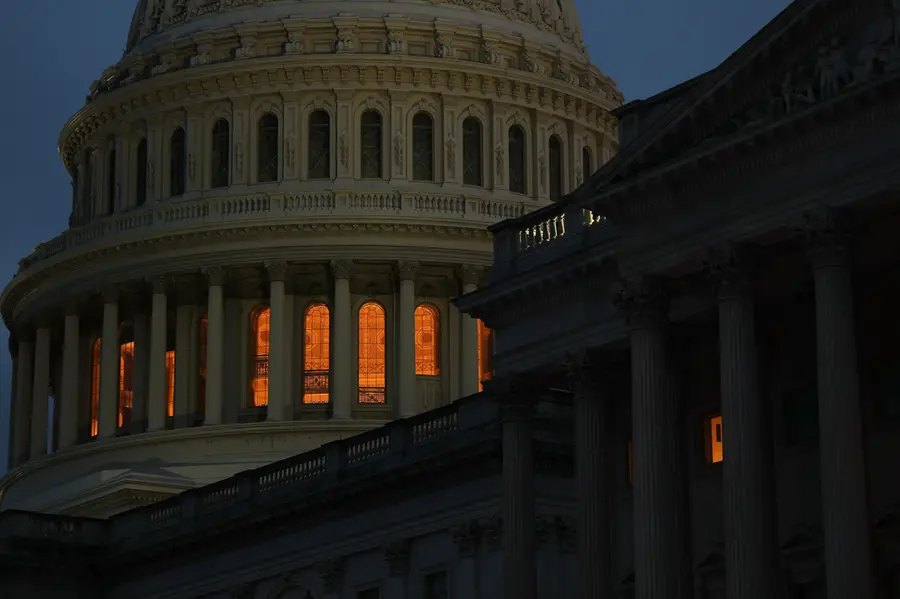
Washington: Tours of the US Capitol have come to a halt as the government shutdown enters its second week, with no clear resolution in sight. The House of Representatives remains closed, while the Senate faces repeated failures to pass a plan to reopen the government. Meanwhile, President Donald Trump has threatened to dismiss large numbers of federal workers and withhold back pay.
Senator Bernie Sanders, independent from Vermont, urged for talks late into Tuesday evening on the Senate floor, stating, “You have to negotiate. That’s the way it works.” However, no formal negotiations have been announced publicly.
Stalemate persists amid signs of quiet discussions
Republicans, who hold the majority in Congress, believe they have the political advantage as they resist Democratic demands to immediately fund health insurance subsidies as part of any shutdown-ending agreement.
Democrats, for their part, remain steadfast, arguing that the American public supports their efforts to prevent upcoming health care cost increases, and they place the blame for the shutdown squarely on President Trump.
Behind closed doors, however, there are signs of unease. A small group of senators from both parties have informally discussed possible solutions to the health insurance subsidy issue. Senator Susan Collins of Maine has put forward her own proposals. Prominent Republicans such as Representative Marjorie Taylor Greene (Georgia) and Senator Josh Hawley (Missouri) have also voiced the need to address the rising insurance rates.
Earlier this week, President Trump hinted at willingness to negotiate with Democrats on preserving health care subsidies, saying talks were underway and expressing a desire for “great health care” for Americans. Yet he later emphasised that reopening the government must come first.
Trump Seeks a Health Care Deal
House Speaker Mike Johnson confirmed in a conversation with the president on Monday that Trump “wants to solve problems,” particularly the health care debate that has long divided Congress.
At the heart of the impasse lies the Affordable Care Act (Obamacare). During the COVID-19 pandemic, Congress increased federal subsidies to help people buy insurance on ACA exchanges, resulting in record enrolment of 24 million. These enhanced subsidies are due to expire at the end of the year.
Republicans argue the health insurance issues can be addressed after the government reopens, while Democrats insist on resolving the matter immediately as many people are already receiving notices of rising premiums for the coming year.
Senate Majority Leader John Thune (Republican, South Dakota) said discussions on the subsidies were always planned but would come after the shutdown ends.
Distrust and doubts run deep
Democrats criticise Republicans for failing to tackle the subsidy problem earlier this year when they passed Trump’s signature bill, often called the One Big Beautiful Bill Act. They also question whether the House will return to session soon, with Speaker Johnson keeping lawmakers away and encouraging work in their home districts.
House Democratic Leader Hakeem Jeffries (New York) criticised the GOP, saying: “Tens of millions of people are about to experience dramatically increased health insurance costs — how is that acceptable in the wealthiest country in the history of the world?”
He added, “A health care crisis is unfolding before the eyes of the American people because of the actions taken by the GOP — they’re on vacation.”
Federal workers face missed paychecks and failed votes
Federal employees, long accustomed to missing paychecks during shutdowns, now face uncertainty over whether they will receive back pay. President Trump has threatened to eliminate guaranteed back pay, a significant departure from previous practice. The White House budget office argues that back pay is not automatic and requires congressional approval.
Meanwhile, Senate Republicans’ attempts to persuade more Democratic senators to support the House-passed funding bill—without a health care fix—have failed. The parties appear to be moving further apart.
Independent Senator Angus King of Maine, who has previously voted with Republicans to fund the government, has suggested he may switch his vote, aligning with Democrats who demand a better deal.
The Senate is expected to attempt again on Wednesday to advance the House GOP’s bill, but another failure is anticipated.
Political battle lines firm ahead of 2026 midterms
Both sides remain entrenched, confident in their positions partly due to internal polling. A memo circulated to Senate Democrats and House campaigns urges maintaining pressure on Republicans, emphasising that easing up would be a “mistake.”
Republicans, for their part, are focusing on the economic impact of the shutdown in their messaging, providing district-level analyses of those affected.
Each party views the shutdown fight as a key prelude to the 2026 midterm elections.
Published: 08 Oct 2025, 02:59 pm IST
Related Topics
Disclaimer: Kindly avoid objectionable, derogatory, unlawful and lewd comments, while responding to reports. Such comments are punishable under cyber laws. Please keep away from personal attacks. The opinions expressed here are the personal opinions of readers and not that of Mathrubhumi.
