
The United States’ longest government shutdown has finally ended after 43 days, with the House passing a narrow funding deal that reopens federal agencies but leaves the battle over Affordable Care Act tax credits unresolved. The bill now heads to President Donald Trump for approval.
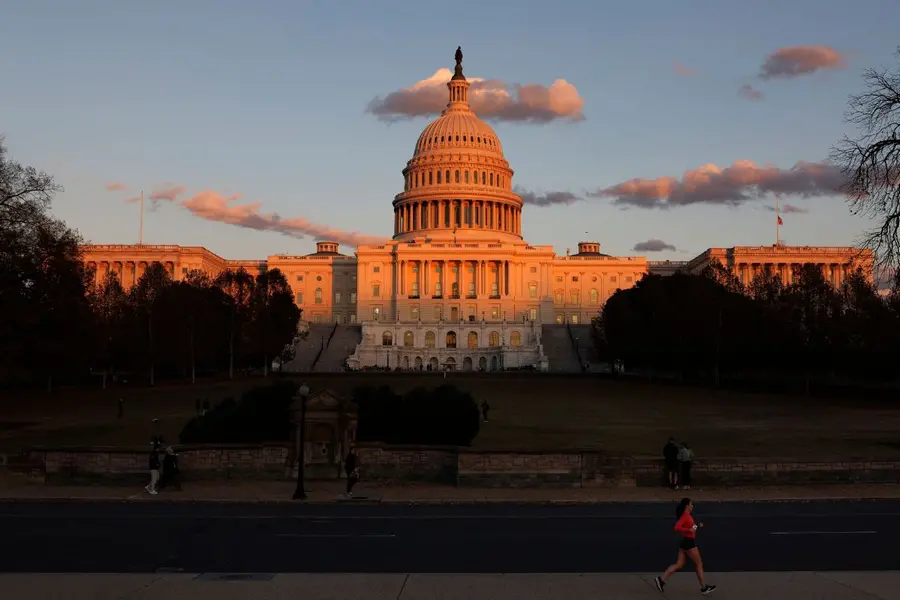
After 43 days of federal funding paralysis, the nation’s longest government shutdown came to an official end Wednesday night when the United States House of Representatives passed a spending measure to reopen large swathes of the federal government.
The bill, approved 222-209 along largely party lines, now moves to Donald J Trump for his signature.
Republicans, holding a slim majority, had kept the chamber out of session since Sept. 19 in a bid to force Democrats’ hand. Mike Johnson, the House Speaker, sent members home after that date, arguing the Senate needed to act.
The Senate had already passed the compromise package before the House returned. The legislation funds three full-year appropriations bills for the United States Department of Agriculture, military construction, and the legislative branch, while extending remaining government funding through Jan. 30.
It also promises a mid-December vote on extending enhanced tax credits under the Affordable Care Act (ACA), though no guarantee of passage is included.
Key provisions of the deal include:
Restoring pay for federal employees who worked without compensation during the shutdown, protecting them from further layoffs through January.
Funding food-aid programs that had been imperiled during the shutdown, and reversing recent federal worker dismissals.
Appropriating approximately $203.5 million for congressional security and an additional $28 million for the protection of Supreme Court justices.
Including a controversial provision that allows senators to sue a federal agency or employee for up to $500,000 in damages if their electronic records are searched without notification—seen by critics as politically motivated.
Despite the relief of reopening the government, the agreement drew sharp criticism from Democrats who argued it fails to address the looming collapse of ACA marketplace subsidies.
Without extension of the enhanced tax credits, millions face sharply higher premiums—or even loss of coverage.
Representative Hakeem Jeffries declared, “This fight is not over. We’re just getting started.”
House Republicans countered that the shutdown was deliberately prolonged by Democrats seeking to use federal workers and programs as leverage in the health-care debate.
The senior Republican on the Appropriations Committee, Tom Cole, summed it up: “Government shutdowns don’t work… They never achieve the objective that you announce.”
Economically and socially, the shutdown left a heavy toll. Thousands of federal workers missed paychecks, travellers were stranded at airports, and food banks nationwide reported spikes in demand as assistance programs stalled.
Looking ahead, a new short-term funding deadline looms at the end of January, and the health-care subsidy battle appears far from resolved. With the legislation signed, attention now shifts to how and when the IRS tax credits will be extended—and whether bipartisan compromise can be found in time.
Published: 13 Nov 2025, 07:22 am IST
Related Topics
Disclaimer: Kindly avoid objectionable, derogatory, unlawful and lewd comments, while responding to reports. Such comments are punishable under cyber laws. Please keep away from personal attacks. The opinions expressed here are the personal opinions of readers and not that of Mathrubhumi.
