
The US has ended Operation Epic Fury against Iran, Secretary of State Marco Rubio announced, as a ceasefire holds amid rising tensions in the Strait of Hormuz.
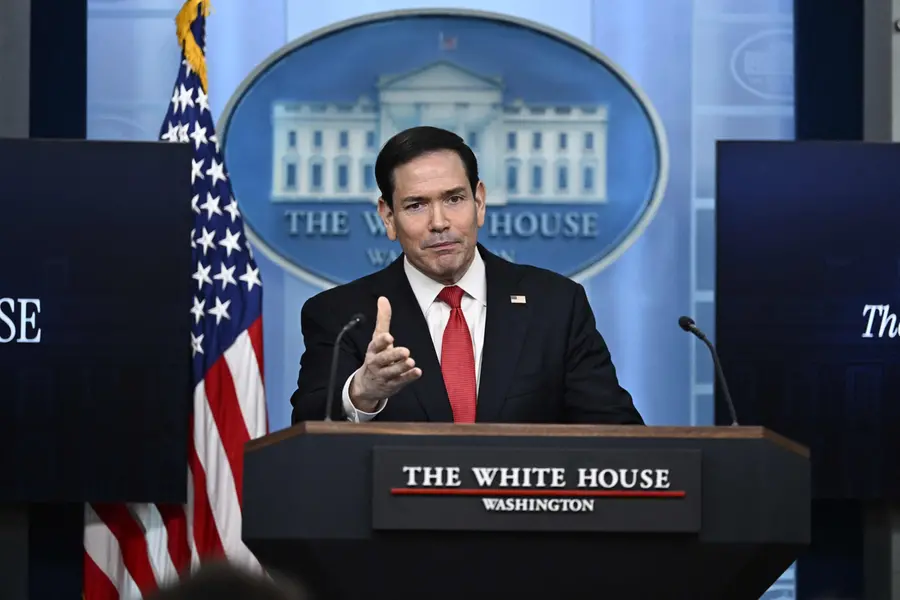
Washington: The United States has formally ended its offensive military campaign against Iran, Secretary of State Marco Rubio said on Tuesday, signalling the close of a major phase of the conflict even as tensions remain high in the Strait of Hormuz and a fragile ceasefire persists.
Rubio, speaking to reporters at the White House, confirmed that the US-led assault launched jointly with Israel on 28 February had wrapped up. The operation, known as ‘Operation Epic Fury’, targeted senior Iranian leadership figures and critical military and economic infrastructure but did not bring down the Islamic Republic. Iran responded with waves of missile and drone strikes across the region.
“The operation is over, Epic Fury, as the president notified Congress. We're done with that stage of it,” Rubio said.
He added that while offensive actions had ceased, the US remained on alert as part of an ongoing effort to manage maritime security in the Gulf amid Iranian control of the Strait of Hormuz.
Offensive phase ends
President Donald Trump declared a ceasefire on 8 April, extending it multiple times despite stalled negotiations with Tehran. Rubio said the US had achieved the strategic goals set at the start of the conflict.
“These guys are facing, they are facing real, catastrophic destruction to their economy,” he said, while stressing that the White House still preferred diplomacy.
Rubio, a former US senator, again voiced opposition to the 1973 War Powers Act, saying: “We don't acknowledge the law as constitutional. Nonetheless, we comply with elements of it for purposes of maintaining good relations with Congress.”
Earlier on Tuesday, Congress was informed that the war had effectively terminated due to the ceasefire, a move that allowed the administration to avoid seeking authorisation for military action exceeding the 60-day limit.
Strait of Hormuz standoff: ‘Defensive Operation’
Fresh confrontations in the Strait of Hormuz, where Iran seized control after coming under attack, were not part of Epic Fury, Rubio said. Instead, he insisted the US was acting out of necessity.
“This is not an offensive operation; this is a defensive operation,” he said. “And what that means is very simple, there's no shooting unless we're shot at first.”
The United States has been attempting to shepherd commercial vessels out of the strait, though only two ships have reportedly made the passage so far. Defence Secretary Pete Hegseth said the US would continue escort operations if required but preferred a peaceful approach.
The UAE, a key American partner, said it has been defending against renewed Iranian strikes. Iran denied launching attacks “in recent days.”
Trump pauses ‘Project Freedom’ amid mediation efforts
Tensions escalated quickly around Trump’s newly announced escort mission, dubbed ‘Project Freedom’, which started on Monday and aimed to help foreign vessels leave the narrow chokepoint. US forces claimed to have sunk seven Iranian boats, while several civilian ships came under attack, allegedly from Iran.
But the president abruptly paused the operation on Tuesday following intervention by Pakistan and other mediators, writing on Truth Social that “Great Progress has been made toward a Complete and Final Agreement” with Tehran.
“We have mutually agreed that, while the Blockade will remain in full force and effect, Project Freedom… will be paused for a short period of time to see whether or not the Agreement can be finalized and signed,” Trump said.
Washington continues to enforce a blockade of Iranian ports as leverage to push Tehran toward a settlement.
What comes next?
The immediate future of the conflict remains uncertain. The ceasefire technically remains in place, though regional attacks have not fully subsided. Rubio reiterated that the US sought to avoid further escalation.
“We're not cheering for an additional situation to occur,” he said. “We would prefer the path of peace.”
He added that Iran must meet Trump’s demands on its nuclear programme and reopen the Strait of Hormuz, describing the waterway as critical to global energy markets.
(With AFP inputs)
Published: 06 May 2026, 07:15 am IST
Disclaimer: Kindly avoid objectionable, derogatory, unlawful and lewd comments, while responding to reports. Such comments are punishable under cyber laws. Please keep away from personal attacks. The opinions expressed here are the personal opinions of readers and not that of Mathrubhumi.
