
Tuesday’s elections across several US states could further entrench the nation’s political divide, deepening the split between Republican-led red states and Democratic-controlled blue states
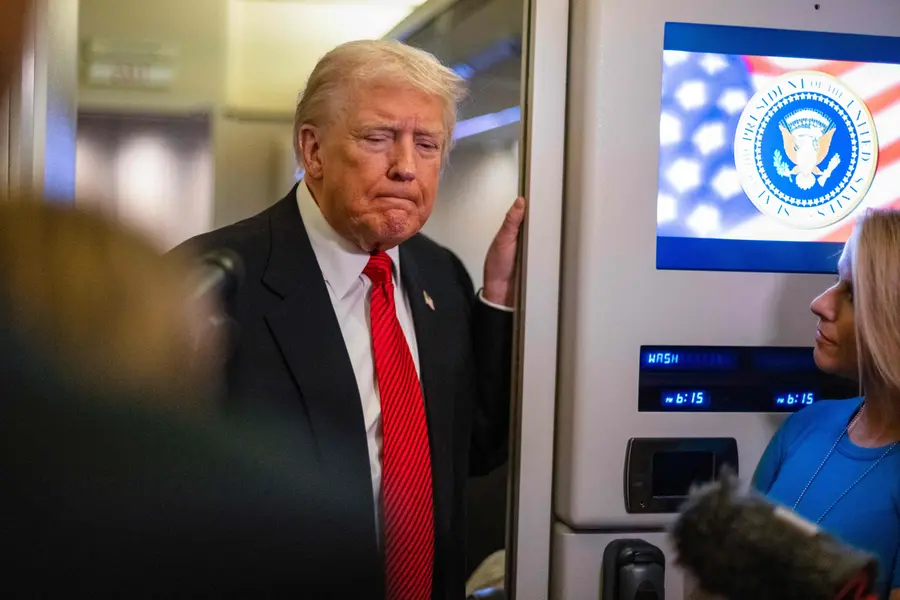
Washington DC: The United States appears headed towards deeper political polarisation as elections on Tuesday may mark another step in dividing the nation into two hostile blocs of red and blue states. From California to Virginia, the results are expected to reinforce a growing trend: each major party consolidating control over its strongholds while losing influence in the other’s territory.
The 2025 United States state legislative elections are scheduled for November 4, 2025, and will take place in two states. Only two state legislative chambers will hold elections this year, accounting for about 3 percent of all lower house seats nationwide. No upper house seats are scheduled for regular elections in this cycle.
Also Read

America’s divide deepens as red and blue states drift further apart
The United States appears headed towards deeper political polarisation as Tuesday’s elections may mark another step in dividing the nation into two increasingly hostile blocs. From California to Virginia, results are expected to reinforce the consolidation of political power within each party’s regional strongholds.
Democrats and Republicans tighten grip on their territories
Democratic victories in traditionally blue states such as New Jersey and Virginia would underline the party’s growing dominance in its base regions. Conversely, Republicans continue to cement their control over red states, especially across the South and Midwest. Experts warn that this divide is becoming more permanent, with each side retreating further into its own ideological sphere.
Redistricting battle escalates nationwide
Beyond the immediate election results, the greater consequence may lie in the redistricting war unfolding across the country. Republican-led states including Texas, North Carolina, and Missouri have redrawn maps to reduce Democratic representation. In response, California’s Proposition 50 — expected to erase up to five Republican-held seats — could push Democratic states to retaliate, escalating what analysts call a “partisan arms race.”
Shrinking cross-party representation in Congress
The US House of Representatives remains one of the last spaces where both parties hold some ground in opposing territories. Currently, Democrats occupy about 23% of seats in Republican-dominated states, while Republicans hold roughly 21% in Democratic ones. However, with redistricting intensifying, these cross-party seats may soon disappear, erasing one of the final threads of national political balance.
Voting Rights Act under strain amid racial implications
The ongoing reshaping of political maps could have profound consequences for racial representation. Research from the Equity Research Institute at the University of Southern California shows that voters of colour account for over 90% of population growth in several southern states since 2010. If the Supreme Court further weakens the Voting Rights Act, Republicans could eliminate numerous seats held by Black and Latino Democrats, deepening racial and political inequality.
Consequences for federal unity and governance
Political scientists warn that this partisan reshaping of America’s geography could make it harder for any president to govern inclusively. In the past, presidents had to consider states that voted differently in presidential elections. As such representation declines, leaders may feel less pressure to accommodate opposing viewpoints, pushing the nation towards even greater division.
Trump’s combative legacy and a ‘cold civil war’
Former President Donald Trump has intensified regional hostilities, treating blue states less as partners and more as political opponents. His administration’s confrontations over immigration, law enforcement, and state funding have heightened mistrust between state and federal authorities. Analysts fear these divisions could persist, even under future administrations, due to the structural polarisation now embedded in American politics.
Two Americas — and an uncertain future
With bipartisan cooperation fading and ideological divides widening, experts warn that the United States is evolving into “two Americas.” As University of California political scientist Eric Schickler observed, “There’s no realistic way for the country to break apart — but how it stays together is becoming harder to imagine.”
Published: 03 Nov 2025, 09:08 am IST
Related Topics
Disclaimer: Kindly avoid objectionable, derogatory, unlawful and lewd comments, while responding to reports. Such comments are punishable under cyber laws. Please keep away from personal attacks. The opinions expressed here are the personal opinions of readers and not that of Mathrubhumi.