
China now possesses “the world’s largest navy” and is modernising its nuclear forces at a pace that far outstrips US production.
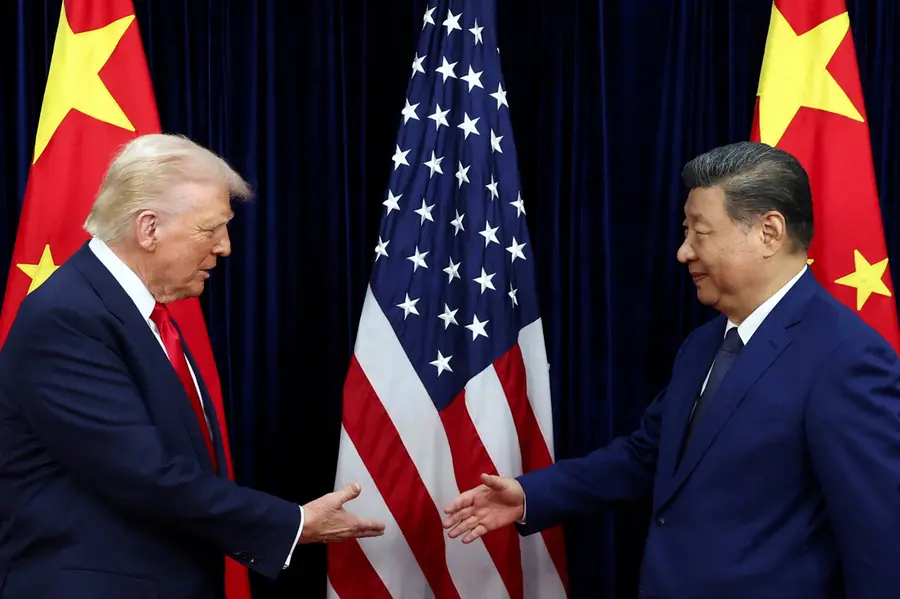
Washington: The United States has issued a stark warning over China’s rapidly expanding military capabilities, describing Beijing’s defence buildup as “historic” and highlighting the urgent need to strengthen America’s defence industrial base, a move with direct implications for India’s security strategy in the Indo-Pacific.
At the Reagan National Defence Forum, US Secretary of War Pete Hegseth pointed to China’s rapid naval growth, expanding nuclear arsenal, and deepening military cooperation with Russia, saying, “We’re obviously well aware of their historic military buildup. It’s right in front of us.”
China now possesses “the world’s largest navy” and is modernising its nuclear forces at a pace that far outstrips US production. Hegseth noted, “For every eight warships Beijing builds, the United States produces fewer than two. Chinese shipbuilding capacity is 230% greater than the United States’s capability.”
In response, he stressed that the US must accelerate internal reform and defence production, stating, “The most important thing we can do is look inward and increase our urgency of ensuring we rebuild our defence industrial base in the arsenal of freedom.”
He added that the Trump Administration has undertaken “an entire acquisitions requirements and foreign military sales overhaul. Not a reform, not a tinkering… This is a complete game change in how we deliver systems to the battle. We have to, we don’t have time.”
The Secretary emphasised that the goal is “to be able to feel the best as quickly as possible,” underscoring the need to restore America’s defence production capacity at scale and speed to deter China’s expanding footprint.
While Hegseth did not explicitly mention India, his remarks align closely with New Delhi’s strategic concerns over China’s growing military power, particularly in the maritime domain. India has been monitoring Beijing’s increasing presence in the Indian Ocean, militarisation of the South China Sea, and strengthened ties with Pakistan, all areas where robust US preparedness could help stabilise regional security.
Hegseth also highlighted the US approach to the challenge, saying, “We see it, we’re aware, but we’re also prudent in how we approach it, which is the way the president has approached it. And we’ll do the same.”
For India, which has enhanced defence coordination with the US through the Quad, joint exercises, technology cooperation, and maritime surveillance, the US focus on rebuilding naval and industrial power is likely to be seen as a key pillar of Indo-Pacific stability.
China’s ability to mass-produce ships, missiles, and munitions at a pace unmatched by any Western power has long been a concern for New Delhi. In response, India has expanded naval partnerships with the US, Japan, and Australia, and invested in aircraft carriers, submarines, long-range surveillance aircraft, and unmanned systems.
The US has also intensified cooperation with India under the Initiative on Critical and Emerging Technologies (iCET), focusing on jet engines, munitions co-production, maritime domain awareness, and supply-chain resilience.
On emerging technologies, the Secretary said the future battlefield will rely on “both” artificial intelligence and autonomous systems. AI, he noted, can operate “10, 100, a thousand x the speed of sensing,” while autonomous platforms are already shaping lessons from Ukraine.
The Reagan National Defence Forum remains one of the most closely watched annual gatherings on US national security policy. IANS
Published: 07 Dec 2025, 09:35 am IST
Related Topics
Disclaimer: Kindly avoid objectionable, derogatory, unlawful and lewd comments, while responding to reports. Such comments are punishable under cyber laws. Please keep away from personal attacks. The opinions expressed here are the personal opinions of readers and not that of Mathrubhumi.
