
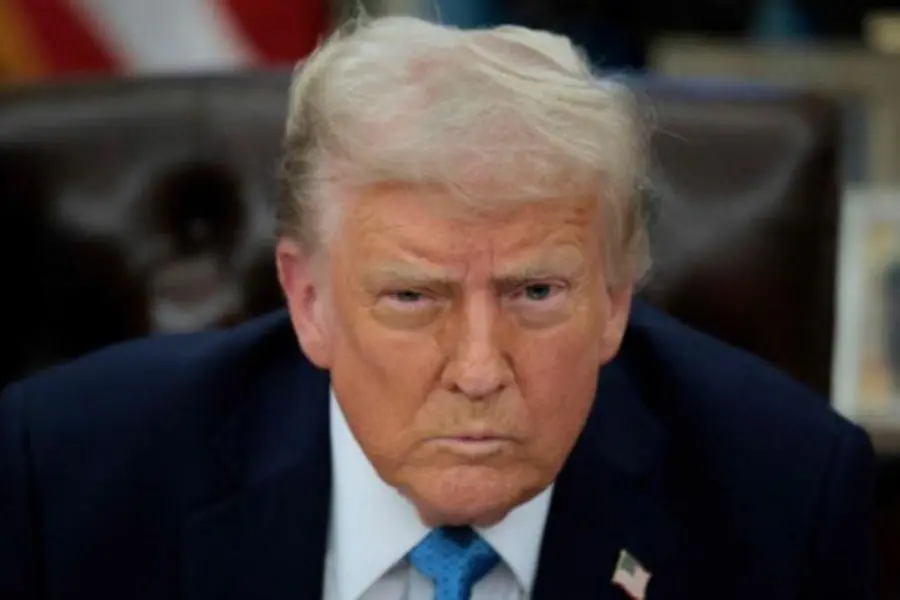
Boston: A federal judge in Boston said Friday he would take under advisement a request from 18 state attorneys general to block President Donald Trump’s executive order ending birthright citizenship for children of parents who are in the U.S. illegally.
U.S. District Judge Leo Sorokin was the third federal judge this week to hear arguments in lawsuits challenging the order. It was unclear when Sorokin, appointed by former President Barack Obama, would issue a decision, but it was not expected Friday.
The attorneys general, along with the cities of San Francisco and Washington, urged Sorokin to issue a preliminary injunction.
“Millions of Americans who were born to immigrant parents and hundreds of millions can trace their citizenship back to immigrant ancestors — ancestors who built our country and fueled our economy under the protections of the 14th Amendment of the United States Constitution,” said Massachusetts Attorney General Andrea Campbell, joined by attorneys general from Connecticut and New Jersey, ahead of the hearing. “The president cannot change the Constitution with a sharpie or a sham executive order.”
Two other federal judges have already blocked Trump’s order this week. A Maryland judge issued a nationwide pause in a lawsuit brought by immigrant-rights groups and expectant mothers, while a Seattle judge, ruling in a separate case, criticized the administration’s approach to the Constitution, saying Trump was attempting to change it via executive order.
Another challenge, brought by the American Civil Liberties Union, is set to go before a federal judge in New Hampshire on Monday.
Plaintiffs in the Boston case argue that birthright citizenship is “enshrined in the Constitution” and that Trump lacks the authority to issue the order, calling it a “flagrantly unlawful attempt to strip hundreds of thousands of American-born children of their citizenship based on their parentage.”
They also contend that the order would cost states critical funding needed for essential services, including foster care, health care for low-income children, and early interventions for infants, toddlers, and students with disabilities.
“This is a case about children born in the United States,” Shankar Duraiswamy, deputy solicitor general for New Jersey, told the court.
“The executive branch has no power to take away their constitutional rights to birthright citizenship because they believe it will disincentivize unlawful entry than they have the power to take away First Amendment rights, their due process rights or equal protection rights.”
Eric Hamilton, representing the Department of Justice, argued that the states challenging the order were “misreading” the 14th Amendment.
The Trump administration contends that children of noncitizens are not “subject to the jurisdiction” of the U.S. and therefore do not qualify for birthright citizenship.
Sorokin questioned the order’s potential effects, including whether it would apply retroactively and how impacted individuals would be identified.
At the center of the lawsuits is the 14th Amendment, ratified in 1868 after the Civil War and the Dred Scott Supreme Court decision, which ruled that Scott, an enslaved man, was not a citizen despite living in a state where slavery was outlawed.
Attorneys for the states argue that the amendment has been interpreted to grant birthright citizenship since its adoption, particularly in the 1898 Supreme Court case United States v. Wong Kim Ark. That decision held that the only exceptions to birthright citizenship were children of diplomats, enemies present in the U.S. during occupation, those born on foreign ships, and children of sovereign Native American tribes.
Published: 08 Feb 2025, 06:15 am IST
Related Topics
Disclaimer: Kindly avoid objectionable, derogatory, unlawful and lewd comments, while responding to reports. Such comments are punishable under cyber laws. Please keep away from personal attacks. The opinions expressed here are the personal opinions of readers and not that of Mathrubhumi.
