
Three Palestinians, including a seven-year-old girl, were killed in an Israeli airstrike in southern Gaza, according to Palestinian officials. Meanwhile, Israeli voters are expressing demands for peace and political change ahead of a closely contested election.
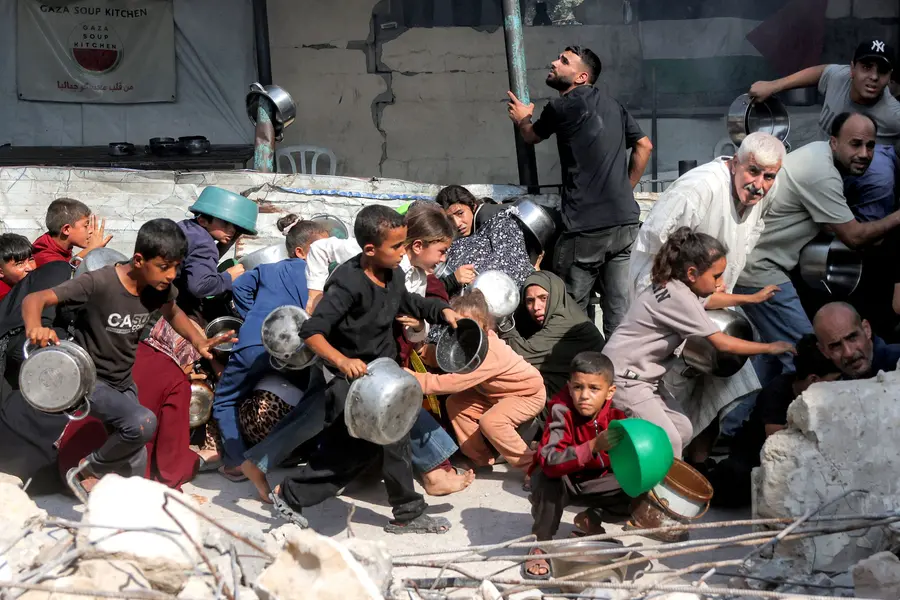
Jerusalem: An Israeli airstrike on a camp for displaced Palestinians in southern Gaza killed three people, including a seven-year-old girl, according to Palestinian medical sources and civil defence officials. Meanwhile, ahead of Israel's legislative elections, residents have voiced demands for peace, political change and national unity after years of conflict.
Three Palestinians, including a seven-year-old girl, were killed in an Israeli airstrike targeting a camp for displaced people in the Al-Mawasi area, west of Khan Yunis in southern Gaza, on Monday, October 26, according to Palestinian civil defence officials and medical sources.
Civil defence spokesman Mahmoud Bassal told AFP that the strike killed three people. Nasser Hospital in Khan Yunis confirmed the deaths and said several injured people, including a woman and a child, had been brought in for treatment.
The hospital identified the deceased as Hossam al-Zamli, Tamer Abu Sneima and Jouri al-Soufi. Gaza's education ministry said the girl was seven years old.
Israel's military told AFP that it was investigating reports of the strike.
Bassal also said Israeli fire and airstrikes had killed 11 people and wounded 50 across Gaza over the preceding 24 hours.
Military activity reported near Deir al-Balah
Separately, a security source in Gaza told AFP that Israeli tanks, military vehicles and a bulldozer advanced west of the so-called Yellow Line in eastern Deir al-Balah on Monday morning.
The reported movement coincided with heavy gunfire towards eastern and northern parts of the central Gaza city, where displaced families are living.
The Yellow Line was established under the ceasefire that took effect in October 2025 following US-brokered negotiations. It separates areas under Israeli control from areas under Hamas control.
According to figures cited by AFP from Gaza's health ministry, more than 1,500 people have been killed in Gaza since the ceasefire began.
The wider war began on October 7, 2023, when Hamas-led militants attacked southern Israel, killing 1,221 people, according to an AFP tally based on official Israeli figures. Israel subsequently launched a military campaign in Gaza that has killed more than 74,500 people, according to the territory's health ministry. The United Nations has considered the ministry's casualty figures generally reliable.
Israeli voters call for peace and political change
As Israel prepares for legislative elections, residents from different age groups have expressed frustration with prolonged conflict and called for changes in the country's political direction.
Speaking to ANI, first-time voter Nave said Israel needed agreements with other countries and Hamas to bring an end to years of fighting.
“My expectation from the government is that after three years of war, we need to get some agreements with the other countries and with Hamas in the Gaza Strip, and we need to get some peace and quiet,” he said.
Nave added that most of his friends supported a change in government, although some members of his family continued to back incumbent Prime Minister Benjamin Netanyahu.
Another resident, Gideon Ros, said the repeated violence had made it difficult for people to live peacefully.
“I don't like what is happening with Israel now. This time, all the time war, all the time killing, all the time from two sides, we need a little time to live in peace,” Ros told ANI.
Ido, another resident, said the war had affected everyday life and that people in his social circle had lost friends and acquaintances.
“We had like a really rough couple of years and me and my friends are really hoping for a change,” he said, adding that the elections were particularly important to younger voters.
Sharda, meanwhile, stressed the importance of national unity regardless of the election outcome. She also called for greater participation by women in political decision-making.
Netanyahu faces a competitive election
The election comes amid continuing regional tensions involving Iran and Hezbollah. Netanyahu has presented himself as the leader best equipped to address Israel's security challenges, with his relationship with US President Donald Trump forming part of his political narrative.
His coalition includes Likud, Finance Minister Bezalel Smotrich's Religious Zionism party and National Security Minister Itamar Ben-Gvir's Jewish Power party.
Among the competing political forces are Gadi Eisenkot, a former military chief who has positioned himself as a security-focused alternative; an alliance involving former prime ministers Naftali Bennett and Yair Lapid; and parties led by former defence minister Avigdor Lieberman and Yair Golan.
According to the Jerusalem Post, four election surveys completed on October 23 showed Eisenkot's Yashar party ahead of Netanyahu's Likud. However, neither of the two main political blocs was projected to secure a majority in the 120-member Knesset.
Israel follows a proportional representation system in which voters choose party lists. Parties must receive at least 3.25% of valid votes to qualify for parliamentary seats.
After the election, President Isaac Herzog is expected to assign a member of the Knesset the task of forming a government. The proposed government must then secure a vote of confidence in parliament. Israeli governments have historically been formed through coalitions.
Published: 26 Oct 2026, 03:09 pm IST
ABOUT THE AUTHOR

Disclaimer: Kindly avoid objectionable, derogatory, unlawful and lewd comments, while responding to reports. Such comments are punishable under cyber laws. Please keep away from personal attacks. The opinions expressed here are the personal opinions of readers and not that of Mathrubhumi.