
The demands come ahead of the September 24 Trump-Xi meeting, with lawmakers also pushing for a US-China agreement on AI safety standards.
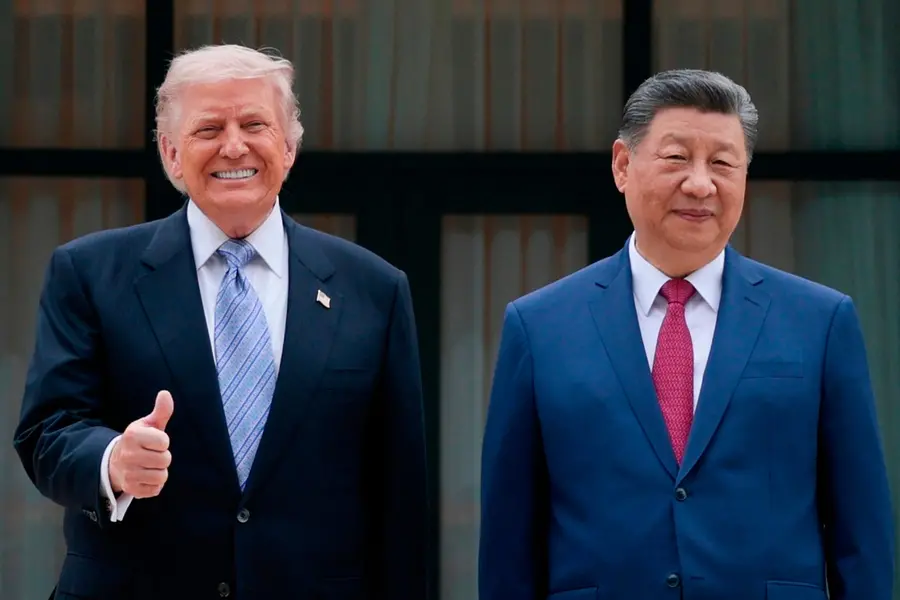
Washington DC: US lawmakers have urged President Donald Trump to press China for the release of Americans detained in the country and restrict Beijing’s access to advanced artificial intelligence chips ahead of his scheduled meeting with Chinese President Xi Jinping next week.
The demands came separately as lawmakers stepped up pressure on China ahead of the September 24 White House meeting between Trump and Xi.
Also Read

Also read | ‘Don’t kill Golden Goose!’ Trump slams fears of AI escaping human control, rejects calls for curbs
Lawmakers seek release of detained Americans
On September 17, Senators Edward Markey and Ted Budd introduced a bipartisan resolution condemning what they described as China’s repeated arbitrary or wrongful detention of American academics. Senators John Curtis and Adam Schiff also joined the measure.
A companion resolution in the House was led by Representatives Stephen Lynch and John Moolenaar. The lawmakers called for priority to be given to securing the safe return of Massachusetts academic Youlin Chen and US scholar Min Zin.
“President Trump must use his upcoming meeting with President Xi to demand that China release every unlawfully detained American,” Lynch said.
The Senate resolution urges the secretary of state to use available diplomatic tools to seek their release. It also calls for raising the US travel advisory for China from Level 2 to Level 3, which advises Americans to reconsider travel.
The measure further proposes adding a wrongful-detention indicator to the advisory and reviewing the criteria for designating countries as state sponsors of wrongful detention.
According to the resolution, Chen, a US citizen who conducted seismological research with Chinese academics, was arrested on November 5, 2024. It says he has been held for more than 600 days without trial or family access on espionage charges that the resolution's sponsors describe as baseless. It also says he was denied a lawyer for the first 434 days.
Min Zin, a US citizen who heads a Myanmar-focused policy think tank, was detained at Kunming Changshui International Airport on June 3, 2026, according to the resolution. He had travelled to Yunnan province after being invited to an academic event at a university there.
Schumer calls for curbs on advanced AI chips
Separately, Senate Democratic Leader Chuck Schumer urged Trump to restrict China's access to America's most advanced AI chips and chipmaking equipment.
“Before Trump meets with Xi Jinping next week, he needs to draw a line in the sand and say that blocking the Chinese Communist Party’s access to our cutting-edge AI technology is non-negotiable,” Schumer said on the Senate floor.
Schumer said a bipartisan group of lawmakers had introduced legislation as part of the National Defense Authorization Act to restrict advanced chip sales. He also accused Trump of obstructing those efforts.
He argued that technology-transfer restrictions could be combined with domestic safeguards to address AI risks, saying maintaining US leadership and limiting those risks were compatible goals.
Also read | India faces 100% tariff threat as US passes Russia bill—but Trump holds the final card; know why
Hearing planned on US-China AI safety
Meanwhile, Representative Ro Khanna announced a September 23 hearing on a proposed US-China AI safety agreement, a day before the Trump-Xi meeting.
Khanna, the senior Democrat on the House Select Committee on China, said the US needed an agreement with Beijing on basic AI inspections and safety standards.
“We urgently need an agreement with China on basic inspections and safety standards,” he said.
The virtual hearing will examine risks including the potential loss of human control over AI systems and systems acting against human intentions. Nobel laureate Geoffrey Hinton and retired US Air Force Lt Gen Jack Shanahan are among the scheduled witnesses.
Khanna said OpenAI and Anthropic had not committed to testify despite repeated requests. He also wrote to Chinese AI companies Moonshot AI, Alibaba and DeepSeek seeking commitments to a binding agreement with US AI laboratories.
His office said any such agreement would need to be enforceable and verifiable.
The statements supplied by the lawmakers did not include responses from the White House, the Chinese government or the AI companies.
(With IANS inputs)
Published: 18 Sept 2026, 08:39 am IST
ABOUT THE AUTHOR
Related Topics
Disclaimer: Kindly avoid objectionable, derogatory, unlawful and lewd comments, while responding to reports. Such comments are punishable under cyber laws. Please keep away from personal attacks. The opinions expressed here are the personal opinions of readers and not that of Mathrubhumi.