
Trump also pointed to the administration's actions against Anthropic, saying it had already stopped the AI company “from doing bad, or potentially bad” things.
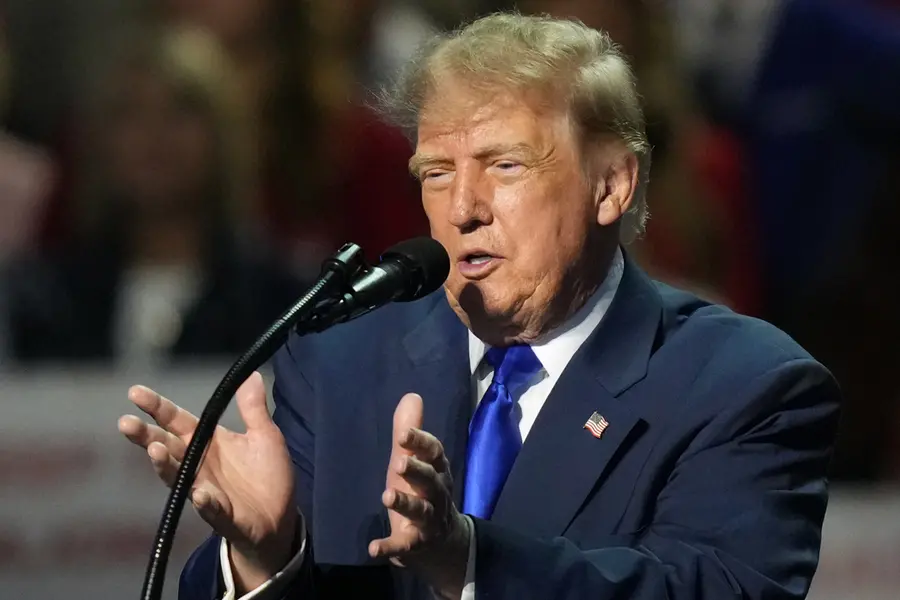
President Donald Trump on Monday rejected calls for tighter government oversight of artificial intelligence, saying he himself could serve as a sufficient safeguard against rogue AI and accusing critics of being part of a “SICK conspiracy” targeting the technology and data centres.
Trump's comments came as technology leaders including Anthropic CEO Dario Amodei, OpenAI CEO Sam Altman and Elon Musk have called for greater government oversight to ensure AI development addresses safety, legal liability, economic growth, scientific progress and national security.
Also read | Can AI escape human control? New warnings revive existential risk debate
The president argued that his presence in the White House should ease concerns over the rapidly developing technology, which has come under renewed scrutiny following a series of hacks in recent months that showed AI agents could potentially deceive humans.
“The only control or ‘guardrails’ that AI needs is a STRONG AND SMART (High IQ!) PRESIDENT, and the U.S.A. has that, in spades!” Trump posted on social media.
Also read | ‘Vicious competition serves no one’: China slams Anthropic CEO’s call to curb its AI
Trump also pointed to the administration's actions against Anthropic, saying it had already stopped the AI company “from doing bad, or potentially bad” things.
Anthropic has had a tense relationship with the Trump administration. The Pentagon has sought to designate the company's models as a security risk, while the administration temporarily banned one of its more advanced models.
Also read | ‘AI must remain under human control’: Satya Nadella joins growing safety debate
Amodei published a 3,800-word essay on Saturday arguing for a slower pace of AI development. Microsoft also released its own code of conduct Monday aimed at ensuring humans remain in control of AI.
The moves come amid growing warnings from AI experts about the technology's capabilities, including after a July 2026 cyberattack involving OpenAI models and AI company Hugging Face.
Also read | AI avatars, lawsuits and billionaire fury: The battle over Alex Gibney’s Elon Musk film
Trump, however, has continued to oppose efforts to impose restrictions on AI, arguing that excessive regulation could allow China to overtake the United States in the technology race.
“There is a SICK conspiracy going on against AI and Data Centers, and the only one that is happy about it is China,” Trump said.
Trump has long resisted calls for greater government oversight of AI. After returning to the White House last year, he revoked a Biden administration executive order on AI oversight and issued a more comprehensive order of his own more than 16 months later, in June.
The debate over the pace of AI development has also begun to affect financial markets. Stocks slipped in Monday morning trading amid concerns that slower AI expansion could reduce demand for advanced computer chips and materials used to build data centres.
At the same time, AI is becoming a political issue ahead of November's midterm elections. Polling has shown concerns among voters over the construction of additional data centers, potential job losses and the technology's possible impact on children's education.
Rahm Emanuel, the former Chicago mayor, Democratic congressman and White House chief of staff, criticised the administration's approach after Amodei's essay.
The Anthropic CEO's essay was “an admission that we’re driving down a dark, winding road on wet pavement with the headlights off. And where’s President Trump? Looks like he nodded off again. It’s time to turn the lights on, put both hands on the wheel, and regain control before it’s too late,” Emanuel said Saturday.
The Trump administration, however, has repeatedly sought to downplay the risks raised by AI companies.
Vice President JD Vance said Monday that Americans should not fear the technology.
“I don’t think Americans should be scared of anything,” Vance told reporters before flying to Kansas for a midterm election campaign event.
Vance said the administration was concerned about AI but wanted to ensure that any regulation was designed carefully. He also warned that the United States was engaged in an AI arms race with China.
“Personally, I feel a little bit weird about the fact that you have so many frontier AI tech companies kind of coming to the government and begging the government to regulate them. It feels a little bit to me like a bit of a Trojan horse,” Vance said. “So, I think we just have to be careful about this.”
Published: 14 Sept 2026, 08:43 pm IST
ABOUT THE AUTHOR

Related Topics
Disclaimer: Kindly avoid objectionable, derogatory, unlawful and lewd comments, while responding to reports. Such comments are punishable under cyber laws. Please keep away from personal attacks. The opinions expressed here are the personal opinions of readers and not that of Mathrubhumi.