
Despite regional solidarity from Turkey and Pakistan, Riyadh has not requested military assistance. Meanwhile, the U.S. remains reluctant to intervene directly.
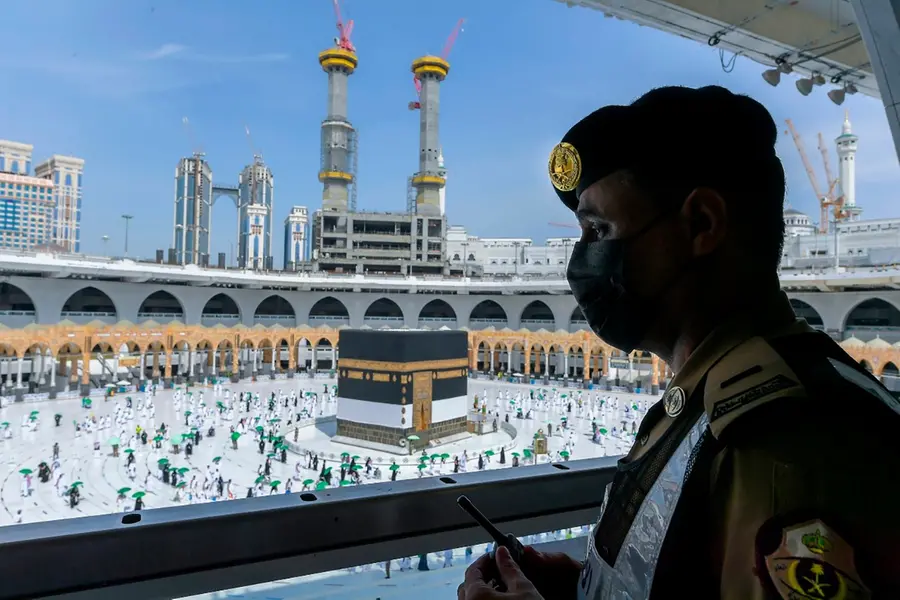
Cairo: Saudi Arabia accused Yemen's Iran-backed Houthi rebels of attempting to attack the holy city of Mecca, drawing widespread regional condemnation on Wednesday but no immediate military intervention, as the kingdom designated the site a "red line" amidst expanding regional conflict.
As the world's primary crude exporter faces escalating attacks from Houthi forces, Riyadh is seeking secure export routes for its oil alongside international military aid, though clear resolutions remain elusive.
A major Saudi pipeline has been forced offline, reportedly for weeks, following strikes attributed to Iranian-aligned militias in Iraq. Concurrently, Houthi forces have targeted domestic infrastructure and commercial shipping across the Red Sea, where rebel troops recently seized several islands in the Bab el-Mandeb Strait. Iranian forces also continue to target maritime traffic in the Strait of Hormuz, maintaining global crude prices above USD 100 per barrel.
Houthi representatives denied launching unmanned aerial vehicles toward Mecca, located roughly 1,100 kilometres (680 miles) from the Yemeni border. Saudi officials stated air defence systems intercepted and destroyed a drone before it entered the airspace surrounding the city.
Turkey and Pakistan Report No Request for Military Assistance
The recent escalation serves as an initial test for a tripartite defence framework established between Saudi Arabia, NATO member Turkey, and Pakistan. However, Turkish and Pakistani officials told The Associated Press that Riyadh has not formally requested military intervention to counter the Houthi offensive.
A Turkish official noted that processes to formalise the alliance must be completed before the agreement becomes fully operational. The sources spoke on condition of anonymity as they were not authorised to comment publicly.
Addressing the incident, Pakistani Prime Minister Shehbaz Sharif stated that his nation stands "unwaveringly, shoulder to shoulder" with Saudi Arabia. Turkey's foreign ministry expressed solidarity, stating through state-run Anadolu Agency that no country could "remain indifferent."
The Organisation of Islamic Cooperation, representing more than 57 Muslim nations, denounced the attempted strike, characterising it as a violation of the "sanctity of holy sites."
According to Col Turki al-Maliki, spokesperson for the Saudi-led military coalition, the incident marks the second documented attempt by Houthi forces against Mecca following a ballistic missile launch targeting the city in 2017.
Houthis Claim Downed Fighter Jet
Later Wednesday, Houthi military officials claimed without providing immediate evidence that rebel forces shot down an F-15 fighter aircraft belonging to the Saudi-led coalition over Yemen's central Marib province.
Houthi military spokesperson Brig Gen Yahya Saree did not specify when the engagement occurred, and the claim could not be independently verified. Spokespersons for the Saudi government and the coalition did not immediately respond to requests for comment.
United States Refrains From Direct Military Involvement
Despite billions of dollars in defence sales and commitments to assist in Saudi national defence, senior U.S. officials signalled a reluctance to intervene directly in the escalating combat along the Yemeni border.
"The Houthis called us, and they don't want to fight with us," U.S. President Donald Trump said Saturday, observing that the rebel group appears focused primarily on Saudi targets.
U.S. Vice President JD Vance stated Monday that Washington remains in "constant contact" with Saudi authorities and has engaged in "direct conversations with the Houthis themselves," describing the security environment as "a very fluid and dynamic thing."
On the ground, forces affiliated with Yemen's internationally recognised government stated they are regrouping to mount a counter-offensive following recent retreats. However, those units comprise various armed factions with differing strategic objectives.
The International Organisation for Migration reported that the number of displaced civilians in Yemen has surged past 100,000 people as concerns mount over a return to full-scale civil war.
Iranian Foreign Minister Meets Counterpart in Beijing
While Saudi Arabia evaluates diplomatic and military options, Iranian Foreign Minister Abbas Araghchi travelled to Beijing to consult with officials from China, Tehran's largest energy customer.
Chinese Foreign Minister Wang Yi urged both the U.S. and Iran to exercise restraint and work toward reopening the Strait of Hormuz, expressing concern over the expansion of hostilities into Yemen and the Red Sea, according to a release from China's Foreign Ministry.
Following the meetings, Araghchi stated that Tehran seeks "the restoration of calm to the region and friendly and peaceful relations with our neighbors," adding that "in this regard we have begun dialogue with the countries of the region."
China has maintained a non-combatant stance, though President Xi Jinping renewed offers to assist in diplomatic mediation during the BRICS summit in New Delhi over the weekend.
Commercial oil transit through the Strait of Hormuz has partially recovered, with tankers utilising routes adjacent to Oman under monitoring from U.S. forces. Daily flow rates are estimated between 5 million and 7 million barrels per day, down from more than half the volume recorded prior to the outbreak of hostilities involving U.S. and Israeli strikes on Iranian facilities on 28 February.
AP
Published: 16 Sept 2026, 07:48 pm IST
ABOUT THE AUTHOR

Related Topics
Disclaimer: Kindly avoid objectionable, derogatory, unlawful and lewd comments, while responding to reports. Such comments are punishable under cyber laws. Please keep away from personal attacks. The opinions expressed here are the personal opinions of readers and not that of Mathrubhumi.