
A submarine cable fault off Pakistan's coast has disrupted internet services weeks after reports that Iran had considered targeting undersea cables in the Gulf. Is the timing a coincidence, and how vulnerable is the region's internet infrastructure?
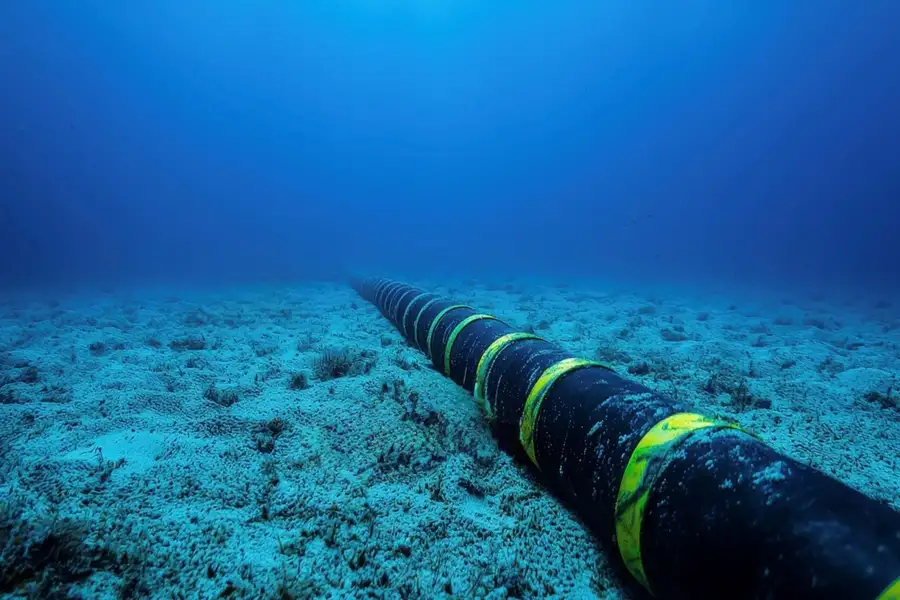
A fault in the SEA-ME-WE 5 (SMW5) international submarine cable system, reported about 11 kilometres off Pakistan’s coast, has affected internet connectivity in the country. The incident has attracted attention beyond the immediate disruption because it comes weeks after reports that Iran had considered targeting undersea communications cables in the Gulf during a potential future conflict.
The Pakistan Telecommunication Authority (PTA) said on Wednesday that the fault could cause intermittent connectivity and a decline in service quality for some internet users. It confirmed that Transworld Associates (TWA) was coordinating with the SMW5 consortium to identify the cause and determine the estimated time for restoration.
The authority said internet traffic was being rerouted through alternative international links to minimise the impact and maintain services. It added that it was coordinating with stakeholders and monitoring the situation, but did not announce a restoration timeline.
Internet monitoring organisation NetBlocks also reported a decline in connectivity in Pakistan, saying the incident was consistent with a fault in the SMW5 system. Cloudflare Radar reportedly recorded a fall of as much as 36% in HTTP data traffic following reports of degraded connectivity. That figure refers to measured HTTP traffic, not a 36% loss of internet access across the country.
Why Iran's reported plans have brought the incident into focus
On October 23, Reuters reported that Iran had drawn up plans to target undersea communications cables in the Gulf if the United States and Israel launched renewed military strikes against it. The report was based on information from two senior Iranian security officials who spoke on condition of anonymity.
One official said Iran could also seek to prevent repairs to damaged cables, prolonging disruption to communications and internet connections. The officials did not disclose detailed operational plans or specify exactly where attacks might take place.
Separately, Yadollah Javani, deputy head of political affairs for Iran’s Islamic Revolutionary Guard Corps, had warned that seven major internet cables beneath the Strait of Hormuz could be targeted if Iranian infrastructure came under attack.
The reports highlighted how submarine cables could become part of the strategic infrastructure at risk during a regional conflict. These cables carry international data traffic and support services including financial transactions, cloud computing, business communications and internet access.
The timing of Pakistan’s cable fault has therefore prompted questions about whether the region’s undersea networks face a growing security risk. However, there is no evidence that the latest SMW5 fault was caused by an attack or is connected to Iran’s reported plans. The PTA has said the cause is still being investigated.
Are the two developments geographically connected?
The location of the fault and the area mentioned in Iran’s reported threat need to be distinguished.
The current fault was reported about 11 kilometres from Pakistan’s coast, near the Gulf of Oman. The Iranian warning specifically referred to seven major internet cables beneath the Strait of Hormuz, the narrow passage connecting the Persian Gulf with the Gulf of Oman.
Both locations form part of the wider regional maritime and communications geography, but they are not the same. The available information does not establish that the SMW5 cable was among the seven cables mentioned by the Iranian official. Nor does it establish that the fault occurred as a result of deliberate interference.
There is also an important distinction between the regional and global consequences of a cable disruption. Undersea cables carry around 99% of global internet traffic, according to the International Telecommunication Union. However, research cited by Reuters indicates that less than 1% of international bandwidth passes through the Strait of Hormuz. Multiple cable failures could seriously affect regional connectivity without necessarily bringing down the global internet.
Why a single cable fault can affect internet services
Submarine cables are the physical connections through which large volumes of international data travel. They support everything from video calls and online banking to cloud platforms, international business operations and digital services.
The SEA-ME-WE 5 system is part of the international network connecting Asia with Europe, with Pakistan among the countries served through its cable infrastructure.
When a cable develops a fault, operators can redirect traffic through other available connections. This is what the PTA says is happening in Pakistan. However, alternative routes have finite capacity. If traffic is shifted onto them, users may experience slower speeds, intermittent connectivity and reduced service quality.
The problem can become more serious when several cables are damaged in the same region. In that situation, the available alternative routes may struggle to handle the additional traffic.
Why cable repairs could become a security concern
The physical vulnerability of submarine cables is not limited to military threats. Accidental damage, equipment failures and other incidents can also disrupt services.
However, repairing a cable is a specialised operation. Repair vessels must locate the damaged section, access it, recover the cable and carry out the necessary work. In areas affected by military tensions, access restrictions, security risks and insurance costs could delay these operations.
That is why the reported Iranian suggestion of preventing repairs attracted attention. It points to a potential strategy of prolonging disruption rather than simply damaging infrastructure. Reuters reported that the officials who described the plans had provided limited operational details, so the extent of any preparations remains unclear.
Pakistan has experienced a similar disruption before
The latest incident is also not the first recent fault involving the SMW5 system. On July 1, a fault in the same cable affected internet connectivity in Pakistan. Services were restored on July 3, according to local reporting.
The recurrence raises questions about the resilience of Pakistan’s international connectivity and the capacity of alternative routes to handle traffic when a major cable is unavailable. It also highlights the importance of transparent updates from the regulator and cable operators about the cause of faults and restoration timelines.
Is this a warning about the security of the internet beneath the Gulf?
The most important issue is not whether Iran was involved in the latest fault. There is currently no evidence to support that conclusion. The larger question is how vulnerable the region’s digital infrastructure could become if submarine cables were deliberately targeted during a military confrontation.
Three issues deserve attention.
1. The investigation must establish what happened
The PTA has confirmed the location of the fault and the ongoing investigation, but has not identified its cause. Until the SMW5 consortium completes its assessment, the incident should be treated as a reported cable fault rather than an attack.
2. Multiple cable failures could have wider consequences
A single damaged cable can often be managed by rerouting traffic. Several simultaneous failures could reduce available capacity and make it harder to maintain normal internet services. The effects would depend on which routes were affected and how much spare capacity remained.
3. Digital infrastructure is increasingly part of regional security
The reported Iranian plans demonstrate that undersea communications infrastructure has entered discussions about potential targets in a future conflict. The cables are not just telecommunications assets; they support financial systems, technology companies, government services and international commerce.
For Pakistan, the immediate concern is restoring normal connectivity. The wider concern is whether the country and its regional partners have sufficient alternative routes and contingency arrangements to withstand repeated disruptions.
The distinction remains crucial: Iran's reported threat and Pakistan's latest cable fault have emerged within weeks of each other, but timing alone does not establish a connection. The cause of the SMW5 fault remains unknown. What the incident does demonstrate is how much modern economies depend on infrastructure that is largely hidden beneath the sea.
Published: 19 Nov 2026, 10:38 am IST


ABOUT THE AUTHOR

Disclaimer: Kindly avoid objectionable, derogatory, unlawful and lewd comments, while responding to reports. Such comments are punishable under cyber laws. Please keep away from personal attacks. The opinions expressed here are the personal opinions of readers and not that of Mathrubhumi.