
Trump says the US will leave Iran ‘pretty quickly’ but may conduct targeted strikes. He also considers a NATO withdrawal as ceasefire talks quietly advance.
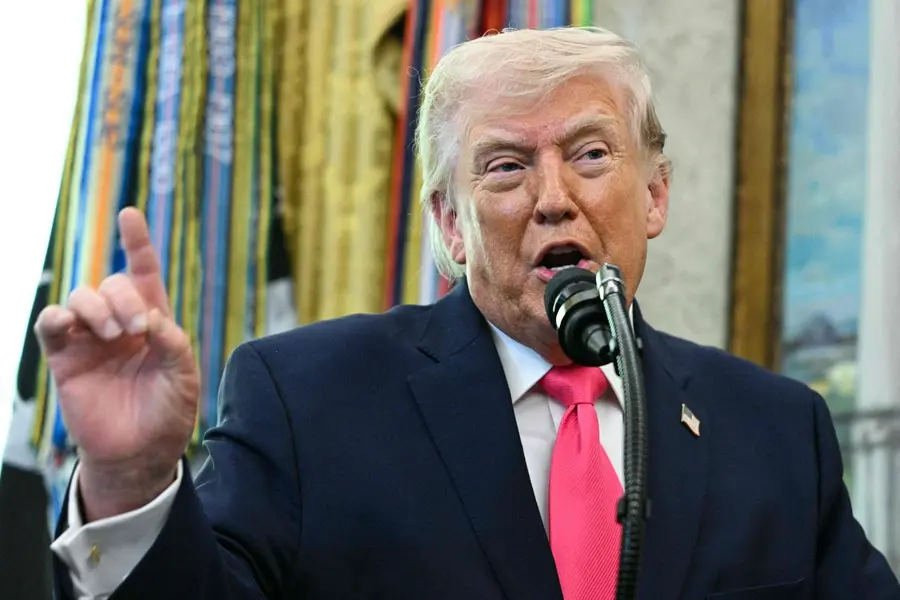
President Donald Trump said the United States is preparing to wind down its military campaign in Iran, signalling that American forces would withdraw “pretty quickly” but could return for targeted operations if required. His comments came just hours before a primetime national address on Wednesday outlining the administration’s next steps in the conflict, now in its fifth week.
Trump, speaking to Reuters in a telephone interview earlier in the day, said he intended to use the evening speech to voice frustration at what he sees as NATO’s lack of support for Washington’s objectives in Iran. The president has long criticised the alliance and told Reuters he was “absolutely” considering a US withdrawal from NATO.
War pressures
The conflict has contributed to soaring energy prices and rising political pressure at home, with Americans increasingly eager for an end to US involvement.
Despite repeatedly offering varying timelines in recent days, at one point suggesting the war could be wrapped up within two to three weeks, Trump declined to specify a timeframe during Wednesday’s interview, telling Reuters: “I can't tell you exactly … we're going to be out pretty quickly.”
He added that once US forces withdraw, “we'll come back to do spot hits” on Iranian targets when necessary.
Changing leadership landscape in Iran
Trump said the death of Iran’s Supreme Leader Ayatollah Ali Khamenei in early airstrikes, along with other casualties among senior officials, amounted to what he called a de facto regime change.
Mojtaba Khamenei has taken over as Iran’s new supreme leader, though US authorities believe he may be injured and “likely disfigured.” The country’s president and foreign minister remain the same.
“I didn't need regime change, but we got it because of the casualties of war. We got it,” Trump said. “So we have regime change and the big thing we have is they're not going to have a nuclear weapon … Nor do they want one.”
The White House has said back-channel contacts with Iran are ongoing, a claim Tehran denies. A source familiar with the discussions said Vice President JD Vance communicated through intermediaries in Pakistan as recently as Tuesday, signalling that Trump could accept a ceasefire under certain conditions.
Nuclear concerns and the fate of enriched uranium
Preventing Iran from obtaining a nuclear weapon was one of the key justifications Trump gave for launching the campaign.
International Atomic Energy Agency figures estimated that Iran had accumulated 440.9 kg of uranium enriched up to 60%, material which, if further enriched, could yield enough explosive material for roughly 10 nuclear weapons. Much of it was believed to be stored in a heavily fortified tunnel complex in Isfahan.
Despite this, Trump dismissed concerns about the remaining stockpile, saying: “That's so far underground, I don't care about that. We'll always be watching it by satellite.” He asserted that Iran was now “incapable” of developing a nuclear weapon.
Iran has consistently denied seeking a nuclear bomb, insisting its programme is peaceful.
Ceasefire prospects and tensions in the Strait of Hormuz
Earlier on Wednesday, Trump claimed Iran’s president, whom he characterised as “much less radicalised” and “far more intelligent” than previous leaders, wanted a ceasefire. He added that a truce would only be possible when the Strait of Hormuz was “open, free, clear.”
Iranian Foreign Minister Abbas Araghchi reiterated Tehran’s stance that the strait lies within Iranian and Omani territorial waters and would remain closed to vessels from countries at war with Iran.
“Only for the ships of those who are at war with us, this strait is closed,” he told Press TV. He added that several nations were negotiating passage while others avoided the waterway due to high insurance and security risks.
Speaking to Al Jazeera, Araghchi said: “You cannot speak to the people of Iran in the language of threats and deadlines. We do not set any deadline for defending ourselves.”
Published: 01 Apr 2026, 10:19 pm IST
Related Topics
Disclaimer: Kindly avoid objectionable, derogatory, unlawful and lewd comments, while responding to reports. Such comments are punishable under cyber laws. Please keep away from personal attacks. The opinions expressed here are the personal opinions of readers and not that of Mathrubhumi.
