
Calling it “a big day for patients,” US President Donald Trump signed an executive order reclassifying medical marijuana under federal law, easing restrictions to expand research and improve access for those suffering from chronic and severe illnesses.
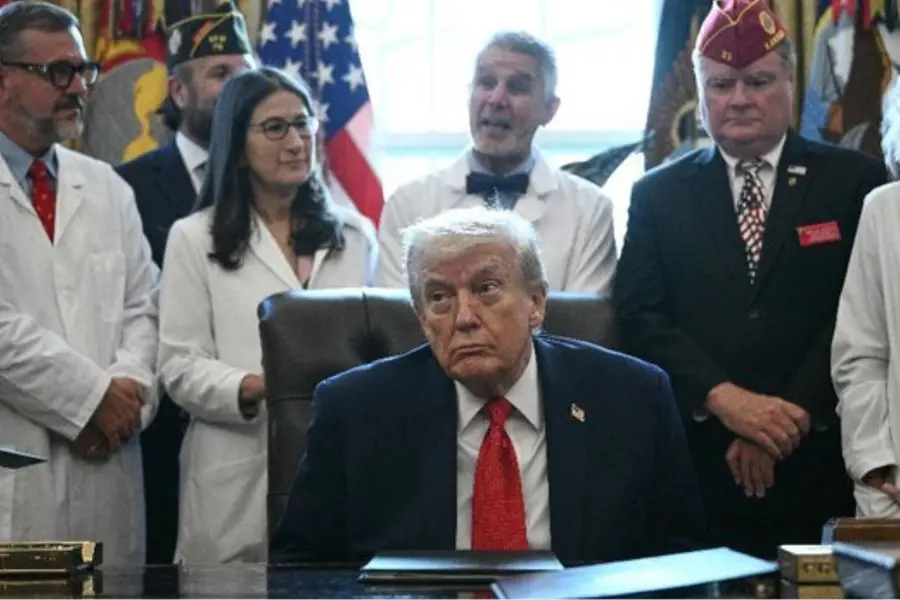
US President Donald Trump on Thursday signed an executive order directing the federal government to ease restrictions on medical marijuana by reclassifying it under federal drug laws, a move he said would expand scientific research and improve access for patients suffering from serious and chronic illnesses.
The order shifts marijuana from Schedule I — the most restrictive category under the Controlled Substances Act — to Schedule III, placing it alongside drugs recognised to have medical value but still subject to regulation.
Calling it “a big day for many reasons,” Trump said the decision followed years of appeals from patients, veterans, and healthcare professionals.
“For decades, this action has been requested by American patients suffering from extreme pain, incurable diseases, aggressive cancers, seizure disorders, neurological problems, and more,” he said at a White House event.
Trump was careful to stress that the order does not legalise recreational marijuana. “This is not the legalization of marijuana in any way, shape or form,” he said, warning that misuse of controlled substances remains dangerous.
According to the President, reclassification will significantly reduce barriers to federally approved research into marijuana’s medical benefits and risks, including its potential role as an alternative to opioid-based pain management. “This reclassification order will make it far easier to conduct marijuana-related medical research,” Trump said.
Several cabinet members and senior health officials attended the signing ceremony, including Health and Human Services Secretary Robert F Kennedy Jr, Medicare and Medicaid Services Administrator Mehmet Oz, and researchers from the National Institutes of Health, Dana-Farber Cancer Institute, and Duke University.
Kennedy described the move as a long-overdue correction. “This will finally allow us to study this issue and answer these questions for the American people,” he said, noting that earlier administrations had promised similar reforms but failed to act.
Oz said the change could have immediate benefits for seniors and veterans, adding that Medicare may begin covering certain hemp-derived cannabidiol (CBD) products as early as next year, if recommended by doctors. “At Medicare, we cover 68 million Americans,” he said, calling the policy shift a potential expansion of treatment options at no additional cost to patients.
Medical researchers and veterans’ groups welcomed the order, calling it a breakthrough for clinical trials and evidence-based care. However, Trump acknowledged concerns that easing restrictions could influence youth drug use, insisting the focus remains firmly on research — not legalization.
The order comes amid a broader national debate, with over 40 US states already permitting medical marijuana in some form despite long-standing federal restrictions.
Published: 19 Dec 2025, 07:39 am IST
Related Topics
Disclaimer: Kindly avoid objectionable, derogatory, unlawful and lewd comments, while responding to reports. Such comments are punishable under cyber laws. Please keep away from personal attacks. The opinions expressed here are the personal opinions of readers and not that of Mathrubhumi.
