
Trump slams Canada`s rejection of the `Golden Dome` missile defense over Greenland, citing growing China trade ties. Discover the escalating US-Canada tensions and potential global implications. Click to learn more!
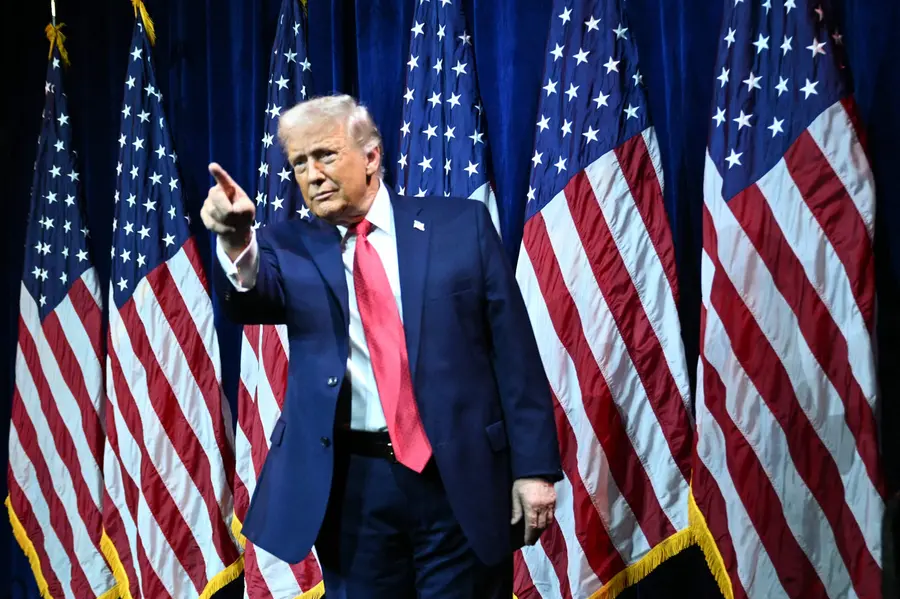
Washington/Srinagar: US President Donald Trump criticised Canada for rejecting his proposed “Golden Dome” missile defence system over Greenland, warning that Beijing could “eat them up” within a year as Ottawa strengthens trade ties with China.
Trump posted on Truth Social, saying: “Canada is against The Golden Dome being built over Greenland, even though The Golden Dome would protect Canada. Instead, they voted in favour of doing business with China, who will 'eat them up' within the first year!”
The US President’s comments follow rising tensions between Washington and Ottawa after Canadian Prime Minister Mark Carney spoke at the World Economic Forum (WEF) in Davos earlier this week.
Trump: US provides security, Canada should be grateful
During his WEF address, Trump criticised Carney, saying Canada should appreciate the “freebies” it receives from the US, including security protections.
"Canada gets a lot of freebies from us, by the way. They should also be grateful, but they're not. I saw your Prime Minister yesterday; he wasn't so grateful," Trump said. "Canada lives because of the United States. Remember that, Mark, the next time you make your statements."
Trump also highlighted that his Golden Dome missile defence system would extend protection to Canada, framing the project as a crucial part of US-backed northern security.
Canada strengthens trade ties with China
On January 17, Canadian Prime Minister Mark Carney announced a new trade agreement with China, aimed at opening markets for Canadian businesses and workers. Carney wrote on X: "We've secured a new trade agreement with China -- unlocking more than $7 billion in export markets for Canadian workers and businesses."
The deal includes:
- Cutting Canada’s 100% tariff on Chinese electric vehicles in exchange for lower tariffs on Canadian farm products
- China reducing tariffs on canola seeds from 84% to about 15%
- An initial annual cap of 49,000 Chinese EVs, rising to 70,000 over five years
Carney emphasised that China is a more predictable trade partner than the US. "Our relationship has progressed in recent months with China. It is more predictable and you see results coming from that," he said, according to CBS News.
Canada has been affected by US tariffs, including a 50% levy on imported metals and 25% on non-US automobiles. While tensions eased after Trump’s meeting with Xi Jinping, some tariffs remain in place until November 10, 2026.
Published: 24 Jan 2026, 10:33 am IST
Disclaimer: Kindly avoid objectionable, derogatory, unlawful and lewd comments, while responding to reports. Such comments are punishable under cyber laws. Please keep away from personal attacks. The opinions expressed here are the personal opinions of readers and not that of Mathrubhumi.
