
The global economic system, built on trade and shared rules for 30 years, is breaking apart
Two hundred million years ago, the supercontinent Pangaea began to crack. The process was slow, almost invisible at first, but once it started, it could not be reversed. Today, something similar is unfolding – not to landmasses, but to the global order that shaped the world for the past three decades.
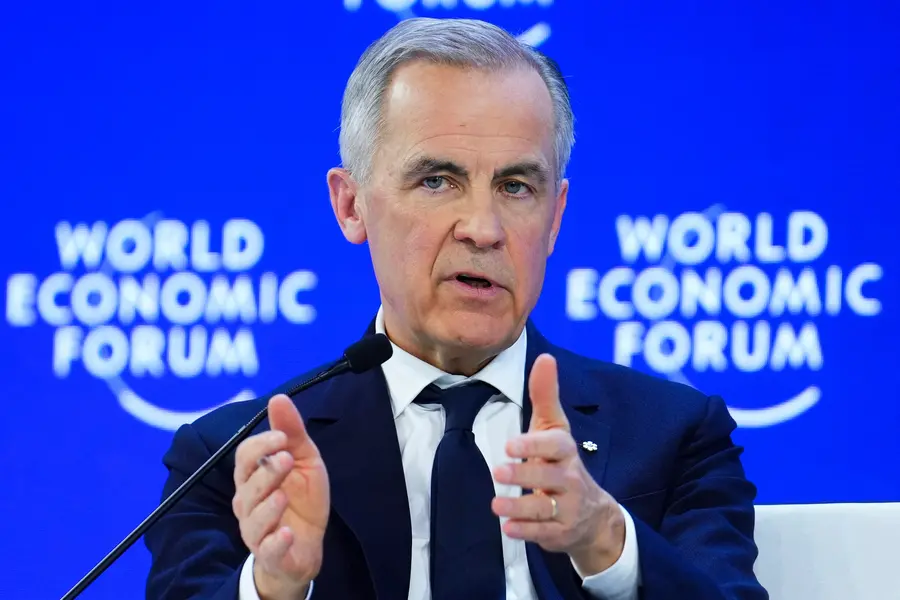
Mark Carney, Canada’s former central banker and now prime minister, put it bluntly at the World Economic Forum in Davos, warning that the world is living through “a rupture, not a transition”. The assumptions that underpinned global trade and stability, he said, no longer hold.
Also Read

The warning is timely. The integrated system that emerged after the Cold War – built on open trade, interlinked economies and shared rules – is breaking apart. For roughly 30 years after 1991, the world moved towards what might be called an economic Pangaea.
Goods were produced wherever it was cheapest and most efficient. China became the factory floor. India emerged as the software backbone. Southeast Asia carved out manufacturing niches. Borders still existed on maps, but for business they mattered less and less.
This system delivered obvious gains. Products became cheaper. Growth accelerated. Hundreds of millions were lifted out of poverty. Entire nations transformed themselves by plugging into global supply chains. Yet its most important contribution went largely unnoticed because it worked quietly in the background.
Economic integration acted as a restraint
When the world was genuinely interconnected, isolation carried real consequences. Sanctions mattered because there were no easy alternatives. Countries that crossed certain lines faced exclusion from the only economic system that mattered. Even authoritarian regimes had to calculate carefully.
The system was deeply flawed. Rules were applied selectively. Ordinary citizens often bore the cost of economic sanctions against dictators. China wielded market access as leverage to silence criticism and reshape global norms to suit its interests. Yet, for all its contradictions, this interconnected order imposed limits. It restrained recklessness in ways diplomacy and international law often failed to do.
That restraint is now eroding
The Covid-19 pandemic exposed how fragile hyper-efficient supply chains had become. Factory shutdowns in one country froze industries across continents. Governments realised that efficiency had come at the cost of resilience.
The response has been swift. Countries are rebuilding domestic manufacturing despite higher costs. The United States is investing heavily in semiconductor production. Japan is doubling down on robotics. India wants to make more of what it consumes. Nations are scrambling to secure energy, food and critical minerals.
The guiding question has changed. It is no longer “where is it cheapest to produce?” but “where is it safest?”
Trade itself then became a weapon, a trend that accelerated after the return of Donald Trump to the White House. Tariffs, export controls and financial pressure were deployed with growing unpredictability. The very architecture meant to stabilise global commerce began to fracture.
As supply chains shrink and regional blocs replace global networks, the deeper danger is not merely higher prices or inefficiency. It is the loss of constraint. In a fractured world, sanctions lose their bite. Countries facing punishment can pivot to alternative partners. Isolation becomes partial, manageable, sometimes symbolic.
For India, the consequences of this fracture are no longer abstract. As the United States and other advanced economies push for self-sufficiency – and as artificial intelligence is deployed to cut costs – long-standing assumptions about outsourcing and IT-led job security are being quietly rewritten. Economic shocks that originate far beyond India’s borders are now travelling faster and landing closer to home.
None of this means the old order was ideal, or that a return to it is possible. That world is gone. What replaces it remains uncertain.
China is asserting itself across technology, trade and geopolitics. Russia shows little hesitation in breaking international rules. Middle powers are pursuing strategic autonomy. Institutions meant to manage disputes – from the World Trade Organization to climate frameworks – are weakened or paralysed.
We may be entering an era where power speaks louder than rules, where restraint weakens, and where conflict becomes easier to sustain – not because diplomacy failed, but because the economic architecture that once imposed consequences no longer holds.
The world’s economic continents are drifting apart once more, and a great split is underway. The only question is whether we are prepared for the new world order it is creating.
Published: 24 Jan 2026, 10:19 am IST
Related Topics
Disclaimer: Kindly avoid objectionable, derogatory, unlawful and lewd comments, while responding to reports. Such comments are punishable under cyber laws. Please keep away from personal attacks. The opinions expressed here are the personal opinions of readers and not that of Mathrubhumi.