
The delivery of the advanced aircraft is expected to be one of several major agreements unveiled during the visit
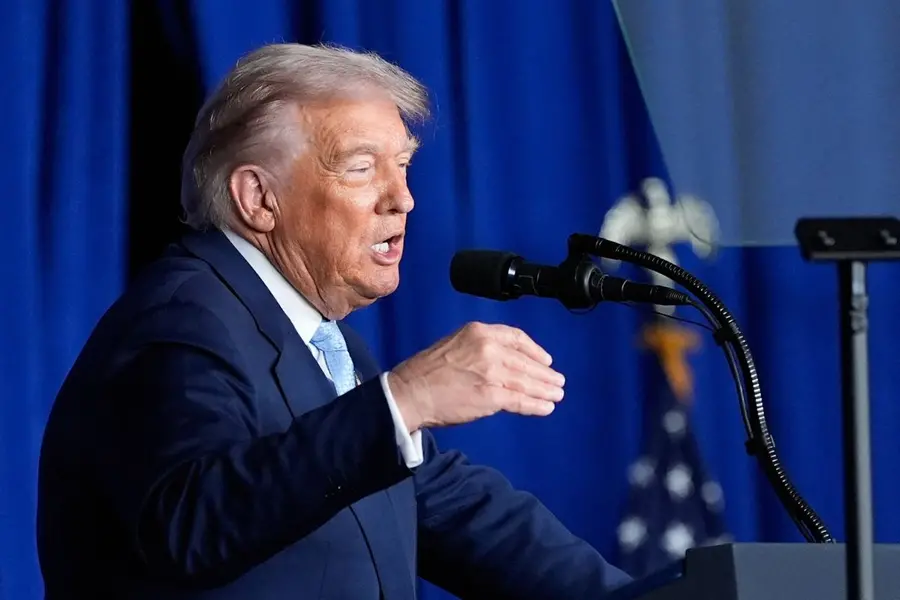
Washington: President Donald Trump confirmed on Monday that his administration will proceed with the sale of F-35 fighter jets to Saudi Arabia, despite internal concerns that the transfer could allow China access to highly sensitive US defence technology.
The announcement comes on the eve of Saudi Crown Prince Mohammed bin Salman’s long-anticipated visit to Washington — his first trip to the United States in more than seven years.
Asked whether he would authorise the sale, Trump said: “I will say that we will be doing that. We’ll be selling F-35s.”
The delivery of the advanced aircraft is expected to be one of several major agreements unveiled during the visit. Saudi Arabia is also preparing to announce a multibillion-dollar investment in US artificial intelligence infrastructure, alongside new cooperation in the civil nuclear energy sector, according to a senior administration official who was not authorised to comment publicly.
The crown prince is arriving with a strategic wish list, including formal assurances regarding the scope of US military protection for the kingdom and approval to purchase F-35s — one of the world’s most sophisticated fighter jets.
However, the Republican administration has been cautious about upsetting Israel’s qualitative military edge in the region, particularly as Trump seeks Israeli support for his Gaza peace plan. Another deep-seated concern — which previously derailed a similar sale to the United Arab Emirates — is the risk that F-35 technology could be exposed to China, given Beijing’s close ties with both the UAE and Saudi Arabia. Three administration officials, speaking anonymously due to internal deliberations, noted that this remains a significant factor.
China and Saudi Arabia held joint naval exercises last month, and Beijing played a key role in brokering the 2023 rapprochement between Saudi Arabia and Iran. Although China overtook the US as Saudi Arabia’s top trading partner last year, the United States remains Riyadh’s preferred supplier of advanced weaponry.
Bradley Bowman, senior director at the Foundation for Defence of Democracies, said Congress may demand assurances from Riyadh regarding its relationship with China. He added that lawmakers are also likely to scrutinise how Israel’s military edge will be preserved.
Trump’s decision comes as he attempts to secure a historic normalisation deal between Saudi Arabia and Israel. The former president has repeatedly promoted the expansion of his first-term Abraham Accords — which established diplomatic ties between Israel and several Arab states — as the cornerstone of his strategy for stabilising the Middle East.
“I hope that Saudi Arabia will be going into the Abraham Accords very shortly,” Trump told reporters aboard Air Force One on Friday.
However, internal assessments are more cautious. Saudi Arabia has insisted that a guaranteed path toward Palestinian statehood is essential before it signs on to the accords — a condition Israel strongly opposes.
The UN Security Council on Monday approved a US proposal for Gaza that includes an international stabilisation force and a potential roadmap toward an independent Palestinian state.
Officials acknowledge that Riyadh is unlikely to join the accords immediately, but some remain cautiously optimistic that a deal could be reached by the end of Trump’s second term.
“Let’s hope that President Trump makes clear that the first F-35 will not be delivered until Saudi Arabia normalises relations with Israel,” Bowman said. “Otherwise, the president will undercut his own leverage.”
The Trump administration previously notified Congress in November 2020 that it intended to sell 50 F-35s to the UAE as part of a larger $23 billion defence package aimed at countering Iran, despite Israeli reservations. The move came after Trump’s 2020 election defeat and shortly after the signing of the Abraham Accords. President Joe Biden later froze the sale upon taking office.
Trump’s latest decision is also likely to attract criticism from human rights groups, as Prince Mohammed returns to Washington for the first time since 2018. That visit, designed to improve the kingdom’s image in the United States, was overshadowed months later by the killing of Washington Post journalist Jamal Khashoggi — an operation US intelligence later assessed had likely been directed by the crown prince, an allegation he has denied.
Seven years on, Trump has sought to repair the strained ties. Speaking on Monday, he praised Saudi Arabia as a valued partner: “They have been a great ally.”
Published: 18 Nov 2025, 06:45 am IST
Related Topics
Disclaimer: Kindly avoid objectionable, derogatory, unlawful and lewd comments, while responding to reports. Such comments are punishable under cyber laws. Please keep away from personal attacks. The opinions expressed here are the personal opinions of readers and not that of Mathrubhumi.
