
A journey of a lifetime has turned into a maritime nightmare. Three passengers are dead, and others remain in critical condition following a suspected hantavirus outbreak aboard the polar cruise ship MV Hondius.
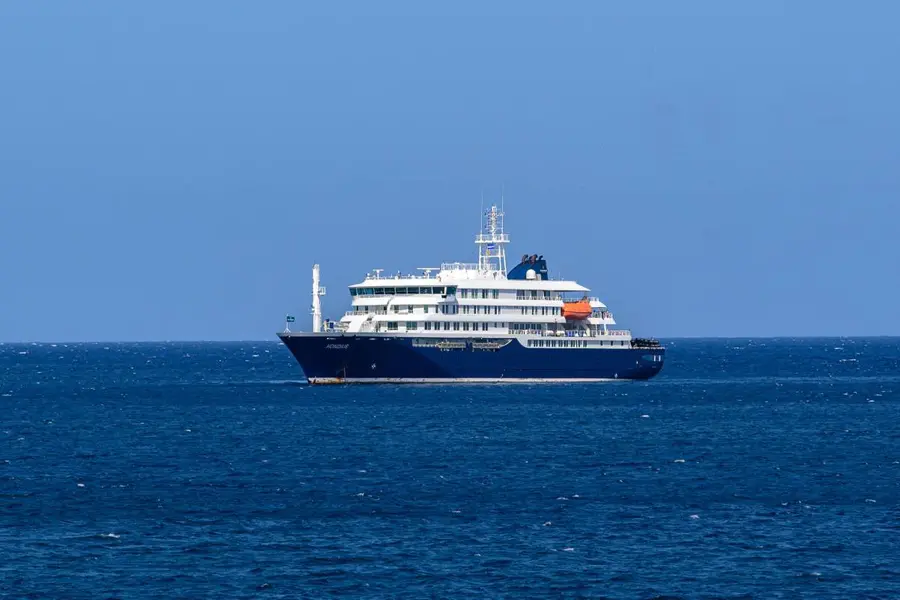
A high-stakes medical emergency is unfolding in the Atlantic Ocean as a suspected outbreak of the rare hantavirus has claimed the lives of three people aboard a specialist polar cruise ship, leaving several others fighting for their lives.
The World Health Organization (WHO) and South Africa's Department of Health confirmed Sunday that the MV Hondius, a Dutch-operated vessel, is currently the subject of an international health investigation.
The fatalities include an elderly Dutch couple and a third individual whose body remains on the ship.
Voyage turned into a quarantine
The MV Hondius began its journey three weeks ago in Argentina, charting a course through Antarctica and the Falkland Islands. What was intended to be a luxury expedition is now a floating isolation ward sitting off the coast of Cape Verde.
Local authorities in the island nation have provided assistance but are currently denying disembarkation to the 150 passengers and 70 crew members onboard.
"Our priority is to ensure the two crew members who are ill receive urgent medical care," said a spokesperson for Oceanwide Expeditions, the ship's operator.
Local health authorities have visited the vessel, but a decision on transferring the symptomatic individuals to land has not yet been made.
The Path of the Infection
The outbreak has left a trail of casualties across several Atlantic territories.
A 70-year-old man who died while the ship was at sea. His body was removed at the British territory of Saint Helena. The man's wife collapsed shortly after at an airport in South Africa while attempting to fly home to the Netherlands. She later died at a Johannesburg hospital.
A British national fell ill near Ascension Island and was medevaced to Johannesburg, where they remain in intensive care.
Two crew members are currently displaying symptoms and require urgent evacuation from the ship’s current position near Cape Verde.
What is Hantavirus?
Hantaviruses are a family of viruses typically spread by rodents. While the virus gained public attention last year following the death of Betsy Arakawa (wife of the late actor Gene Hackman), it remains a rare but deadly threat.
Hantavirus transmission happens primarily through contact with rodent urine or feces; human-to-human spread is rare but possible.
Hantavirus can manifest as Respiratory (Lung) or Hemorrhagic (Kidney) syndromes.
There is no specific cure or vaccine; survival depends on early supportive medical care.
Ongoing Investigation
South Africa's National Institute for Communicable Diseases (NICD) has launched an aggressive contact-tracing campaign in Johannesburg to identify anyone who may have been exposed to the infected passengers during their transit.
Meanwhile, the WHO is performing viral sequencing to determine the exact strain involved.
"Detailed investigations are ongoing, including further laboratory testing and epidemiological investigations," the agency stated.
Published: 04 May 2026, 08:37 am IST
Related Topics
Disclaimer: Kindly avoid objectionable, derogatory, unlawful and lewd comments, while responding to reports. Such comments are punishable under cyber laws. Please keep away from personal attacks. The opinions expressed here are the personal opinions of readers and not that of Mathrubhumi.
