
The attacks follow the recent decision by the International Atomic Energy Agency (IAEA) Board of Governors to censure Iran for the first time in 20 years
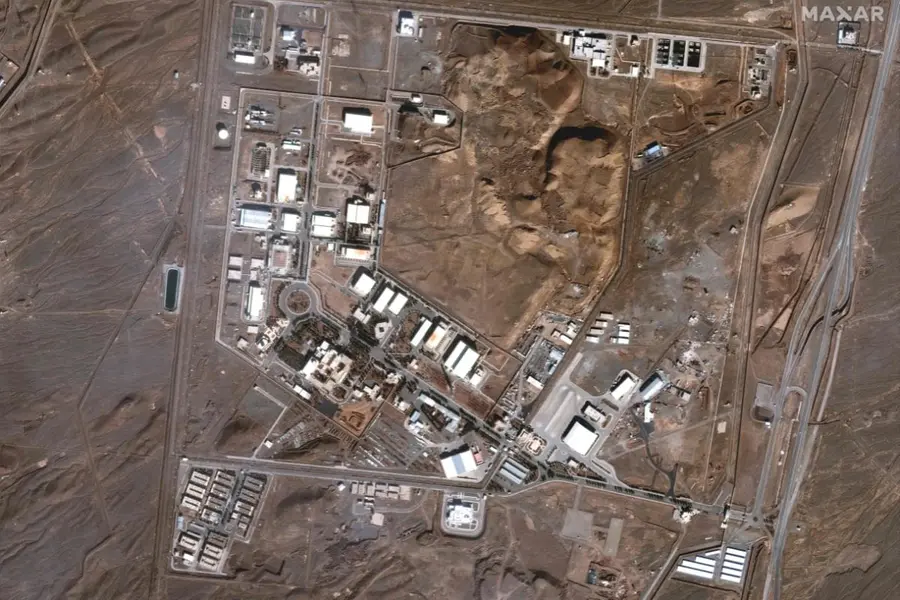
Dubai: Israel launched a series of attacks on key Iranian nuclear and military facilities on Friday, escalating tensions amid concerns over Iran’s advancing nuclear capabilities.
Israeli officials justified the strikes as a necessary measure to prevent what they described as an imminent threat posed by Iran’s efforts to develop nuclear weapons. Tehran, however, has consistently maintained that its nuclear programme is peaceful. Meanwhile, U.S. intelligence assessments have suggested that Iran is not currently pursuing a nuclear bomb.
The attacks follow the recent decision by the International Atomic Energy Agency (IAEA) Board of Governors to censure Iran for the first time in 20 years, over its failure to cooperate fully with inspectors. In response, Iran announced plans to open a third uranium enrichment site and upgrade some of its centrifuges to more advanced models.
This escalation comes amid stalled talks between the US and Iran, which aimed to ease crippling economic sanctions on Tehran in exchange for significant curbs on its uranium enrichment activities.
Here is a closer look at some of Iran’s most significant nuclear sites and their roles in the country’s atomic programme:
Natanz Enrichment Facility
Located about 220 kilometres southeast of Tehran, Natanz is Iran’s primary uranium enrichment facility. The site includes an underground section designed to protect against airstrikes and hosts multiple centrifuge cascades--groups of centrifuges working in unison to speed up uranium enrichment.
Nearby, Iran is expanding into the Kuh-e Kolang Gaz La mountain, adjacent to Natanz’s southern perimeter. Natanz has been targeted in the past by sabotage, including the Stuxnet computer virus, widely believed to be an Israeli-American cyberattack, which damaged centrifuges. Additional covert strikes, reportedly by Israel, have also targeted the site.
Fordo Enrichment Facility
Situated roughly 100 kilometres southwest of Tehran, Fordo is another uranium enrichment site, though smaller than Natanz. It is heavily fortified and buried under a mountain, protected by anti-aircraft defences, reflecting its design to withstand aerial attacks.
Construction of Fordo began at least by 2007, though Iran only informed the IAEA about the facility in 2009 after Western intelligence agencies revealed its existence.
Bushehr Nuclear Power Plant
Iran’s sole commercial nuclear power plant is located in Bushehr on the Persian Gulf, approximately 750 kilometres south of Tehran. Initially constructed in the 1970s under the Shah, the plant’s development was interrupted by the 1979 Islamic Revolution and the Iran-Iraq war, before being completed with Russian assistance.
Bushehr is fuelled by uranium imported from Russia, not enriched in Iran, and remains under IAEA monitoring. Iran is also constructing two additional reactors of the same type at the site.
Arak Heavy Water Reactor
The Arak facility, around 250 kilometres southwest of Tehran, uses heavy water to cool its reactor. While heavy water reactors can produce plutonium--a potential material for nuclear weapons--under the 2015 nuclear deal, Iran agreed to redesign the reactor to reduce proliferation risks.
Isfahan Nuclear Technology Centre
Located some 350 kilometres southeast of Tehran, this centre employs thousands of nuclear scientists and houses three Chinese-built research reactors, along with laboratories linked to Iran’s nuclear research.
Tehran Research Reactor
Situated at the Atomic Energy Organization of Iran headquarters, the Tehran Research Reactor was provided by the United States in 1967 as part of the Atoms for Peace programme. Originally fuelled by highly enriched uranium, it was later converted to use low-enriched uranium to mitigate proliferation concerns.
Published: 13 Jun 2025, 10:58 am IST
Disclaimer: Kindly avoid objectionable, derogatory, unlawful and lewd comments, while responding to reports. Such comments are punishable under cyber laws. Please keep away from personal attacks. The opinions expressed here are the personal opinions of readers and not that of Mathrubhumi.
