
Known for her work in justice reform and support for women prisoners, she earned both national and international recognition for her public service efforts
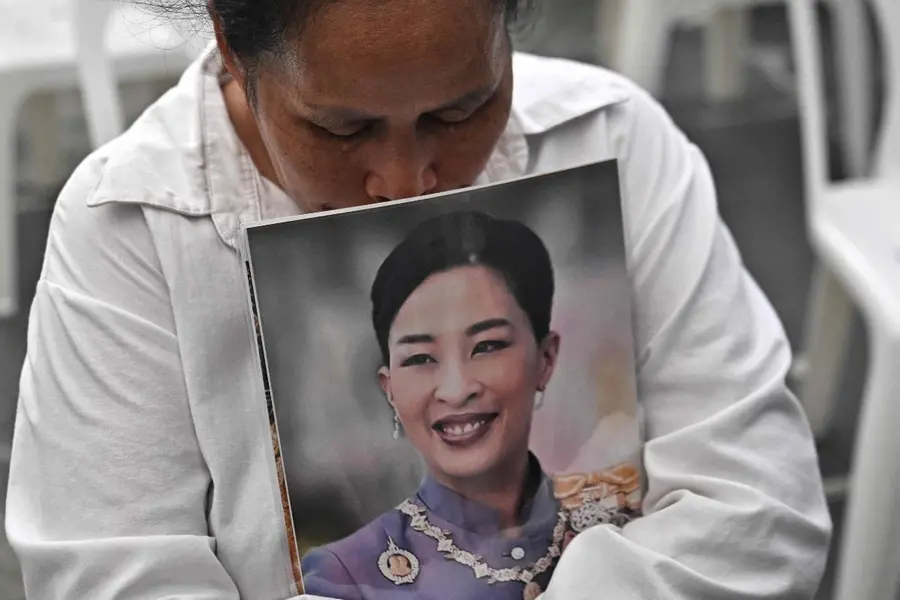
Bangkok: Princess Bajrakitiyabha Mahidol of Thailand, the eldest daughter of King Maha Vajiralongkorn and a prominent royal known for her work in justice reform and social welfare, has died at the age of 47.
The Bureau of the Royal Household announced on Friday that the princess passed away peacefully on Thursday evening after her health deteriorated following an abdominal infection. She had remained unconscious for nearly three years after falling ill and had been receiving treatment at a hospital in Bangkok throughout that period.
In a statement, the royal household said her condition had progressively worsened before her death.
Funeral to be held with full royal honours
The royal household said the late princess's body will lie in state at Bangkok's Grand Palace. Her funeral will be conducted in accordance with royal tradition and will be accorded the highest ceremonial honours.
Princess Bajrakitiyabha died at a Bangkok hospital where she had been under continuous medical care since collapsing and losing consciousness several years ago.
Prime Minister pays tribute
Thailand's Prime Minister, Anutin Charnvirakul, paid tribute to the princess in a televised address following the announcement of her death.
Describing her as "a pride of Thailand", he praised her dedication to public service and social development.
He said her efforts to promote kindness, justice and equality would continue to inspire future generations and remain part of the nation's moral legacy.
A royal known for public service
Princess Bajrakitiyabha earned widespread respect among many Thais for her involvement in social welfare programmes and legal reform initiatives.
One of her most recognised projects was the Kamlangjai, or "Inspire", campaign, which focused on helping women prisoners prepare for life after release and reintegrate into society.
Observers have often noted that her close engagement with social causes helped distinguish her from members of the royal family who were sometimes perceived as distant from ordinary citizens.
Possibility of a historic succession
Although Thailand's royal succession traditionally favours male heirs, reports have suggested that constitutional changes in recent years could have opened the possibility for Princess Bajrakitiyabha to become the country's first female traditional ruler.
While she was never officially designated as heir, her position within the royal family frequently drew public attention whenever discussions about succession emerged.
Education and legal career
Born on December 7, 1978, Princess Bajrakitiyabha was the daughter of the then Crown Prince Vajiralongkorn and his wife at the time, Princess Soamsawali.
Her full title was Princess Bajrakitiyabha Narendiradebyavati, though she was affectionately known as "Bha" or "Patty" by many people.
She pursued legal studies at Cornell University in the United States and later built a career in public service.
In the early 2000s, she briefly served at Thailand's Permanent Mission to the United Nations in New York before returning to Thailand, where she worked as the attorney general of Udon Thani Province.
Her diplomatic career later saw her appointed Thailand's ambassador to Austria, a position she held between 2012 and 2014.
In 2017, she was named a goodwill ambassador for the United Nations Office on Drugs and Crime.
Princess Bajrakitiyabha received international recognition for advocating improved conditions for female prisoners.
Her efforts contributed to the adoption of the "Bangkok Rules" by the United Nations General Assembly in 2010. The guidelines focus on the treatment and care of women in detention and have since been used as an international framework for prison reform.
Questions over royal succession
Following the princess's death, attention is expected to turn once again to Thailand's royal succession.
Reports identify her younger brother, 21-year-old Prince Dipangkorn Rasmijoti, as the presumptive heir to the throne. He is the youngest child of King Vajiralongkorn and was born to the king's third legal wife, Srirasmi Suwadee.
Prince Dipangkorn generally maintains a low public profile and is rarely seen in the spotlight.
King Vajiralongkorn, 73, has seven children from four marriages. However, he has not publicly named an official successor. Under Thailand's succession laws, male heirs continue to hold preference.
Public discussion of Thailand's monarchy remains heavily regulated under the country's lese-majeste legislation.
The laws prohibit criticism of the royal family and carry prison sentences of up to 15 years for each offence. As a result, public debate concerning royal matters, including succession, is often conducted within strict legal boundaries.
Mourners gather to pay their respects
Following the announcement of her death, mourners gathered at the atrium of King Chulalongkorn Memorial Hospital in Bangkok, where Princess Bajrakitiyabha had been receiving treatment since her illness.
Many carried framed photographs showing different stages of her life and public service career as they paid tribute to the late royal.
With agency inputs
Published: 12 Jun 2026, 03:05 pm IST
Related Topics
Disclaimer: Kindly avoid objectionable, derogatory, unlawful and lewd comments, while responding to reports. Such comments are punishable under cyber laws. Please keep away from personal attacks. The opinions expressed here are the personal opinions of readers and not that of Mathrubhumi.
