
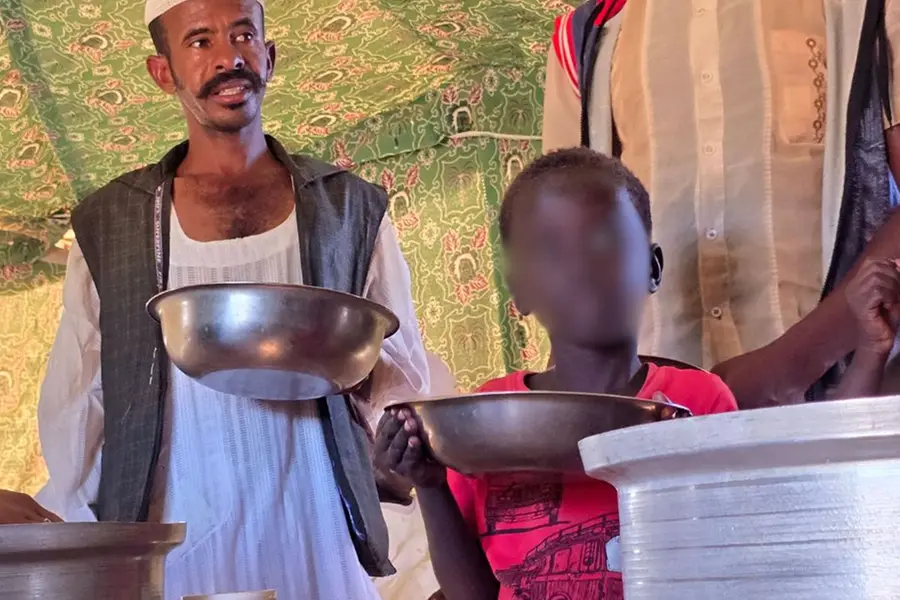
Cairo: In a country already suffering from nearly two years of war, Sudan is now facing an even more severe food crisis, with tens of thousands of people going hungry after US President Donald Trump's decision to freeze foreign aid. The freeze has crippled essential soup kitchens that have been feeding the hungry in the capital, Khartoum, and beyond.
Since the war between Sudan's regular army and the paramilitary Rapid Support Forces began in April 2023, over 12 million people have been displaced, and nearly 25 million are facing food insecurity. Five regions of Sudan are in the grips of famine. Community-run soup kitchens, which have been vital in providing meals to the most vulnerable, are now forced to close, leaving many people without the food they rely on.
Also Read

Volunteers and aid workers speak out
"People will die because of these decisions," said one Sudanese volunteer, highlighting the gravity of the situation. Another volunteer mentioned that there were 40 soup kitchens across Sudan, feeding between 30,000 to 35,000 people daily, but all of them have now closed due to the lack of funding after the aid freeze.
"Women and children are being turned away, and we can’t promise them when we can feed them again," said a third volunteer, speaking anonymously due to fears for their job.
Shortly after his inauguration last month, Trump froze US foreign aid and announced the dismantling of the United States Agency for International Development (USAID). Despite the administration issuing waivers for “life-saving humanitarian assistance,” aid workers on the ground in Sudan report that there has been no visible change in the flow of aid. The impact has been devastating.
Javid Abdelmoneim, the medical team leader at Doctors Without Borders (MSF) in Khartoum, described the situation as “life-ending” for the people of Sudan. MSF and other humanitarian organisations are struggling to fill the gap left by the withdrawal of US support.
Humanitarian efforts crippled
In the wake of the aid freeze, many aid organisations have been forced to suspend critical operations, including the provision of food, shelter, and medical care. An aid coordinator said, “All official communications have gone dark,” as USAID workers were placed on leave. The remaining soup kitchens are stretched to the limit and unable to meet the growing demand.
The United States had been the largest donor to Sudan, contributing nearly USD 800 million in 2024, which accounted for about 46 percent of the funding for the UN's humanitarian response plan. However, in 2025, the UN estimates it has received less than 6percent of the necessary funding for Sudan.
The Famine Crisis Intensifies
Over 8 million people in Sudan are currently at risk of famine, with conditions expected to worsen. The UN predicts that famine will spread to at least five more areas of Sudan by May 2025. Aid organisations fear that the situation could deteriorate further with the onset of the rainy season, which will make it even harder to access food.
“We have already distributed millions of dollars worth of aid based on US funding promises,” said one aid coordinator, “but what happens when the funding runs out next month? How many more people will go hungry?”
As food supplies in Sudan continue to dwindle, the impact of the aid freeze is becoming more apparent. Volunteers and aid workers are working tirelessly to help, but their resources are running out. The humanitarian response, already stretched thin, is now facing a dire future. Without immediate intervention, the situation could spiral further out of control, leaving countless people without the help they desperately need.
“It was already not enough, but at least people were getting something,” one fundraiser said. “Now, things are going from bad to worse.”
Agency
Published: 13 Feb 2025, 01:25 pm IST
Related Topics
Disclaimer: Kindly avoid objectionable, derogatory, unlawful and lewd comments, while responding to reports. Such comments are punishable under cyber laws. Please keep away from personal attacks. The opinions expressed here are the personal opinions of readers and not that of Mathrubhumi.