
Rights groups and critics warn the regulation could worsen child marriage practices and further restrict women’s rights under Taliban rule
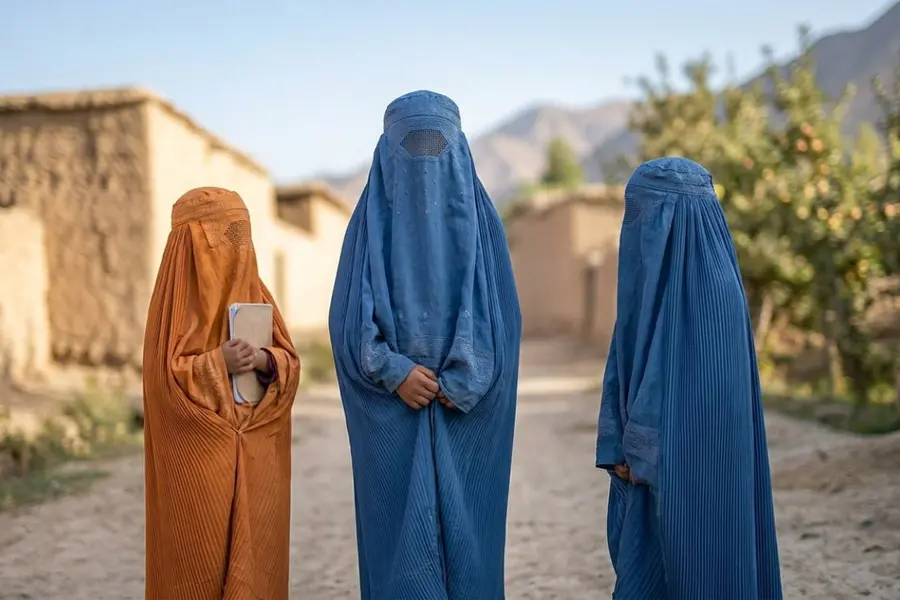
Kabul: The Taliban has introduced a new family law decree in Afghanistan stating that the silence of a “virgin girl” may be interpreted as consent to marriage under certain circumstances.
The 31-article regulation, titled Principles of Separation Between Spouses, was approved by Taliban supreme leader Hibatullah Akhundzada and published in mid-May.
The decree lays out rules related to marriage disputes, annulments, child marriages and the authority exercised by male guardians. According to Afghan media outlet Amu TV, the regulation also addresses cases involving missing husbands, forced separation, breastfeeding relations and accusations of adultery.
Fathers and grandfathers granted authority in child marriages
Under the new rules, fathers and grandfathers are granted authority over marriages involving children.
The regulations further state that marriages involving female minors may later be annulled after puberty, but only if approved by a Taliban court.
Another controversial provision says that if a virgin girl who has reached puberty remains silent, that silence can be treated as acceptance of a marriage proposal. The same interpretation does not automatically apply to boys or previously married women.
Rights groups warn of worsening child marriage crisis
Human rights organisations say the decree further formalises practices already reported in several parts of Afghanistan, where families facing severe economic hardship arrange marriages involving young girls in exchange for money.
Some rights groups have documented cases in which infants were reportedly promised in marriage to settle debts or secure financial support.
Reports suggest payments linked to child marriages range between $500 and $3,000.
According to the charity Girls Not Brides, nearly one-third of girls in Afghanistan are married before turning 18.
Taliban restrictions on women continue to draw global criticism
Since returning to power in August 2021, the Taliban has imposed sweeping restrictions on women and girls across Afghanistan.
The measures include limitations on education, employment and participation in public life.
International organisations, including Amnesty International, have described the current system in Afghanistan as gender apartheid.
Reports cited by British media outlet GB News also claimed Taliban legal frameworks do not explicitly ban sexual or psychological violence against women. The reports further stated that husbands are permitted to physically discipline wives provided no visible bodily injury is caused.
Commentator says silence cannot be treated as consent
Political commentator Fahima Mahomed criticised the regulation, saying child marriage cannot involve meaningful consent.
“Child marriage is not marriage in any meaningful sense. A child cannot properly consent, and treating silence as consent is dangerous because it removes a girl’s voice completely,” she told GB News.
Mahomed also rejected suggestions that the Taliban’s interpretation represented Islam broadly.
“As a Muslim, I would also strongly reject the idea that this reflects Islam as a whole. The Qur’an itself speaks against compulsion and mistreatment of women, so the Taliban’s position should not be presented as ‘Islamic law’ in a broad sense,” she said.
“It is their political and extremist interpretation, enforced through power and fear.”
Published: 17 May 2026, 04:50 pm IST
Related Topics
Disclaimer: Kindly avoid objectionable, derogatory, unlawful and lewd comments, while responding to reports. Such comments are punishable under cyber laws. Please keep away from personal attacks. The opinions expressed here are the personal opinions of readers and not that of Mathrubhumi.
