
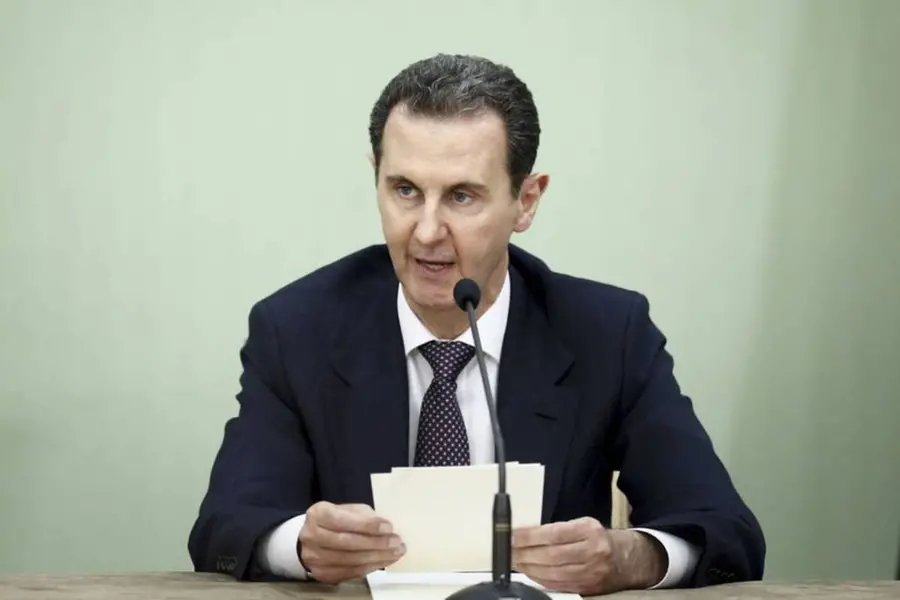
Syria: Ousted Syrian leader Bashar al-Assad has fled to Moscow, receiving asylum from his long-time ally, Russian media reported on Sunday. This comes hours after a stunning rebel advance captured Damascus, bringing an end to his family's 50 years of authoritarian rule.
Thousands of Syrians celebrated on the streets, waving the revolutionary flag amidst celebratory gunfire. The scenes evoked memories of the Arab Spring uprisings, which eventually led to a brutal civil war lasting nearly 14 years.
Implications for the region
The rapid developments have raised questions about Syria's future and the wider regional dynamics.
“Our approach has shifted the balance of power in the Middle East,” said US President Joe Biden, attributing Assad’s downfall to the efforts of the US and its allies in weakening Syria's backers—Russia, Iran, and Hezbollah. Biden described the event as a “fundamental act of justice” but acknowledged the risks, saying, “Rebel groups are saying the right things now, but their actions will need to be assessed.”
Russia has called for an emergency session of the UN Security Council to discuss the crisis, according to Dmitry Polyansky, Russia’s deputy UN ambassador.
Assad seeks refuge in Russia
Russian news agencies Tass and RIA reported Assad's arrival in Moscow, citing Kremlin sources. The reports also stated that Syrian insurgents had assured the safety of Russian military and diplomatic establishments in Syria.
Earlier, Russia confirmed that Assad left Syria following negotiations with rebel groups and instructed a peaceful transfer of power.
The leader of Syria’s largest rebel faction, Abu Mohammed al-Golani, formerly affiliated with al-Qaida, now positions himself as a proponent of pluralism and tolerance. Al-Golani, also known by his real name, Ahmad al-Sharaa, hailed Assad’s fall as a “victory for the Islamic nation.”
Challenges ahead
The rebels face the monumental task of uniting a nation deeply fractured by war. Various factions continue to vie for control, including Turkish-backed opposition fighters, US-aligned Kurdish forces, and remnants of the Islamic State group.
Syrian state media announced Assad’s overthrow and called for preserving the institutions of the “free Syrian state.” They also declared a curfew in Damascus.
Videos circulating online purportedly show the release of prisoners from Saydnaya prison, notorious for allegations of torture. A relative, Bassam Masr, expressed mixed emotions, saying, “This happiness will not be complete until I find my son, who has been detained for 13 years.”
Local and international reactions
Residents in Damascus took to mosques and public squares, celebrating with chants of “God is great.” Some rebel leaders sought to reassure minority communities of their safety, emphasising unity and justice for all sects.
The fall of Assad also represents a setback for his allies, Iran and Hezbollah, who have been weakened by other conflicts. Iran’s ambassador to Syria acknowledged the government's inability to resist the insurgents’ military superiority.
Meanwhile, Israel’s military seized a buffer zone in the Golan Heights, citing concerns for the safety of Israeli residents. The Arab League condemned the move, accusing Israel of exploiting Syria's instability.
As the dust settles, global powers, including the UN and Qatar, are calling for urgent negotiations to ensure an orderly political transition in Syria.
Published: 09 Dec 2024, 06:13 am IST
Related Topics
Disclaimer: Kindly avoid objectionable, derogatory, unlawful and lewd comments, while responding to reports. Such comments are punishable under cyber laws. Please keep away from personal attacks. The opinions expressed here are the personal opinions of readers and not that of Mathrubhumi.
