
Tehran firmly rejects President Trump's assertion that the vital waterway is under U.S. territory, vowing to defend its maritime borders and national unity.
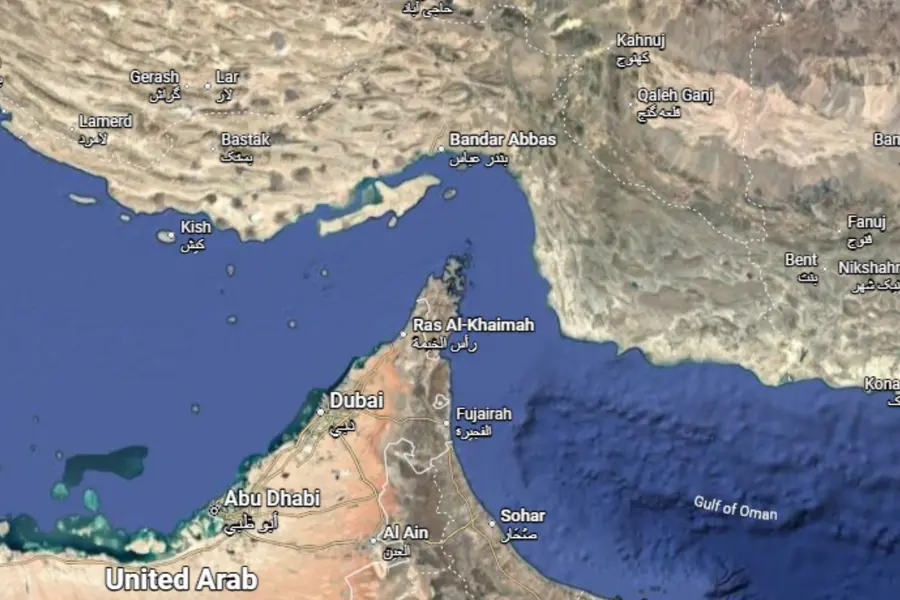
Tehran: Iran's Secretary of the Supreme National Security Council, Mohsen Rezaei, said Saturday that the Strait of Hormuz remains closed and will not reopen until the United States honours its commitments and alters its stance amid mounting tensions between Tehran and Washington.
In an interview with broadcaster IRIB, Rezaei said, "The Strait of Hormuz is closed, despite American claims, and will not open until America corrects its behaviour."
"This time, America must first fulfil its obligations," he added.
Rezaei further stated that Washington had abandoned direct military avenues and was instead relying on economic measures against Tehran.
"The Americans are completely disappointed with the military attacks and think they can help with military actions through economic blockade," he said.
He asserted that Israeli Prime Minister Benjamin Netanyahu had assured US President Donald Trump that an economic blockade would force Iran to capitulate.
"Netanyahu has promised Trump that if he imposes an economic blockade on Iran for six months or two to three months, he will surrender," Rezaei said.
Rezaei also claimed Washington was dependent on international backing, stating, "Trump is alone and needs the help of NATO and its allies."
He said Iran had established mechanisms to bypass international sanctions and maintain petroleum exports.
"Iran, however, has learned over the years to bypass sanctions and sell oil," he said.
Rezaei reiterated that Tehran desires an end to conflict across West Asia and stands opposed to escalation.
"The Islamic Republic of Iran wants an end to the war in West Asia and stands against the warmongers of the world," he said.
"Every home can be an economic war launcher," Rezaei added.
"Iranian youth should enter the economy. Every neighbourhood can be a missile base for economic warfare," he further said.
Rezaei also pointed to financial pressures facing Washington, claiming US national debt had expanded during Trump's presidency.
"America's debts have increased during Trump's presidency," he said.
Rezaei stated that Iran holds sovereign authority over the strategic waterway, citing its extensive shoreline along the Persian Gulf.
"More than 50 per cent of the Persian Gulf coast belongs to Iran, and it is we who must manage the Strait of Hormuz," he said.
He warned that Iran would defend its sovereignty and prevent any American incursions onto Iranian soil.
"We will defend Iran wholeheartedly and will not allow the Americans to gain access to Iran," Rezaei said, adding, "I advise the Americans not to add any more forces because we will beat them."
Rezaei accused Washington of employing economic sanctions to undermine domestic cohesion within Iran.
"The Americans intend to break the unity of the Iranian nation through economic pressure to achieve their goal," he said.
His comments followed US President Donald Trump's announcement of an "Economic D-Day" campaign against Iran, which he described as the "most crushing economic operation ever taken against any country," while calling on international partners to join Washington in isolating Tehran.
Trump stated the sanctions would target core financial conduits, including clandestine oil transport networks, financial transactions, exchange houses, maritime registries, and corporate proxies.
"Oil smuggling, swap lines, cash transfers, exchange houses, ship registries, front companies -- It all needs to stop now," Trump wrote in a post on Truth Social.
Trump also asserted that the Strait of Hormuz should be viewed as "American territory" during the standoff, claiming the US maintained "total control" over the maritime corridor.
"We cannot let them have a nuclear weapon; we cannot let Iran have a nuclear weapon, or you will see some very bad things," Trump said.
"They want to make a deal so badly, we don't even know if we want [a deal] because I view the Strait of Hormuz as an American territory right now; it's an American territory," he added, according to Al Jazeera.
Iran rejected the assertion, with Iranian Deputy Foreign Minister Kazem Gharibabadi stating that the US President's claims regarding the Strait of Hormuz would be corrected either by geopolitical reality or by Iran itself.
Iranian Parliament Speaker Mohammad Bagher Ghalibaf also confirmed Tehran would keep the Strait of Hormuz closed until Washington fulfils conditions detailed in a 14-point memorandum of understanding, which includes ending the economic blockade, unfreezing Iranian funds, and lifting oil sanctions.
Meanwhile, US Energy Secretary Chris Wright stated that over 15 million barrels of crude oil and refined products passed through the Strait of Hormuz under US naval escort on Tuesday, with total regional exports, including pipelines, approaching 20 million barrels.
"Make no mistake, thanks to the U.S. Navy, oil is flowing through the Strait of Hormuz," Wright posted on X.
The Strait of Hormuz represents one of the world's most critical energy transit points, where prolonged disruption threatens global oil supplies.
Iranian officials continue to dismiss Washington's pressure campaign, maintaining that previous sanctions failed to alter Tehran's strategic posture and will instead reinforce internal resolve.
ANI
Published: 23 Aug 2026, 06:24 am IST
ABOUT THE AUTHOR

Related Topics
Disclaimer: Kindly avoid objectionable, derogatory, unlawful and lewd comments, while responding to reports. Such comments are punishable under cyber laws. Please keep away from personal attacks. The opinions expressed here are the personal opinions of readers and not that of Mathrubhumi.