
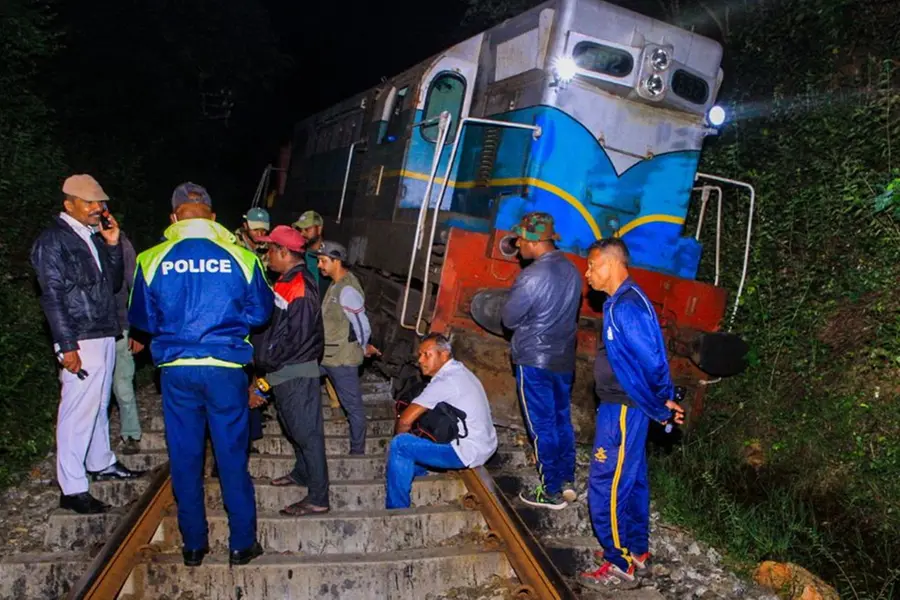
Colombo: A Sri Lankan passenger train derailed on Thursday after crashing into a family of elephants, with six elephants killed, but no passengers were injured, according to police. The incident occurred near a wildlife reserve in Habarana, located about 180 kilometres (110 miles) east of the capital, Colombo.
The express train was travelling through the area before dawn when it struck the herd of elephants crossing the railway tracks. "The train derailed, but there were no casualties among the passengers," police confirmed. Authorities added that wildlife officials were treating two elephants who survived the crash.
Also Read

Footage taken after the accident shows one elephant standing guard over an injured calf lying beside the tracks, with the tips of their trunks touching.
Sri Lanka’s commitment to protecting elephants
In Sri Lanka, killing or harming elephants is a criminal offence, as they are considered a national treasure. The country is home to an estimated 7,000 wild elephants, which hold significant cultural importance, particularly in Buddhism.
This tragedy follows a similar accident in September 2018 when a train killed two baby elephants and a pregnant mother in the same region. Following that incident, authorities implemented speed limits for train drivers to reduce the risk of accidents in areas where elephants cross the tracks.
Human-elephant conflict on rise
The recent elephant deaths come just days after authorities voiced concerns about the increasing conflict between humans and elephants. The animals’ natural habitats are being encroached upon as human settlements expand.
Farmers who rely on small plots of land often face challenges as elephants raid their crops, leading to tensions between the two groups. Deputy Minister of Environment Anton Jayakody reported that in 2023, 150 people and 450 elephants lost their lives in such conflicts.
This marks an increase from the previous year, when 145 people and 433 elephants were killed, as per official data. These two years alone account for over a tenth of Sri Lanka's elephant population.
Despite the rising tensions, Jayakody remains hopeful that the government can find solutions to the problem. "We are planning to introduce multiple barriers – these may include electric fences, trenches, or other deterrents – to make it more difficult for wild elephants to stray into villages," he said.
Agency
Published: 20 Feb 2025, 10:33 am IST
Related Topics
Disclaimer: Kindly avoid objectionable, derogatory, unlawful and lewd comments, while responding to reports. Such comments are punishable under cyber laws. Please keep away from personal attacks. The opinions expressed here are the personal opinions of readers and not that of Mathrubhumi.