
Seif al-Islam Gadhafi, the son of Libya’s former ruler, was killed in Zintan as authorities probe a suspected targeted assassination.
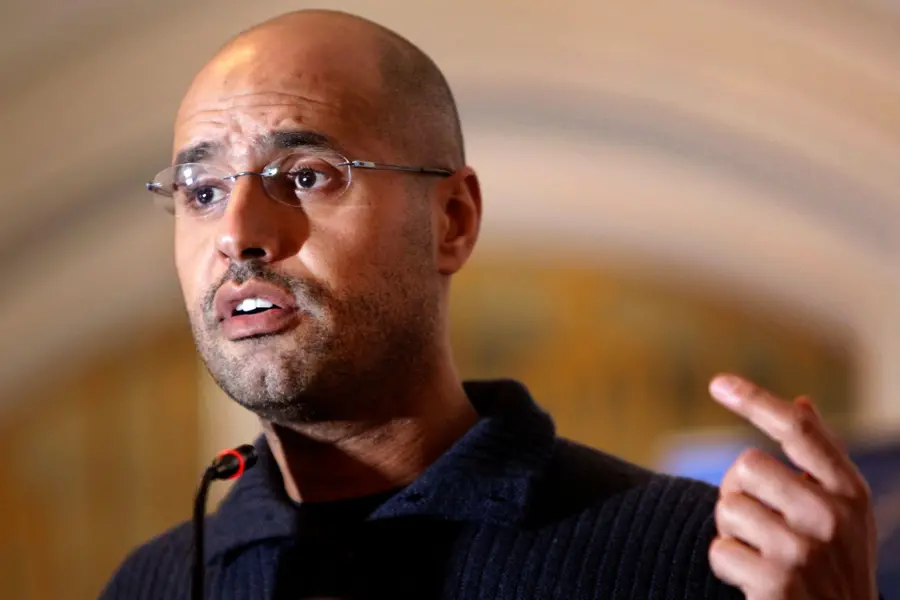
Cairo (Egypt): Seif al-Islam Gadhafi, the son and once-presumed successor of Libya’s late strongman Moammar Gadhafi, has been killed in Libya, officials said on Tuesday.
The 53-year-old was killed in Zintan, a town located about 136 kilometres (85 miles) southwest of Tripoli, according to two security officials in western Libya. The officials spoke on condition of anonymity as they were not authorised to speak to the media.
Khaled al-Zaidi, a lawyer representing Seif al-Islam, confirmed the death in a Facebook post but did not provide further details.
Abdullah Othman Abdurrahim, who represented Gadhafi during the UN-brokered political dialogue aimed at ending Libya’s prolonged conflict, also announced the killing on Facebook.
While Abdurrahim did not elaborate, Libyan news outlet Fawasel Media quoted him as saying that Seif al-Islam was killed by armed men inside his home. The report added that Libyan prosecutors had opened an investigation into the killing.
In a later statement, Seif al-Islam’s political team said that “four masked men” forced their way into his house and carried out what it described as a “cowardly and treacherous assassination”. According to the statement, he resisted the attackers, who reportedly shut down CCTV cameras at the residence “in a desperate attempt to conceal traces of their heinous crimes”.
Second son of Gadhafi
Born in Tripoli in June 1972, Seif al-Islam was the second son of Moammar Gadhafi and was long viewed as the regime’s public face of reform. He pursued doctoral studies at the London School of Economics and played a prominent role in Libya’s political life before the 2011 uprising.
Moammar Gadhafi was overthrown during a NATO-backed popular revolt in 2011 after more than four decades in power. He was killed later that year as fighting spiralled into a civil war, leaving Libya fragmented and dominated by rival militias and armed factions.
Seif al-Islam was captured by fighters in Zintan in late 2011 while attempting to escape to neighbouring Niger. He was released in June 2017 after receiving amnesty from one of Libya’s competing governments and had been living in Zintan since then.
In 2015, a Libyan court sentenced him to death in absentia after convicting him of inciting violence and ordering the killing of protesters. He was also sought by the International Criminal Court on charges of crimes against humanity linked to the 2011 uprising.
In November 2021, Seif al-Islam triggered controversy by announcing his candidacy in Libya’s presidential election, a move strongly opposed by anti-Gadhafi political factions across the country.
Although Libya’s High National Elections Committee later disqualified him, the vote was never held due to deep divisions between rival administrations and armed groups that have controlled the country since the fall of Moammar Gadhafi.
AP
Published: 04 Feb 2026, 08:29 am IST
Related Topics
Disclaimer: Kindly avoid objectionable, derogatory, unlawful and lewd comments, while responding to reports. Such comments are punishable under cyber laws. Please keep away from personal attacks. The opinions expressed here are the personal opinions of readers and not that of Mathrubhumi.
