
Khamenei’s televised address came as Iran continued to witness its most intense wave of protests in years, triggered by public anger over rising living costs and economic hardship.
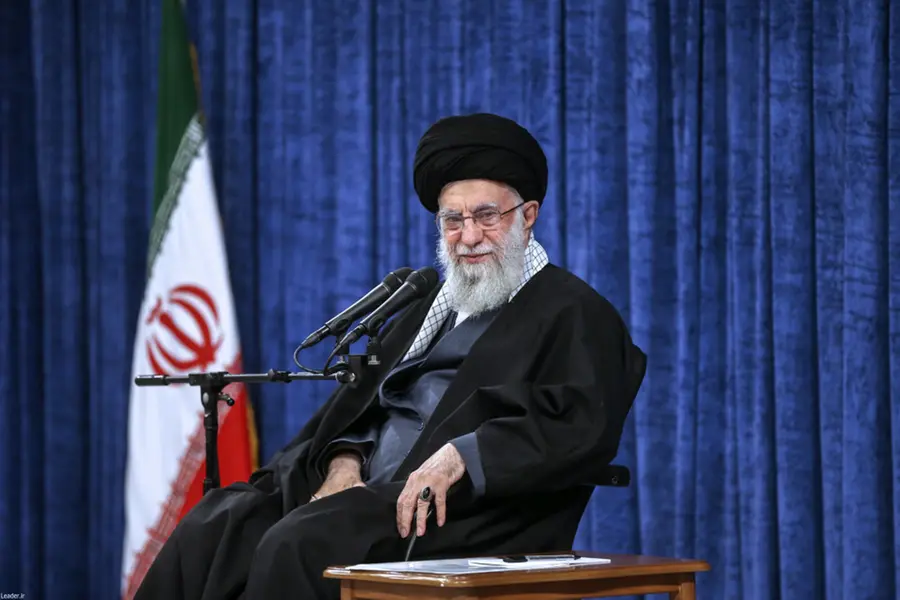
Tehran: Iran’s Supreme Leader Ayatollah Ali Khamenei on Friday directly addressed the ongoing nationwide unrest, accusing protesters of seeking to please US President Donald Trump and urging Washington to focus on its own domestic problems.
“There are some rioters, they want to please Trump,” Khamenei said in a speech aired by Iran’s state broadcaster, his first public remarks since protests erupted across Tehran and several major cities and rural areas.
He said that protesters are “ruining their own streets to make the president of another country happy,” with the crowd cheering, “Death to America.”
Khamenei also lashed out at the US and Israel, warning that Iran would not tolerate “mercenaries acting on behalf of foreign powers.”
“Everyone should know that the Islamic Republic came to power with the blood of hundreds of thousands of honourable people, and it will not back down in the face of saboteurs,” Khamenei said.
“They want to make him happy. If he knew how to run a country, he would run his own,” he said, adding that there were many problems inside US.
Also Read: Israeli minister reaches out on Starlink connectivity amid Iran’s internet shutdown: Reports
He also told protesters to concentrate on issues “in their own country,” dismissing the demonstrations as being influenced by external forces.
Khamenei’s televised address came as Iran continued to witness its most intense wave of protests in years, triggered by public anger over rising living costs and economic hardship. Demonstrations have spread beyond the capital to several provinces, with crowds chanting anti-government slogans and, in some places, targeting official buildings.
Internet monitoring groups said Iranian authorities had imposed a near-total connectivity blackout late Thursday in an apparent attempt to curb mobilisation and restrict the flow of information. NetBlocks reported that large parts of the country remained offline for hours as protests intensified.
Videos verified by AFP showed thousands of demonstrators gathering in parts of Tehran, with chants including “death to the dictator,” a reference to Khamenei, echoing through the streets. Similar scenes were reported from cities such as Tabriz, Mashhad, Isfahan and Kermanshah, as well as smaller towns, highlighting the nationwide scale of the unrest.
Some videos circulating on social media appeared to show protesters setting fire to government buildings and offices of state-run television, though not all footage could be independently verified. Rights groups have alleged that security forces opened fire on demonstrators in certain areas, resulting in multiple casualties, claims that authorities have not officially acknowledged.
US-based Reza Pahlavi, son of Iran’s last shah, has repeatedly called on Iranians to sustain street protests, saying large crowds were weakening the regime’s ability to respond with force. He urged demonstrators to return to the streets, describing the movement as a turning point against what he called decades of repression.
The protests are the largest since the 2022–2023 demonstrations sparked by the death of Mahsa Amini in police custody, and pose one of the most serious challenges to Iran’s leadership in recent years.
Published: 09 Jan 2026, 03:01 pm IST
Related Topics
Disclaimer: Kindly avoid objectionable, derogatory, unlawful and lewd comments, while responding to reports. Such comments are punishable under cyber laws. Please keep away from personal attacks. The opinions expressed here are the personal opinions of readers and not that of Mathrubhumi.
