
A massive winter storm driven by a weakened polar vortex has swept across the United States, killing at least seven people and causing widespread power outages
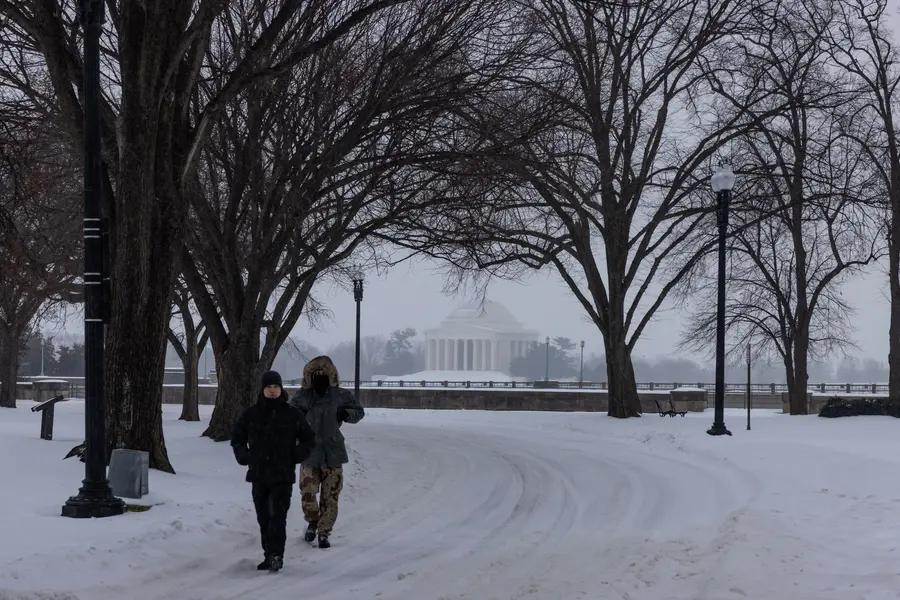
Texas: At least seven people have died in the United States after a powerful winter storm brought heavy snow, ice and extreme cold from Texas to New England, according to local authorities.
Among the dead, at least two men in Louisiana were confirmed to have died from hypothermia, while New York City officials said five deaths are under investigation after people were found outdoors during freezing temperatures.
The National Weather Service (NWS) warned of “life-threatening” conditions across large parts of the country, as freezing rain, sleet and deep snow made roads impassable and caused widespread school closures. Nearly 900,000 homes were left without electricity by Sunday afternoon, with Tennessee and Mississippi among the worst-hit states, according to outage tracking data.
Travel disruption was severe, with more than 10,000 flights cancelled nationwide and nearly 20,000 delayed. Airports in Philadelphia, Washington, Baltimore, New York, New Jersey and North Carolina reported continued disruption as the storm moved north-eastward.
Snowfall exceeded 30 centimetres across a 1,300-mile stretch from Arkansas to New England, with some areas forecast to receive up to 60 centimetres. In parts of Mississippi, officials described the storm as the worst ice event since 1994, prompting the state’s largest-ever deployment of ice-melting chemicals.
Bitter cold followed the storm, with the entire continental US expected to record its coldest average low temperature since January 2014. Temperatures dropped to minus 18 degrees Celsius or lower in several states, with strong winds making conditions even more dangerous and increasing the risk of refreezing on roads.
Meteorologist Allison Santorelli of the NWS warned that the snow and ice would melt slowly and that hazardous conditions could persist for days. “The snow and the ice will be very, very slow to melt and won’t be going away any time soon,” she said.
Nearly half of US states have declared emergencies as the storm’s impact continues. Experts said the extreme weather was triggered by a weakened polar vortex, which allowed Arctic air to plunge southwards and collide with warmer air masses. Some scientists believe climate change may be influencing the polar vortex’s behaviour due to rising sea surface temperatures.
Authorities have urged residents to avoid unnecessary travel, check on vulnerable neighbours and take precautions against extreme cold as the storm’s effects are expected to linger into early February.
Published: 26 Jan 2026, 11:06 am IST
Related Topics
Disclaimer: Kindly avoid objectionable, derogatory, unlawful and lewd comments, while responding to reports. Such comments are punishable under cyber laws. Please keep away from personal attacks. The opinions expressed here are the personal opinions of readers and not that of Mathrubhumi.
