
The People’s Action Party claimed 87 out of 97 seats in the national legislature, drawing 65.57% of the more than 2.4 million votes cast—an emphatic show of support that outperformed its 2020 result.
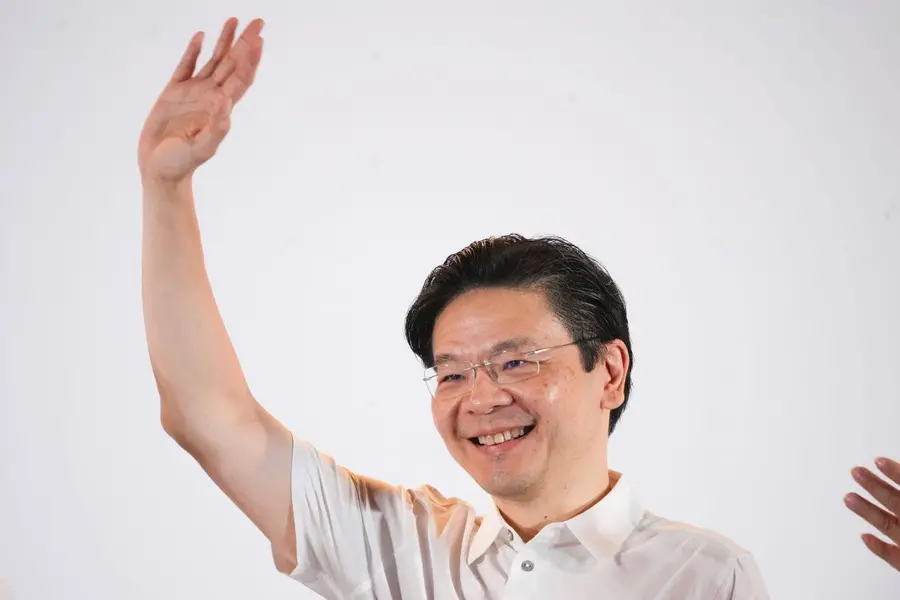
Singapore’s long-dominant People’s Action Party (PAP) has secured an overwhelming win in Saturday’s general election, giving Prime Minister Lawrence Wong a firm mandate to lead the country through mounting global economic challenges, particularly concerns over upcoming US tariffs.
The PAP claimed 87 out of 97 seats in the national legislature, drawing 65.57% of the more than 2.4 million votes cast—an emphatic show of support that outperformed its 2020 result.
“Singaporeans gave the PAP a strong mandate to govern,” Wong said during a press conference after the results were declared. “The results will put Singapore in a better position to face this turbulent world,” he added, calling the outcome a “clear signal of trust, stability and confidence in your government.”
This election was Wong’s first major electoral test since taking office, and he had appealed to voters to back his leadership amid the uncertainty stemming from former US President Donald Trump’s tariff threats. Trump’s tariff policy, briefly paused but still looming, has created fears of a broader trade disruption that could hurt Singapore’s export-reliant economy.
Though the PAP has maintained political dominance since Singapore’s independence in 1965, its grip has been tested in recent years by a more vocal electorate and high-profile controversies involving the party’s top brass. Despite that, the party’s popularity rose in this election compared to 2020.
Wong, previously praised for his leadership of Singapore’s Covid-19 response, succeeded long-serving Prime Minister Lee Hsien Loong last year. Lee is the son of Singapore’s founding father, Lee Kuan Yew.
In the final days of campaigning, both Wong and Lee were active in key battleground constituencies. According to political analyst and former newspaper editor P N Balji, “The intense campaigning by PM Lawrence Wong and former PM Lee Hsien Loong in the hot seats must have helped a lot and the fear of Trump’s tariffs must have worried voters as well.”
At a jubilant rally following the results, PAP supporters clad in white and waving flags emblazoned with the party’s red lightning bolt emblem celebrated the victory. “The PAP is the government and most of the time, things have been going smoothly,” said Arham, an 18-year-old student. “To me, the PAP is reliable.”
Still, the campaign trail was not without turbulence. The PAP has recently faced internal strife and scandal. Lee Hsien Loong remains entangled in a public feud with his brother, Lee Hsien Yang, who supports the opposition and has taken political asylum in the UK. At the heart of the dispute is a long-standing disagreement over the fate of their family home and Lee Kuan Yew’s legacy.
Moreover, former transport minister S Iswaran was jailed for corruption last year, and in 2023, both the speaker of parliament and an MP resigned over an affair.
Meanwhile, Singapore’s opposition—most notably the Workers’ Party (WP)—had hoped to build on its historic 2020 breakthrough, when it captured 10 out of 93 seats. The WP ran a polished campaign this year with a strong slate of candidates, including a prominent lawyer, and drew large crowds to its rallies. However, the enthusiasm did not translate into major electoral gains, as has been the pattern in past elections.
Published: 04 May 2025, 01:24 pm IST
Related Topics
Disclaimer: Kindly avoid objectionable, derogatory, unlawful and lewd comments, while responding to reports. Such comments are punishable under cyber laws. Please keep away from personal attacks. The opinions expressed here are the personal opinions of readers and not that of Mathrubhumi.
