
Kyiv: Senior military officials from over two dozen countries convened near London on Thursday to advance plans for an international peacekeeping force in Ukraine, as negotiations over a partial ceasefire continue.
U.K. Prime Minister Keir Starmer acknowledged uncertainty over a final peace deal but emphasized that progress was being made. "We are moving in the right direction," he said, describing a “coalition of the willing” led by Britain and France, now entering an operational phase.
“We are further ahead this week than last week, and last week we were ahead of the week before,” Starmer added. “If these talks succeed, we must be ready to defend the agreement.”
A limited ceasefire was agreed in principle between Ukraine and Russia on Wednesday after U.S. President Donald Trump held talks with both sides. However, key details—including restrictions on potential targets—are still being finalized.
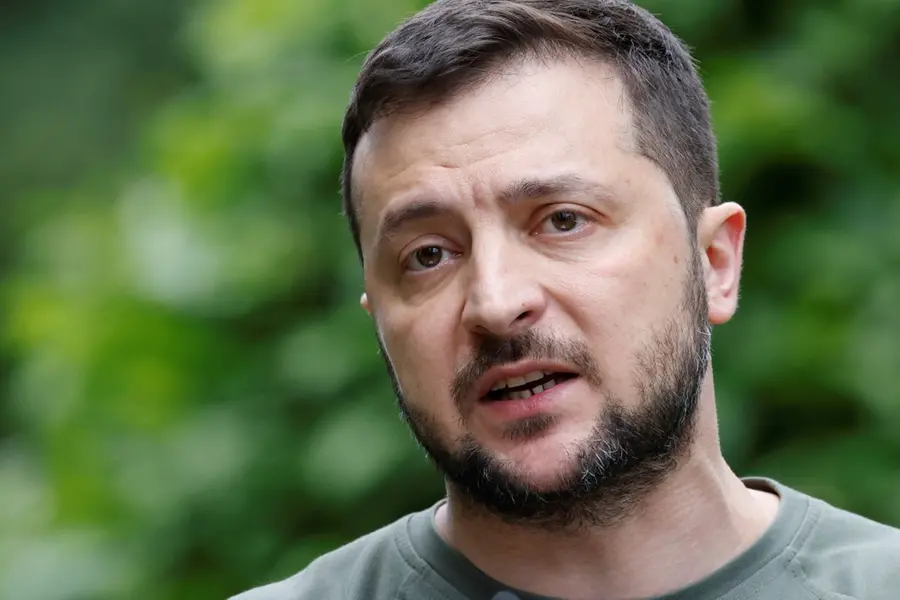
Speaking in Norway, Ukrainian President Volodymyr Zelenskyy confirmed that while he initially sought a broader ceasefire, he is working with the U.S. to prevent strikes on energy and civilian infrastructure.
“I raised this issue with President Trump and clarified that Ukraine will identify what we consider to be civilian sites,” Zelenskyy said. “I want to ensure there is no misunderstanding on what has been agreed.”
The deal follows Russian President Vladimir Putin’s rejection of a 30-day full ceasefire proposed by Trump, underscoring the complexity of efforts to bring the three-year war to an end.
Negotiators from Russia and the U.S. are set to meet on Monday in Riyadh, Saudi Arabia, according to Putin’s foreign affairs adviser, Sergei Ushakov. Meanwhile, Ukrainian and U.S. teams will hold technical discussions, with the U.S. mediating indirect talks between Kyiv and Moscow through shuttle diplomacy.
Kropyvnytskyi, a city in central Ukraine, faced its biggest attack of the war as about four dozen drones injured 14 people, including a couple with serious burns, and damaged houses and apartments.
"In a cruel twist, enemy drones hit Myru Street (‘Peace Street’ in English),” Andrii Raikovych, head of the regional administration, said.
More than 50 drones were intercepted in Russia's Saratov region — the largest attack of its kind in the area — shattering windows in a hospital and damaging two kindergartens, a school and about 30 homes, Gov. Roman Busargin said. The attacks were focused on Engels, an industrial city near Russia's main base for nuclear-capable strategic bombers.
The U.K. Defense Ministry released its latest estimates on Russian casualties, saying 900,000 Russian troops have been killed or wounded since Moscow’s invasion of Ukraine three years ago. That’s a jump of 200,000 from a fall estimate after it said Russian forces suffered heavy losses in October.
Defense intelligence said up to 250,000 Russian soldiers had been killed.
Western estimates of the parties’ war losses have varied and couldn’t be independently verified.
War losses have been a tightly guarded secret in Russia. The Defense Ministry’s most recent figures were from 2023 when it reported 6,000 deaths, which was regarded as unreliable.
The U.K. did not release a similar estimate for Ukrainian casualties.
Zelenskyy told NBC News last month that more than 46,000 soldiers had been killed, and more than 350,000 wounded. Those figures couldn’t be independently confirmed and could be an undercount.
If peace comes to Ukraine, the number of troops that would help enforce it is vague. Officials have cited figures of between 10,000 and 30,000 troops.
Only Britain and France have said they are willing to send troops, though countries including Australia, Canada, France and Finland say they are open to being involved in some way.
Around 30 leaders were involved in a video meeting on Saturday including Macron, Zelenskyy, Italian Prime Minister Giorgia Meloni, leaders from Australia, Canada and New Zealand and officials from NATO and the European Union.
Russia has said it will not accept any troops from NATO countries being based on Ukrainian soil. And Trump has given no sign the U.S. will guarantee reserve firepower in case of any breaches of a truce. Starmer says the plan won’t work without that U.S. “backstop.”
In addition to the meeting in England, EU leaders in Brussels planned to discuss Ukraine’s security needs with Zelenskyy during a meeting about ramping up defense spending after the Trump administration signaled Europe must take care of its own security.
German Chancellor Olaf Scholz said Ukraine must remain an independent democratic nation, continue its journey toward EU membership and maintain strong army after a peace agreement.
The German parliament’s budget committee is expected to decide Friday to clear up to 3 billion euros ($3.3 billion) in extra funding for German military aid to Ukraine this year. That comes after parliament voted to loosen Germany’s debt rules for military and security spending.
Kremlin spokesman Dmitry Peskov said European plans for raising military spending conflicted with Putin and Trump's efforts to reach a peace deal.
“Europe has engaged in militarization and has turned into a party of war,” Peskov said.
Published: 20 Mar 2025, 11:51 pm IST
Related Topics
Disclaimer: Kindly avoid objectionable, derogatory, unlawful and lewd comments, while responding to reports. Such comments are punishable under cyber laws. Please keep away from personal attacks. The opinions expressed here are the personal opinions of readers and not that of Mathrubhumi.
