
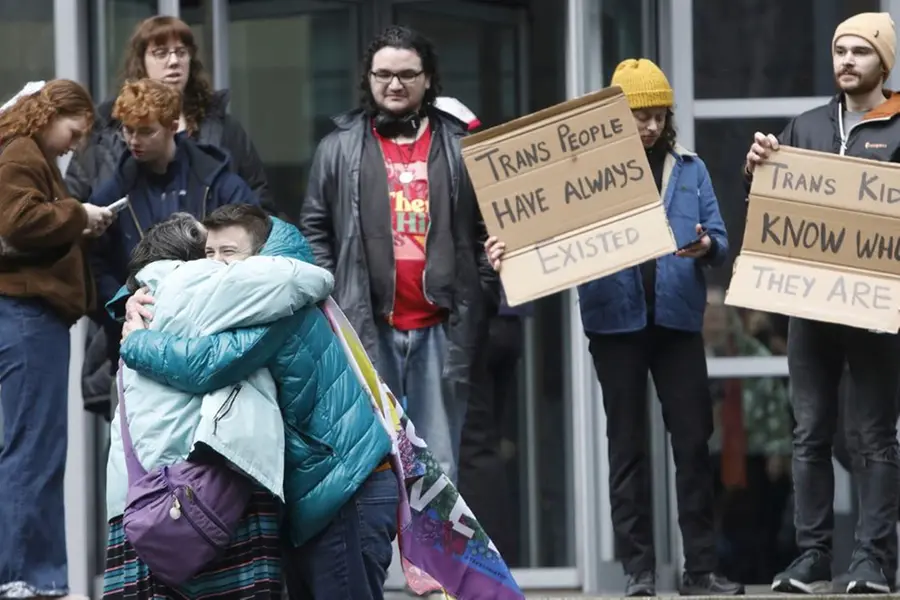
Seattle, USA: A second federal judge has temporarily halted US President Donald Trump’s executive order that stops federal support for gender-affirming care for transgender youth under 19.
US District Court Judge Lauren King granted a temporary restraining order on Friday after Washington, Oregon, and Minnesota’s Democratic attorneys general filed a lawsuit against the Trump administration last week. Three doctors also joined the lawsuit, which was filed in the Western District of Washington.
Also Read

This ruling follows a similar decision by Judge Brendan Hurson in Baltimore, who temporarily blocked Trump’s executive order in response to a separate lawsuit. Hurson’s order, which lasts for 14 days, could be extended, effectively putting Trump’s directive on hold while the case continues. Both judges were appointed by President Joe Biden.
Details of Trump's executive order
Trump signed the executive order last month, stopping federal funding for institutions that provide gender-affirming care and directing federally-run insurance programmes, including Medicaid and TRICARE for military families, to exclude coverage for such treatments. The order also urges the Department of Justice to pursue litigation and legislation against gender-affirming care.
The lawsuit filed in Seattle argues that Trump’s order violates equal rights protections, the separation of powers, and the rights of states to regulate matters not explicitly granted to the federal government. In court filings, the Trump administration defended its actions, claiming, “The President's authority to direct subordinate agencies to implement his agenda, subject to those agencies' own statutory authorities, is well established.”
Trump’s broader policies on gender and transgender rights
In addition to the gender-affirming care order, Trump has signed several other orders affecting transgender people. These include proposals to ban transgender individuals from military service, establish rules on how schools can teach about gender, and restrict transgender athletes from competing in women’s sports.
Legal challenges to Trump’s policies have already been filed, including those related to the military order, the transfer of transgender women in federal prisons to men’s facilities, and limiting the ability to change gender markers on passports. Other lawsuits are expected, as challenges to a variety of Trump’s policies continue.
As transgender people have gained visibility and some level of acceptance, there has been significant opposition. At least 26 states have passed laws restricting or banning gender-affirming care for minors. The US Supreme Court heard arguments last year regarding Tennessee’s ban on gender-affirming care but has yet to rule on its constitutionality.
Agency
Published: 15 Feb 2025, 07:59 am IST
Related Topics
Disclaimer: Kindly avoid objectionable, derogatory, unlawful and lewd comments, while responding to reports. Such comments are punishable under cyber laws. Please keep away from personal attacks. The opinions expressed here are the personal opinions of readers and not that of Mathrubhumi.