
The Oreshnik deployment comes at a time of heightened tension, with Russia leveraging advanced missile systems to strengthen its hand in Ukraine peace talks while sending a stern warning to the West.
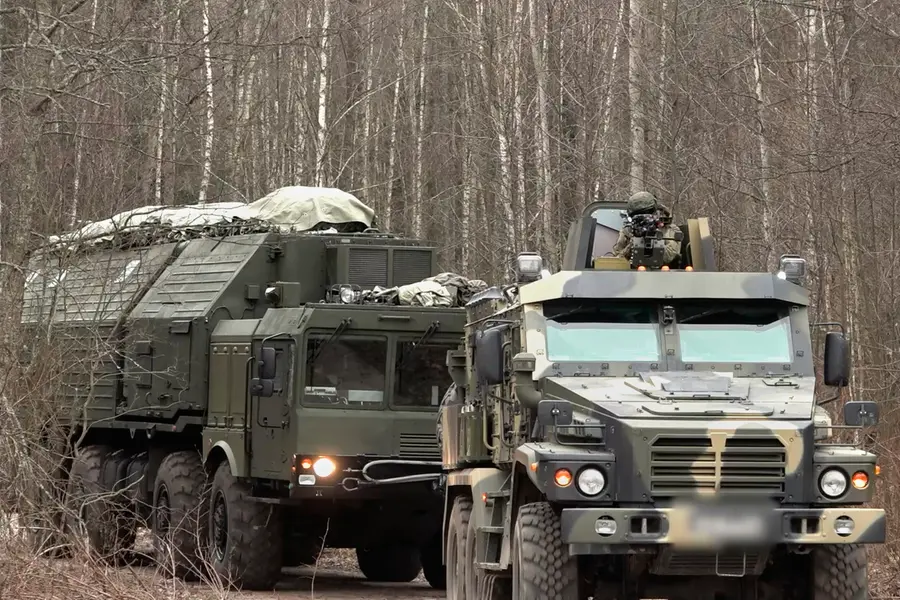
Moscow: Russia’s nuclear-capable Oreshnik missile system has officially entered active service in Belarus, the Russian Defence Ministry confirmed Tuesday, as US-led efforts to broker a peace deal in the nearly four-year Ukraine war reach a critical juncture.
Missile system goes operational
The Russian Defence Ministry released video footage showing combat vehicles of the mobile intermediate-range ballistic missile system moving across forests as part of combat training exercises.
Belarusian President Alexander Lukashenko had earlier confirmed the arrival of the Oreshnik in the country, adding that up to 10 such missile systems will be stationed on Belarusian soil.
Earlier this month, Russian President Vladimir Putin stated that the Oreshnik would enter combat duty before year-end, warning that Moscow would push to extend its gains in Ukraine if peace talks with Kyiv and Western allies faltered.
The deployment coincides with a pivotal moment in Ukraine peace negotiations. US President Donald Trump hosted Ukrainian President Volodymyr Zelenskyy at his Florida resort on Sunday, stating that Moscow and Kyiv were “closer than ever before” to a settlement, though he cautioned that the negotiations could still collapse.
Putin has consistently presented himself as negotiating from a position of strength, highlighting Russia’s military superiority while Ukrainian forces struggle to contain the larger Russian army.
Oreshnik’s capabilities and threats
Russia first tested a conventionally armed Oreshnik — named after the hazelnut tree — in November 2024, striking a Ukrainian factory. The missile reportedly carries multiple warheads, travels at up to Mach 10, and is touted as impossible to intercept. Putin has claimed that even conventional strikes could match the devastation of a nuclear attack.
The Belarusian Defence Ministry confirmed the missile has a range of up to 5,000 kilometres, potentially reaching Poland in 11 minutes and NATO headquarters in Brussels in 17 minutes. Its warhead type — nuclear or conventional — is unknown until impact.
Intermediate-range missiles (500–5,500 km) were banned under a Soviet-era treaty abandoned by the US and Russia in 2019. Russia has previously deployed tactical nuclear weapons in Belarus, using the territory to launch its full-scale invasion of Ukraine in February 2022.
The Oreshnik deployment comes at a time of heightened tension, with Russia leveraging advanced missile systems to strengthen its hand in Ukraine peace talks while sending a stern warning to the West. Analysts say the move signals a more aggressive Russian posture and underscores Belarus’ strategic role in Moscow’s military ambitions.
Published: 30 Dec 2025, 06:45 pm IST
Disclaimer: Kindly avoid objectionable, derogatory, unlawful and lewd comments, while responding to reports. Such comments are punishable under cyber laws. Please keep away from personal attacks. The opinions expressed here are the personal opinions of readers and not that of Mathrubhumi.
