
On June 1, 2025, Ukraine executed a daring and meticulously planned operation codenamed 'Spider Web', marking one of the most audacious drone attacks in the ongoing Russia-Ukraine War. The operation targeted Russian strategic air bases deep inside Russia, showcasing Ukraine’s growing prowess in asymmetric warfare.
The attack involved 117 first-person view (FPV) drones, smuggled into Russia and launched from trucks near five key air bases: Belaya in Irkutsk, Olenya in Murmansk, Dyagilevo in Ryazan, Ivanovo Severny in Ivanovo, and Ukrainka in Amur.
These bases, spanning five time zones and up to 4,300 kilometers from Ukraine, housed critical Russian assets, including Tu-95, Tu-22M3, and Tu-160 strategic bombers and A-50 surveillance aircraft.
The operation, planned over 18 months by Ukraine's Security Service (SBU) under President Volodymyr Zelenskyy and SBU chief Vasyl Maliuk, was a logistical marvel.
Drones were hidden in wooden cabins with retractable roofs mounted on trucks, driven to locations near the bases by unsuspecting drivers.
Once activated, the drones struck with precision, damaging or destroying over 40 aircraft, including 34% of Russia's strategic cruise missile carriers, with estimated damages of $7 billion.
The Belaya air base in Siberia, hosting Tu-22M3 bombers, and Olenya, with Tu-95s, saw significant losses, confirmed by satellite imagery and videos showing burning aircraft.
The strike on Belaya marked Ukraine's first attack in Siberia, highlighting the operation's unprecedented reach.
Ukraine's SBU claimed the attack crippled Russia’s ability to launch long-range missile and drone strikes, targeting bombers that had recently fired Kh-101 cruise missiles on Ukrainian cities.
The operation's timing, just before peace talks in Istanbul, was strategic, signaling Ukraine's resolve to negotiate from strength. Russian defenses were caught off-guard, with the Ministry of Defense admitting damage at Murmansk and Irkutsk while claiming to have repelled attacks elsewhere.
The loss of irreplaceable aircraft, like the Tu-95 and Tu-160, dealt a severe blow to Russia's strategic aviation, with pro-Russian bloggers calling it a 'black day' for their air force.
Oreshnik's shadow looms after Spider Web strike
The Spider Web attack likely provoked a strong reaction from Russia, with some speculating it could prompt the use of advanced weaponry like the Oreshnik missile, first deployed in November 2024 against Dnipro.
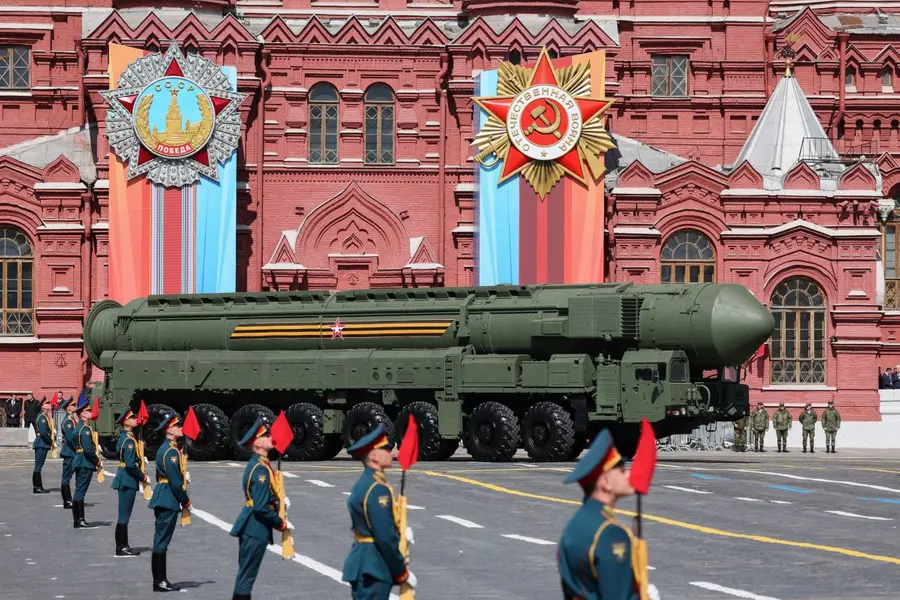
The Oreshnik, a hypersonic intermediate-range ballistic missile based on the RS-26 Rubezh, is a formidable weapon. Capable of carrying six warheads, each with six submunitions, it can deliver 36 explosive units over a wide area, acting like a shotgun blast.
Its Mach 10 speed (2.5–3 kilometers per second) and ability to maneuver mid-flight make it nearly impossible to intercept, as boasted by President Vladimir Putin.
While the Dnipro strike used inert submunitions, the Oreshnik's potential to carry nuclear or conventional warheads makes it a versatile and terrifying threat.
The timing and scale of the Spider Web attack, which humiliated Russia's air defenses and damaged its strategic bomber fleet, may have pushed Putin to consider escalating with the Oreshnik.
Posts on X and military analyses suggest Russia could deploy the Oreshnik as retaliation, especially given its prior use in response to Western-supplied ATACMS and Storm Shadow missile strikes on Russian territory.
Ukrainian officials, anticipating a potent Russian response, have flagged the Oreshnik as a possible countermeasure, noting its hypersonic capabilities and Ukraine's lack of advanced defenses like THAAD or Arrow 3 to counter it.
The Oreshnik's deployment in Dnipro was seen as a warning of Russia's readiness to escalate, and the Spider Web attack's success could have heightened this threat.
By targeting Russia's nuclear-capable bombers, Ukraine struck at a key component of Russia's nuclear triad, potentially prompting Putin to flex his missile capabilities to reassert dominance.
The Oreshnik's ability to strike at ranges up to 3,410 miles, covering most of Europe, amplifies its strategic value in such a scenario, especially against a Ukraine vulnerable to its hypersonic speed and submunition spread.
In summary, Ukraine's Spider Web attack demonstrated its ability to strike deep into Russia, disrupting Moscow's air superiority. This bold move likely intensified Russia's resolve to showcase its own advanced weaponry, with the Oreshnik missile emerging as a probable tool for retaliation.
As tensions escalate, the interplay between Ukraine's drone ingenuity and Russia's missile prowess underscores the war’s evolving and dangerous dynamics.
The author is a Defence, Aerospace & Geopolitical Analyst.
Published: 03 Jun 2025, 04:16 pm IST
Related Topics
Disclaimer: Kindly avoid objectionable, derogatory, unlawful and lewd comments, while responding to reports. Such comments are punishable under cyber laws. Please keep away from personal attacks. The opinions expressed here are the personal opinions of readers and not that of Mathrubhumi.
