
At least 12 people were killed and 309 injured in a Houthi attack on Riyadh's King Khalid International Airport, prompting US President Donald Trump to condemn the strikes and consider possible support for Saudi Arabia. Flights were disrupted as the regional conflict intensified.
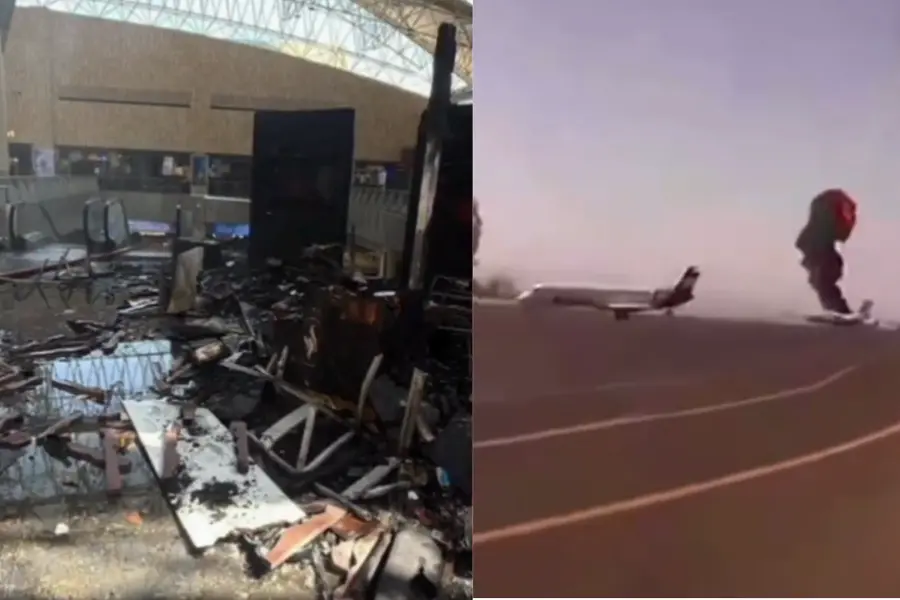
Riyadh: At least 12 people were killed and 309 injured in an attack on Saudi Arabia's King Khalid International Airport in Riyadh on Saturday, October 10, according to the kingdom's General Authority of Civil Aviation. US President Donald Trump condemned the attack as “not acceptable” and said Washington was considering whether to support Saudi Arabia through military action against Yemen's Iran-backed Houthi movement.
The attack marks a further escalation in the regional conflict, with Saudi authorities warning of a firm response and airlines suspending or cancelling services. The incidents have also raised concerns about the security of civilian aviation infrastructure across the Middle East.
Also Read

Riyadh airport attack: top updates
1. Trump condemns attack, considers possible US involvement
Trump condemned the attack while speaking to reporters at Joint Base Andrews in the United States on Saturday. He said he would speak with Saudi Crown Prince Mohammed bin Salman following the strike.
“What happened in Saudi Arabia is not acceptable,” Trump said.
Asked whether the United States would join Saudi military operations against the Houthis, Trump said Washington was considering the possibility. “We may. We're going to look at it. We just found out about the recent attack, so we'll make a decision. We move very quickly,” he said.
US Secretary of State Marco Rubio also condemned the attacks, saying they demonstrated “a blatant disregard for innocent civilian life”. Rubio added that an American citizen had been killed in the strikes.
2. At least 12 killed, 309 injured
Saudi Arabia's General Authority of Civil Aviation reported that 12 people were killed and 309 injured in Saturday's attack on King Khalid International Airport.
The fatalities included four Saudi citizens and nationals of Bangladesh, Palestine, the United States, Egypt, Jordan, Syria and Sudan. Some of the injured were reported to be in critical condition.
The attack was the latest in a series of Houthi strikes targeting Saudi Arabia. According to the reports, it was the group's third attack against the kingdom during the week.
3. Saudi-led coalition vows firm response
The Saudi-led coalition supporting Yemen's internationally recognised government blamed the Iran-backed Houthi movement for the attack.
Coalition spokesperson Major General Turki Al-Maliki described the strike on the airport's passenger terminal as a terrorist act and a war crime under international humanitarian law.
“The Joint Forces Command of the Coalition will respond to this terrorist attack firmly and in accordance with international humanitarian law and its customary rules,” Al-Maliki said in a statement carried by the Saudi Press Agency.
The statement signalled the possibility of further military action as Saudi Arabia faces repeated attacks on its territory.
4. Missile intercepted near Riyadh; projectile reported near Dammam airport
The Saudi-led coalition said on Sunday that it had intercepted and destroyed a Houthi ballistic missile in Al-Kharj, southeast of Riyadh, near the area where Prince Sultan Airbase is located.
Separately, Al-Maliki reported that a projectile had fallen near King Fahd International Airport in Dammam, in Saudi Arabia's Eastern Province. Further details about that incident were not immediately provided in the report.
The incidents have heightened concerns about the potential expansion of attacks against Saudi airports and other critical infrastructure.
5. Riyadh airport suspends operations as flights are disrupted
Saudi Arabia's civil aviation authority temporarily suspended operations at King Khalid International Airport following the attack while authorities assessed the damage.
Flight-tracking website FlightAware reported that at least 291 flights at Riyadh airport were cancelled over a 24-hour period. Flightradar24 also showed widespread disruption, with flights bound for Riyadh diverted or cancelled on Saturday.
Several international airlines, including Air India, FlyDubai, Lufthansa Group and Pakistan International Airlines, suspended flights to and from Riyadh and other Saudi airports for varying periods.
The disruption affected passengers travelling through one of the kingdom's main international aviation hubs.
6. Houthis warn airlines against entering Saudi airspace
Following the attack, the head of the Houthi media office claimed on X that the group had shut down Riyadh's international airport.
The Houthis also warned airlines against entering Saudi airspace, declaring it a military operations zone. The warning came after Yemen's Saudi-backed government launched an offensive against the group on Monday, according to the report.
The claim regarding the airport's closure was made by the Houthi official. Saudi authorities separately confirmed that airport operations had been temporarily suspended following the attack.
7. European aviation regulator expands Saudi airspace guidance
The European Union Aviation Safety Agency expanded its guidance on Saudi airspace amid concerns about the Houthis' ability to strike targets deeper inside the kingdom.
The agency cited the increased focus on aviation infrastructure and warned that missile and drone attacks, along with interception efforts, could raise the risk of civilian aircraft being misidentified.
The warning highlights the wider consequences of the conflict for international airlines, passengers and regional air transport.
8. Yemen's government seeks UN action over airport attacks
Yemen's internationally recognised government submitted a letter to the United Nations and the Security Council concerning a Houthi attack on Aden airport earlier in the week, according to the Saudi Press Agency.
The letter, sent by Yemen's Permanent Representative to the UN, Abdullah Al-Saadi, called for condemnation of the attack, accountability for those responsible and full implementation of the arms embargo imposed on the Houthi movement.
The Yemeni government argued that addressing the threat required tackling the armed group's control of parts of the country and its access to capabilities used against civilians, civilian infrastructure and international navigation.
Why the Riyadh airport attack matters
The attack raises concerns beyond the immediate death toll because it targets civilian aviation infrastructure at a time of heightened military confrontation across the Middle East.
Risk to civilian aviation: Repeated strikes against airports and threats to airspace can force airlines to cancel flights, divert aircraft and reassess routes. Missile interceptions and drone activity also create risks for civilian aircraft operating near affected areas.
Potential US involvement: Trump's remarks indicate that Washington is considering its response, but they do not confirm that the United States will join Saudi strikes against the Houthis. Any decision could affect the scale and geographical reach of the conflict.
Risk of wider regional escalation: Saudi Arabia's vow to respond, combined with reports of further missile and projectile incidents, raises the possibility of additional military action. The extent of any escalation will depend on subsequent attacks and the responses by Saudi Arabia, the United States and the Houthis.
Economic and travel implications: Flight cancellations and airspace restrictions can disrupt passenger travel, cargo movement and regional connectivity. Prolonged instability could increase costs for airlines and travellers while complicating operations across the Gulf.
The immediate priorities are to establish the full extent of the damage, assess the security situation around Saudi airports and determine how the parties respond to the attack. Trump's comments leave open the question of whether the United States will take a more direct military role.
Published: 11 Oct 2026, 07:57 am IST
ABOUT THE AUTHOR
Disclaimer: Kindly avoid objectionable, derogatory, unlawful and lewd comments, while responding to reports. Such comments are punishable under cyber laws. Please keep away from personal attacks. The opinions expressed here are the personal opinions of readers and not that of Mathrubhumi.