
Prince Andrew’s arrest deepens scrutiny on the royals, with King Charles emphasising no palace interference in the inquiry.
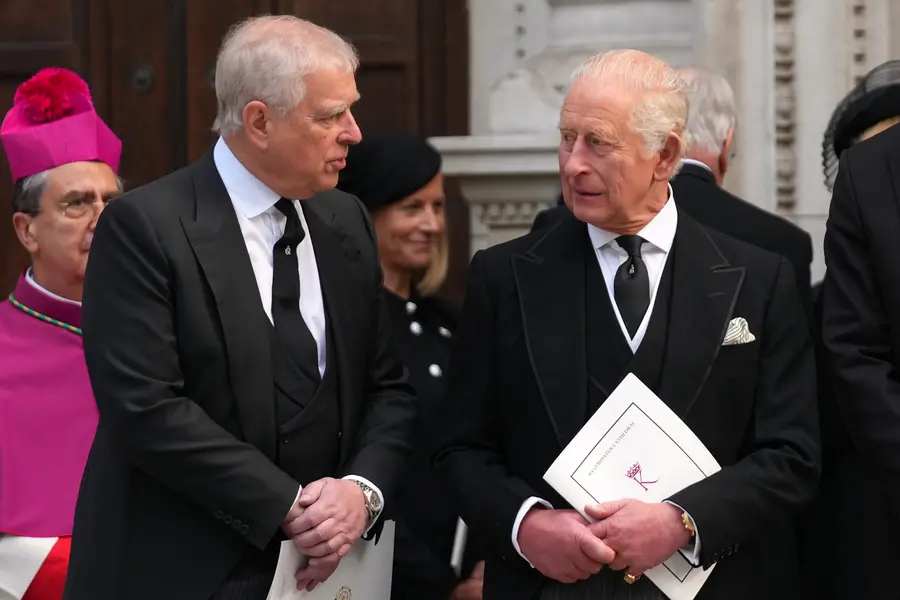
London: The British monarchy has plunged into its gravest modern crisis following the sensational arrest of Andrew Mountbatten-Windsor. In a dawn raid that has sent shockwaves across the globe, officers took the man formerly known as Prince Andrew into custody at the King’s private Sandringham estate.
The disgraced royal spent roughly 11 hours in detention on suspicion of misconduct in public office, a charge linked to his controversial ties with the late US sex offender Jeffrey Epstein. While he was "released under investigation" late Thursday, police have continued searching his former 30-room residence, Royal Lodge, on the Windsor estate.
Confidentiality and the 'Trade Envoy' Scandal
The heart of the investigation lies in Andrew’s former role as a UK trade envoy, a post he held from 2001. Documents released by the US Justice Department suggest he may have shared sensitive commercial or political information with Epstein. Specifically, a November 2010 email appears to show Andrew forwarding reports on his official visits to Hong Kong, Vietnam, and Singapore to the financier just five minutes after receiving them.
Also Read| Prince Andrew's arrest and Epstein links: King Charles III says ‘law must take its course’
Another email allegedly shows him sending Epstein a confidential brief regarding investment opportunities in Helmand Province, Afghanistan. Under official guidance, trade envoys are bound by a duty of confidentiality. Misconduct in public office is defined as the "serious willful abuse or neglect of the power or responsibilities of the public office held," an offence that technically carries a maximum sentence of life imprisonment.
King Charles Breaks Silence
As the drama unfolded, King Charles III moved swiftly to distance the Crown from his brother. In a rare, personally signed statement, the King insisted that "the law must take its course" and confirmed that Buckingham Palace would support the police enquiry. "My family and I will continue in our duty and service to you all," the King added, attempting to project stability even as royal historians compared the event to the 1936 abdication or the 1646 arrest of Charles I.
The arrest, which coincided with Andrew’s 66th birthday, marks the culmination of a dramatic fall from grace. Last year, the King stripped his brother of his military titles and royal honours. Despite being eighth in the line of succession, Andrew has been forced to leave his Windsor mansion and now resides at the King's private retreat in Norfolk.
Also Read | Timeline of Andrew Mountbatten-Windsor’s fall over Epstein links
A Long Fall From Grace
While the current arrest focuses on misconduct in office, the broader Epstein scandal continues to haunt the House of Windsor. At least nine UK police forces are assessing claims stemming from millions of pages of Epstein files. These files include allegations from Virginia Giuffre, who claimed she was trafficked by Epstein to have sex with the then-prince on three occasions. Andrew has consistently denied all wrongdoing and settled a US civil lawsuit with Giuffre in 2022 without admitting liability.
Following his release from Aylsham police station, the former prince was photographed looking "haggard and wild-eyed" in the back of a vehicle. While in custody, he likely underwent standard procedures including DNA swabs and finger printing. Experts note that proving misconduct is notoriously difficult, as there is no standard definition for what constitutes a "public officer". For now, the Crown Prosecution Service must decide if there is a "realistic prospect of conviction" to move forward with formal charges
Published: 20 Feb 2026, 06:53 pm IST
Disclaimer: Kindly avoid objectionable, derogatory, unlawful and lewd comments, while responding to reports. Such comments are punishable under cyber laws. Please keep away from personal attacks. The opinions expressed here are the personal opinions of readers and not that of Mathrubhumi.
