
This is the third major earthquake to strike Afghanistan since the Taliban regained power in 2021
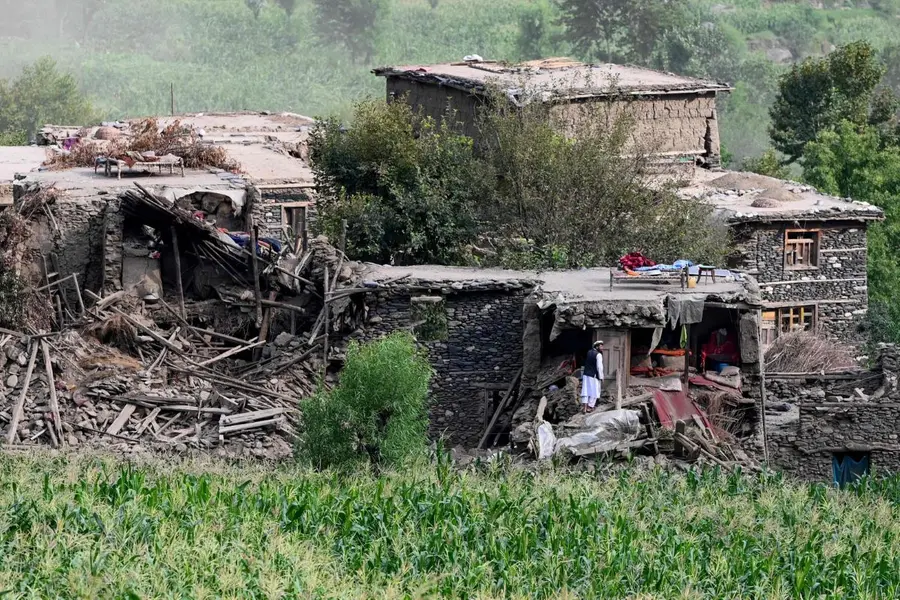
Jalalabad: The death toll from a powerful earthquake that struck eastern Afghanistan on Sunday has risen to over 1,400, with more than 3,000 people injured, according to Taliban government spokesperson Zabihullah Mujahid.
The 6.0-magnitude quake caused extensive destruction across several provinces, flattening entire villages and trapping residents beneath the rubble of homes built largely from mud bricks and timber, which offered little resistance to the tremors.
Rescue operations are underway in what one UN official described as a “race against time” to reach survivors in remote, mountainous regions. The rough terrain has severely hindered relief efforts, prompting Taliban authorities to deploy dozens of commandos to evacuate the injured from areas inaccessible by air or conventional vehicles.
Kunar province hit hardest
The casualty figures released so far are only for Kunar province, suggesting the overall toll could rise significantly as more information emerges from other affected regions.
“This is a life-or-death situation,” said Indrika Ratwatte, the UN’s resident coordinator in Afghanistan, during a press briefing on Tuesday. “We cannot afford to forget the people of Afghanistan, who are facing multiple crises simultaneously. The resilience of these communities is stretched to breaking point.”
Ratwatte also warned of a potential exponential rise in casualties, particularly as many people were asleep when the earthquake struck, increasing the likelihood of them being trapped or killed under collapsing homes.
Third major earthquake under Taliban rule
This is the third major earthquake to strike Afghanistan since the Taliban regained power in 2021, and it adds to the long list of humanitarian crises facing the country. Afghanistan is currently grappling with a crumbling economy, deep cuts to international aid, and the mass return of Afghan nationals from Iran and Pakistan.
The Taliban government, which is only officially recognised by Russia, has issued an appeal for international assistance. However, global support remains limited amid donor fatigue and growing concerns about the regime’s restrictions on women and girls, including a ban on female NGO workers.
Earlier this year, the United States slashed its aid contributions to Afghanistan, citing concerns that funds were being diverted to support the Taliban regime.
Healthcare system on the brink
Kate Carey, Deputy Head of the UN’s Office for the Coordination of Humanitarian Affairs (OCHA) in Afghanistan, highlighted the dire state of the country's health infrastructure. She revealed that more than 420 health facilities have either shut down or suspended operations due to a “massive reduction” in funding -- with 80 closures in the eastern region alone, at the epicentre of Sunday’s quake.
“The result is that the remaining health facilities are overwhelmed, lacking in supplies and staff, and too far from the worst-hit communities,” Carey said. “Emergency trauma care is absolutely critical in the first 24 to 72 hours after an earthquake -- and we’re losing that window.”
Despite the scale of the disaster, aid agencies are warning that help for Afghanistan is being outpaced by other global crises, and donor fatigue is setting in. Ratwatte urged the international community to act swiftly to prevent further loss of life.
“We're not just dealing with one crisis here -- we're dealing with the compounding impact of decades of instability, economic isolation, and now a natural disaster,” he said. “The people of Afghanistan cannot be left behind.”
Published: 02 Sept 2025, 05:09 pm IST
Related Topics
Disclaimer: Kindly avoid objectionable, derogatory, unlawful and lewd comments, while responding to reports. Such comments are punishable under cyber laws. Please keep away from personal attacks. The opinions expressed here are the personal opinions of readers and not that of Mathrubhumi.
