
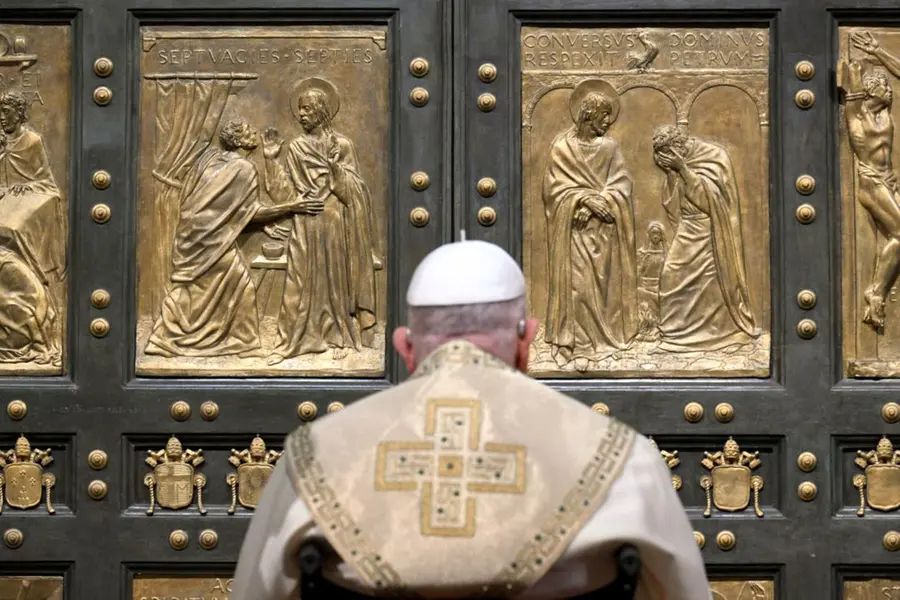
Pope Francis, the first Latin American pontiff, has passed away at the age of 88. As the Church begins preparations for the selection of his successor, the Vatican must first carry out a long-standing and delicate tradition — preserving the Pope’s body for public viewing. With Rome’s warm and humid weather, the process of embalming becomes especially important to allow the faithful to pay their final respects.
Here is a simplified guide to the embalming process likely to be used for Pope Francis, based on historic and modern practices followed by the Vatican.
Modern embalming: A step-by-step process
In modern embalming, the process starts with thoroughly washing the body to remove any bacteria on the surface. As rigor mortis sets in, the body becomes stiff. Morticians typically perform cosmetic procedures to maintain a peaceful expression, including sealing the eyes with plastic caps and wiring the jaw shut. Cotton may be placed inside the mouth to soften the appearance.
The body is then prepared for chemical treatment. A small incision is made above the collarbone to access the carotid artery and jugular vein. The embalming machine pumps in a preservative mixture through the artery while draining out blood through the vein. This mixture usually contains formaldehyde, alcohol, water, and dyes to give the skin a natural colour.
Next, a vacuum-like needle is used to remove fluids from the abdomen, and more embalming fluid is inserted. This step is important to remove harmful microbes and prevent bloating or odour.
Special Papal considerations
The Vatican follows modern methods, but in earlier times, Popes were embalmed using traditional techniques. These included organ removal, washing the body with lye, and stuffing body openings with herbs and wax. These practices have largely been abandoned.
Since the disastrous embalming of Pope Pius XII in 1958, which led to rapid decay, the Church has adopted standard mortuary procedures. His embalmer had used a plastic bag with herbs instead of draining fluids, causing a strong odour and a public scandal.
By contrast, Pope John XXIII was embalmed with a mixture including ethyl alcohol and potassium nitrate. According to embalmer Massimo Signoracci, the Pope "looked just as good as he did on the day after his death" even after 37 years.
However, not all Popes are embalmed. The Vatican stated that Pope John Paul II was not embalmed but only "prepared" for lying in state.
Final preparation for lying in state
After embalming or preparation, the body is dressed in red papal robes with a white mitre. It is then placed in St Peter's Basilica for three days so that the faithful may pay their last respects.
Traditionally, three coffins are used to bury a Pope to create an airtight seal and allow burial of personal items such as coins or papal documents. The Pope's body may later be exhumed and moved, especially if on the path to sainthood, as happened with Pope John XXIII.
The Church prohibits the removal of organs or organ donation after death, as the Pope's body is considered to belong to the Church.
Published: 22 Apr 2025, 10:54 am IST
Related Topics
Disclaimer: Kindly avoid objectionable, derogatory, unlawful and lewd comments, while responding to reports. Such comments are punishable under cyber laws. Please keep away from personal attacks. The opinions expressed here are the personal opinions of readers and not that of Mathrubhumi.
