
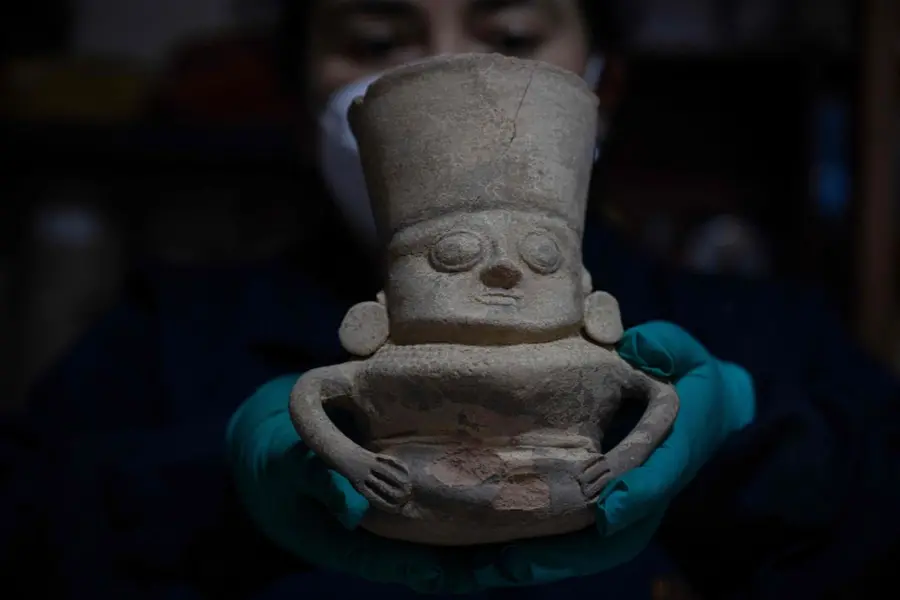
The burial site also contained a number of ceremonial items, including calabash gourds, as well as ceramic vessels—plates, bottles and jugs—adorned with geometric designs and images of fishermen. These artefacts point to the Chancay culture, a pre-Inca civilisation that flourished along Peru’s central coast between the 11th and 15th centuries.
Lima (Peru): A team of gas workers in Peru has made a remarkable archaeological discovery in the capital, Lima — the mummified remains of a boy believed to be over a thousand years old. The find was made earlier this week while laying gas pipelines in the northern district of Puente Piedra, according to Calidda, the gas company overseeing the work.
The discovery came when workers encountered the trunk of a huarango tree, a species native to Peru’s coastal regions, situated just half a metre below the surface. According to Jesús Bahamonde, Calidda’s scientific coordinator and lead archaeologist, such trees were historically used as markers for burial sites.
Bahamonde explained that the mummified remains were uncovered approximately 1.2 metres underground. The boy, estimated to be between 10 and 15 years of age, had been buried in a distinctive seated position, with arms and legs folded, and wrapped carefully in a woven shroud.
The burial site also contained a number of ceremonial items, including calabash gourds, as well as ceramic vessels—plates, bottles and jugs—adorned with geometric designs and images of fishermen. These artefacts point to the Chancay culture, a pre-Inca civilisation that flourished along Peru’s central coast between the 11th and 15th centuries.
“The style of the burial and the objects discovered suggest it dates back to between 1000 and 1200 CE,” said Bahamonde.
Such discoveries are not uncommon in Lima, which is built atop centuries of ancient history. The city is home to over 500 archaeological sites, including numerous huacas—Indigenous Quechua-language term for sacred burial grounds or ancient cemeteries.
Peruvian law requires utility companies to employ archaeologists when undertaking excavation work, precisely because of the capital’s rich historical underbelly. Since 2004, Calidda alone has recorded more than 2,200 archaeological finds during the course of its infrastructure projects.
The latest discovery adds to a growing body of evidence that Lima, far from being just a modern metropolis, rests on layers of ancient civilisations, many of which have yet to be fully uncovered.
Published: 24 Jun 2025, 04:40 pm IST
Related Topics
Disclaimer: Kindly avoid objectionable, derogatory, unlawful and lewd comments, while responding to reports. Such comments are punishable under cyber laws. Please keep away from personal attacks. The opinions expressed here are the personal opinions of readers and not that of Mathrubhumi.
