
These findings, presented at a Chennai conference, rewrite our understanding of ancient trade routes and suggest multilingualism among these traders.
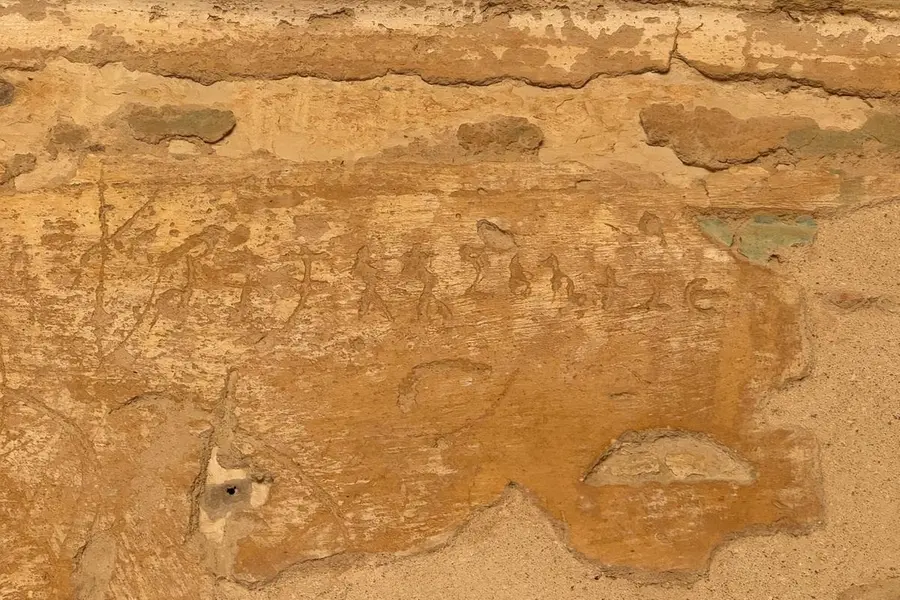
Researchers have discovered about 30 inscriptions in Indian languages, including 20 in Tamil-Brahmi script, carved into the walls of rock-cut tombs at Egypt's Valley of Kings, providing compelling evidence that Tamil traders travelled deep into ancient Egypt nearly 2,000 years ago.
The findings were presented on Wednesday at an international conference on Tamil epigraphy in Chennai by Prof. Ingo Strauch of the University of Lausanne in Switzerland and Prof. Charlotte Schmid of the École Française d'Extrême-Orient (EFEO) in Paris.
A Trader Named Cikai Korran
Among the discoveries, the name Cikai Korran, believed to be a Tamil-speaking trader from ancient Tamilagam, appears eight times across five of the six tombs examined, dating to between the 1st and 3rd centuries AD. The inscriptions are found alongside more than 2,000 Greek graffiti marks left by visitors from across the Mediterranean world during the Roman period.
"We knew that traders from Tamil Nadu visited Egypt through other inscriptions found in the ancient port cities. But this shows that they did not only come with ships and return, but they also stayed here for a longer period of time," Strauch told The Times of India.
One inscription reads "Cikai Korran - vara kanta," meaning "he came and saw," apparently imitating the formula of Greek inscriptions found at the same site, suggesting the Tamil traders were likely multilingual and literate in Greek.
Rewriting Understanding of Ancient Trade
The remaining 10 inscriptions are in Sanskrit and Prakrit, indicating visitors from various regions of the Indian subcontinent made the journey to Thebes, the ancient Egyptian capital, to trade spices and other goods.
Prof. Schmid called the findings "really extraordinary," noting the 20 Tamil inscriptions represent a major addition to the roughly 100 such inscriptions found within India itself.
Strauch first identified Indian-language inscriptions in the Valley of Kings in 2024. The tombs have been visited by hundreds of thousands of tourists, yet the inscriptions had gone unnoticed until now.
Evidence of Two-Way Trade
Senior epigraphist Y. Subbarayalu said the discovery provides proof of two-way trade during the Roman period. "Through the writings of Ptolemy and Pliny, we know that the Romans came to India for trade. But it was not clear whether it was a one-way or two-way trade," he told The Times of India.
The findings correlate with recent excavations at Berenike, an ancient Red Sea port where archaeologists from Tamil Nadu joined Polish researchers last year and found similar Tamil-Brahmi inscriptions on pottery.
Published: 12 Feb 2026, 02:15 pm IST
Related Topics
Disclaimer: Kindly avoid objectionable, derogatory, unlawful and lewd comments, while responding to reports. Such comments are punishable under cyber laws. Please keep away from personal attacks. The opinions expressed here are the personal opinions of readers and not that of Mathrubhumi.
