
After losses in Operation Sindoor, Pakistan is moving to form a high-tech Rocket Force Command modelled on China’s unit.
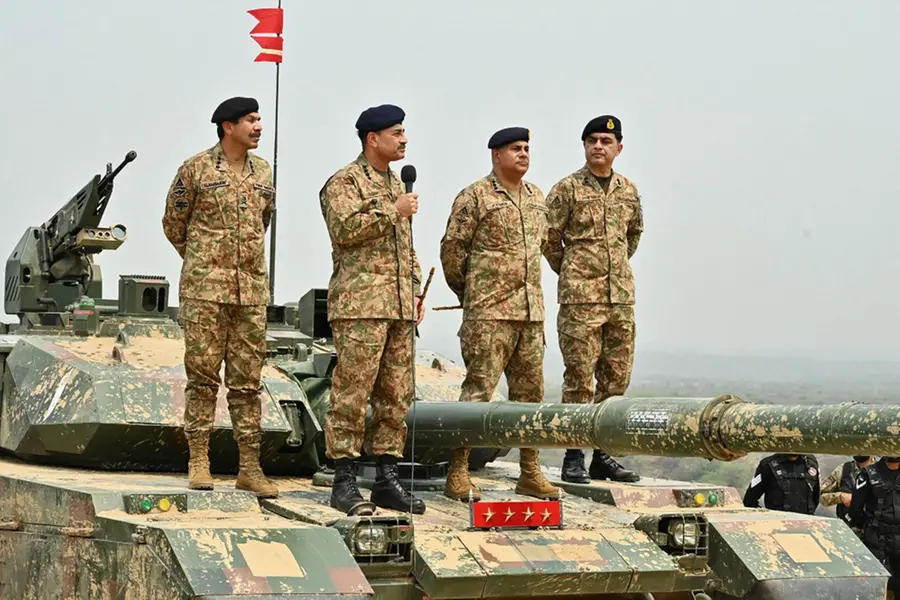
Pakistan has begun work on creating a dedicated Rocket Force Command aimed at bolstering its long-range strike capabilities, months after the military faced significant setbacks during India’s Operation Sindoor in May 2025. According to a CNN-News18 report citing intelligence agencies, the move is part of a broader effort by Islamabad to plug operational gaps exposed during last year’s escalation.
The proposal was recently cleared at a Corps Commanders’ Conference chaired by the country’s first Chief of Defence Forces, General Asim Munir. The structure of the force has been approved and formalisation is expected in the coming months.
Why Pakistan is setting up a Rocket Force
Discussions on establishing the Rocket Force began as early as December, when top military leaders reviewed Pakistan’s performance during the 2025 confrontation. Intelligence inputs suggest the formation is envisioned as a technological upgrade designed to strengthen missile deterrence and improve the army’s long-range strike capability.
The framework for the new command draws inspiration from China’s Rocket Force, established on December 31, 2015, under President Xi Jinping’s military reforms. China’s formation oversees both nuclear and conventional land-based missile systems and is considered a core component of Beijing’s strategic deterrent.
Pakistan’s Rocket Force Command is expected to be modelled along similar lines, with a senior army officer – either a lieutenant general or major general – proposed to head the new structure.
Background: Operation Sindoor and Pakistan’s response
The initiative follows India’s Operation Sindoor, which was launched after the April 2025 terror attack in Pahalgam that killed 26 people. India struck multiple terror-linked sites inside Pakistan, prompting Islamabad to retaliate under what it termed ‘Operation Bunyan-un-Marsoos’, deploying drones, loitering munitions, fighter aircraft and missiles.
However, Pakistan’s counterstrikes reportedly failed to make significant impact. Most incoming projectiles were intercepted by India’s air defence networks, including a missile aimed at New Delhi. India subsequently conducted targeted airstrikes on Pakistan Air Force bases and shot down several fighter jets during four days of hostilities.
Intelligence assessments shared with CNN-News18 say these operational shortcomings became a driving force behind Pakistan’s push to create a streamlined rocket and missile command.
India’s position: Is a Rocket Force on the cards?
India is also evaluating whether to establish its own Rocket Force, though the idea remains under consideration and no formal decision has been taken, according to intelligence officials quoted by CNN-News18. At present, the Strategic Forces Command controls India’s nuclear arsenal, while conventional weapons are managed independently by each service branch.
The concept has gained momentum amid global conflicts where long-range missiles and rocket systems have proved decisive.
Chief of Defence Staff General Anil Chauhan has previously called attention to the need for modernisation, noting that new-age warfare increasingly relies on advanced technologies such as artificial intelligence, quantum computing, hypersonic systems, robotics, edge computing and advanced materials.
Published: 13 Jan 2026, 01:16 pm IST
Related Topics
Disclaimer: Kindly avoid objectionable, derogatory, unlawful and lewd comments, while responding to reports. Such comments are punishable under cyber laws. Please keep away from personal attacks. The opinions expressed here are the personal opinions of readers and not that of Mathrubhumi.
