
Pakistan has placed journalist and researcher Danish Irshad on its Fourth Schedule, an anti-terrorism watchlist, amid a wider crackdown following protests in Pakistan-occupied Kashmir
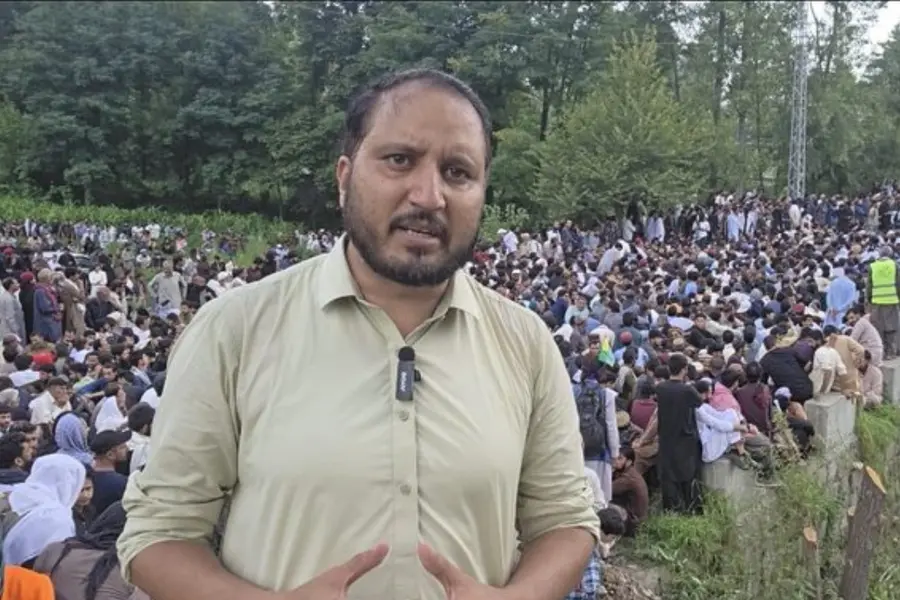
Pakistan has placed journalist and researcher Danish Irshad on its Fourth Schedule under the anti-terrorism law, amid a wider crackdown following protests in Pakistan-occupied Kashmir.
Irshad has covered POK politics and the recent unrest for years, including interviews with families who alleged that their children were killed by Pakistani security forces.
Who is Danish Irshad?
Danish Irshad is a Rawalpindi-based journalist and researcher who began reporting from Islamabad in 2015. He has covered politics and developments in Pakistan-occupied Jammu and Kashmir and Gilgit-Baltistan for nearly a decade.
He writes as a columnist for Kashmir Times and has also worked with Lahore-based Neo News. He is the author of Azad Kay Baad, a book examining the region's post-1947 history.
Why was he placed on the Fourth Schedule?
The PoJK Home Department issued the notification on July 29, 2026, placing Irshad and 23 others on the Fourth Schedule under Section 16(1) of the Azad Jammu and Kashmir Anti-Terrorism Act, 2014.
The notification described those listed as activists associated with the Jammu & Kashmir Joint Awami Action Committee (JAAC), which had been proscribed by the authorities on June 5.
However, the reports provided do not identify a specific act by Irshad that led to his designation. Irshad has said he was neither tried nor convicted before being placed on the list.
What had Irshad been reporting?
Irshad had extensively covered the POK protests and the subsequent security crackdown. His recent reporting included interviews with families who alleged that their children had been killed during actions by Pakistani security forces.
The protests have centred on demands concerning governance, political representation and basic amenities. JAAC has also demanded the removal of 12 assembly seats reserved for Kashmiri refugees settled in Pakistan.
What does the Fourth Schedule mean?
Being placed on Pakistan's Fourth Schedule is an administrative designation and does not itself amount to a criminal conviction.
According to Pakistan's counter-terrorism framework, people placed on the list can face restrictions affecting travel, banking and financial services, as well as increased state monitoring.
Why the move has raised press freedom concerns
The designation has drawn criticism from journalists and activists, who have questioned the use of anti-terrorism provisions against a reporter covering protests and alleged human-rights violations.
The development comes amid a broader crackdown in POK following the June 5 ban on JAAC. Reports have said that numerous activists and supporters have subsequently been placed on the Fourth Schedule.
What remains unclear
The available reports do not establish that Irshad committed a terrorist offence. The key issue raised by the case is the absence of a publicly stated individual allegation explaining why the journalist was placed on the terrorism watchlist.
The designation should therefore be described as an administrative anti-terror listing, not as a finding that Irshad has been convicted of terrorism.
Published: 22 Aug 2026, 02:51 pm IST
ABOUT THE AUTHOR

Related Topics
Disclaimer: Kindly avoid objectionable, derogatory, unlawful and lewd comments, while responding to reports. Such comments are punishable under cyber laws. Please keep away from personal attacks. The opinions expressed here are the personal opinions of readers and not that of Mathrubhumi.