
Saudi Arabia, Turkey and Pakistan meet Iranian leaders in Tehran as fears of renewed Middle East conflict grow. Iran calls the talks “very good”.
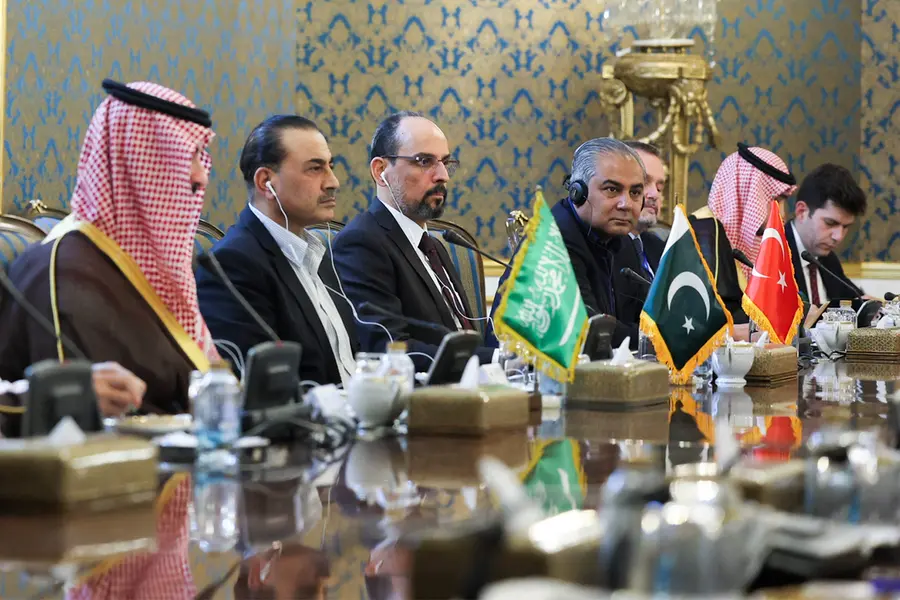
Saudi Arabia, Turkey and Pakistan have held high-level talks with Iran in Tehran in a diplomatic effort to prevent the Middle East conflict from escalating again. Iran described the discussions as “very good”, but the meeting ended without any concrete announcement, with the countries agreeing to continue talks.
The joint visit on Monday brought together senior officials from the three countries that formed a defence alliance in Saudi Arabia's holy city of Mecca in August. It was their first joint visit to Tehran since the alliance was established.
The diplomatic initiative comes amid warnings from the United States, Israel and Iran that hostilities could resume in the eight-month conflict.
Saudi defence minister joins high-level delegation
The visiting delegation included Saudi Defence Minister Prince Khalid bin Salman, Pakistan's army chief General Asim Munir and Turkish intelligence chief Ibrahim Kalin. They met Iranian President Massoud Pezeshkian, Foreign Minister Abbas Araghchi and security chief Mohsen Rezaei.
Following the discussions, Rezaei said the meeting had created a positive atmosphere, according to Iranian state television.
“I feel that a new atmosphere is emerging in the region,” he said, adding that the countries agreed regional security should be managed by the countries themselves without foreign intervention.
Rezaei also said the discussions addressed Israel's presence in southern Lebanon, southern Syria, Gaza and the West Bank.
The Saudi foreign ministry said the visit was intended to support efforts to de-escalate tensions among the parties involved in the crisis.
UN chief warns against further escalation
The diplomatic efforts come as international leaders warn of the risks of renewed military action.
United Nations Secretary General Antonio Guterres called for an end to any escalation in the region during a press conference in Cairo.
He warned that the risk of a major military attack on Iran, followed by a major Iranian attack on Gulf countries, needed to be avoided.
Saudi security analyst Hesham Alghannam described the Tehran meeting as a possible turning point, writing on X that it could be the last opportunity to prevent the crisis from spiralling out of control.
Qatar and Pakistan have also been involved in mediation efforts between Washington and Tehran. A Qatari delegation visited the Iranian capital on Sunday, Iranian foreign ministry spokesman Esmaeil Baqaei said.
Saudi Arabia faces continued Houthi attacks
The talks took place as Saudi Arabia continued to face security concerns following weeks of attacks attributed to the Iran-backed Houthi movement in Yemen.
Explosions were reported in Riyadh overnight after the Houthis claimed responsibility for a fresh attack targeting the Saudi capital's international airport on Sunday.
The Saudi-led coalition in Yemen subsequently said it had intercepted three Houthi-launched drones over southern Saudi Arabia and the Riyadh region.
Meanwhile, Egypt's parliament approved a request from President Abdel Fattah al-Sisi for defensive military support to Saudi Arabia if requested. The precise nature of the potential support was not specified.
Trump and Netanyahu issue fresh warnings
The prospect of renewed hostilities has been heightened by recent statements from US President Donald Trump and Israeli Prime Minister Benjamin Netanyahu.
Trump said on Friday that Washington “may do another little Epic Fury”, referring to the US-Israeli military campaign against Iran that began on February 28.
Netanyahu, meanwhile, warned on Sunday that Iran and its allies could attempt attacks to disrupt Israel's elections scheduled for Tuesday.
His remarks followed a report by Israel's Channel 12, citing unnamed sources, about a disagreement between Netanyahu and military chief Eyal Zamir over an unspecified new directive related to the war with Iran. Netanyahu denied the reported confrontation.
With regional tensions continuing and the possibility of further military action being raised by multiple sides, the latest talks in Tehran have opened another diplomatic channel.
However, the absence of a concrete agreement leaves the outcome of the initiative uncertain.
With AFP inputs
Published: 27 Oct 2026, 08:31 am IST
ABOUT THE AUTHOR

Related Topics
Disclaimer: Kindly avoid objectionable, derogatory, unlawful and lewd comments, while responding to reports. Such comments are punishable under cyber laws. Please keep away from personal attacks. The opinions expressed here are the personal opinions of readers and not that of Mathrubhumi.