
A sailboat named Oceanview sank near Fonte da Telha beach, about 9 kilometres south of Lisbon, after orcas broke its rudder and created a hole below the waterline.
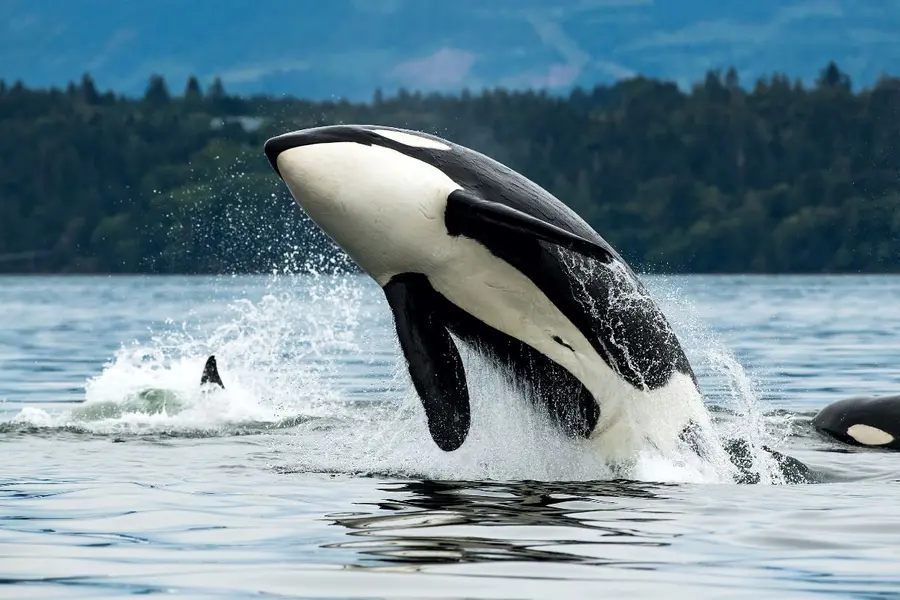
For more than five years, orcas have been ramming into yachts, fishing boats and sailing vessels in the waters off Spain, Portugal, France and Morocco, in some cases sinking them. While often described as “attacks,” scientists say the behaviour is neither hostile nor intentional destruction, but rather playful encounters that have become a fad among a group of Iberian killer whales.
Recent incidents off Portugal
On September 13, two new encounters were reported off Portugal. According to the country’s National Maritime Authority, a sailboat named Oceanview sank near Fonte da Telha beach, about 9 kilometres south of Lisbon, after orcas broke its rudder and created a hole below the waterline. Five people on board were rescued unharmed and taken to Oeiras harbour. A nearby vessel captured video of an orca striking the underside of the yacht before it began sinking.
In a separate incident on the same day, a tourist boat with four passengers required assistance after orcas interacted with the vessel in Cascais Bay, about 20 kilometres away.
A dangerous game
Researchers say the animals’ fascination lies mainly with rudders. When orcas push or strike them, the movement provides stimulation, and once the part breaks off, the whales appear to treat it as a toy.
Renaud de Stephanis, president of Conservation, Information and Research on Cetaceans (CIRCE), has studied orcas for more than 25 years. “The sea is a very boring place for an animal,” he told USA Today. “Imagine if you’re a dog or some other mammal; you can interact with objects around you. But in the sea, there’s not much for the orcas to interact with, so they play with the rudders.”
He compared the encounters to childlike behaviour: “They’re pushing, pushing, pushing – boom! It’s a game. That’s all it is. Imagine a kid of six, seven years, with a weight of three tonnes. That’s it, nothing less, nothing more. If they wanted to wreck the boat, they would break it in 10 minutes’ time.”
How widespread is the phenomenon?
The first recorded encounter occurred in May 2020. Since then, at least six yachts and two Moroccan fishing boats have sunk, while hundreds more have been damaged. Reports compiled by the Atlantic Orca Working Group (GTOA) and the Cruising Association suggest more than 673 interactions have occurred in the Iberian region.
Encounters peaked in 2023 with 207 recorded incidents. That number dropped to 136 in 2024 and just 67 so far this year, a decline researchers link to guidelines issued by Spanish authorities advising sailors to stick to shallower waters or avoid hotspot areas entirely.
Most of the interactions take place between spring and autumn, when orcas and boats cross paths during migratory patterns. “It starts in the spring, goes way off the charts in the summer and goes away in fall. That’s because the whales and boats are in the same area at the same time,” said Naomi Rose, a senior scientist at the Animal Welfare Institute.
Who are the whales behind the encounters?
Photographs have identified 15 individuals out of a population of around 50 Iberian orcas, also called the Strait of Gibraltar orcas. This group follows schools of Atlantic bluefin tuna along the Iberian Peninsula, their primary prey. Many of the interactions appear to involve juveniles, whom scientists describe as more playful and curious.
Alexandre Zerbini, who chairs the International Whaling Commission’s scientific committee, speculated that the behaviour may have started with one young orca bumping into a rudder and discovering it moved. After repeated pushes, the rudder broke, providing something to play with — and the fad spread.
One female known as “White Gladis” was once thought to be leading the behaviour as an act of revenge after suffering an injury from a boat strike. But most researchers now dismiss this theory. Nearly 80 marine biologists signed an open letter last year rejecting claims of vengeance or aggression, writing: “Science cannot yet explain why the Iberian orcas are doing this, although we repeat that it is more likely related to play/socializing than aggression. However, it is unfounded and potentially harmful to the animals to claim it is for revenge for past wrongs or to promote some other melodramatic storyline.”
Culture and learning among killer whales
Scientists point out that orcas are highly intelligent, social mammals with culture, memory and the ability to pass on learned behaviours. As with other pods worldwide that share hunting techniques or vocalisations, the Iberian whales appear to have developed a cultural fad of targeting rudders, and teaching it to younger members.
Published: 23 Sept 2025, 01:36 pm IST
Related Topics
Disclaimer: Kindly avoid objectionable, derogatory, unlawful and lewd comments, while responding to reports. Such comments are punishable under cyber laws. Please keep away from personal attacks. The opinions expressed here are the personal opinions of readers and not that of Mathrubhumi.
