
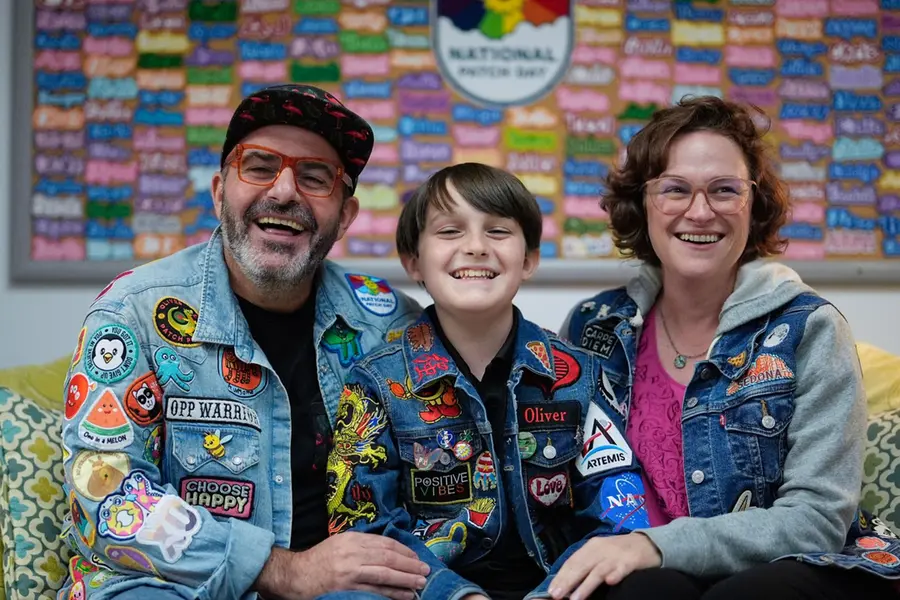
Miami: The ‘Oliver Patch Project’ is a heartwarming initiative created to bring comfort and a sense of belonging to young cancer patients by providing them with personalized denim jackets or tote bags adorned with colorful patches. The project, founded by Brian Burkhardt and Trisha Brookbank after their son Oliver’s own battle with leukemia, has been offering emotional support to children undergoing cancer treatments across the United States.
A personal story inspiring a global movement
At age 9, Oliver Burkhardt was diagnosed with leukemia, and like many children in similar situations, he faced the harsh physical and emotional effects of chemotherapy. During his hospital visits, Oliver would wear a denim jacket covered in patches—symbols of strength, unity, and positivity. The patches included images of Pokémon, Superman, NASA, and even classic rock bands, all sent from well-wishers around the world after Oliver’s father made a simple request on social media.
The jacket, lovingly sewn by his parents, became more than just a piece of clothing—it was Oliver’s "suit of armor." It sparked conversations with hospital staff, uplifted his spirits, and made him feel supported by a broader community.
Realizing how much joy and empowerment this brought Oliver, his family decided to expand the experience to other children facing similar battles. The ‘Oliver Patch Project’ was born, with the goal of bringing that same sense of community and strength to young cancer fighters.
How does the ‘Oliver Patch Project’ work?
The charity provides either a denim jacket or tote bag to children aged 19 and under who are battling cancer. Each child or their family can select 20 patches from the Oliver Patch Project’s website. These patches reflect the child’s personality, hobbies, or even specific milestones in their cancer journey. Each month, they receive a new patch, creating a continuous source of joy and something to look forward to during a very challenging time.
Parents are also given a set of 13 ‘milestone patches’, which they can gift their child as they hit certain points during their cancer treatment. For instance, there’s a gorilla patch for starting chemotherapy, a bald eagle for hair loss, and a polar bear for dealing with fevers. These milestone patches help children celebrate the small but significant moments in their treatment journey.
To make sure siblings aren’t left out, they too receive special patches, as the program recognizes the importance of supporting the entire family.

Since its inception, the ‘Oliver Patch Project’ has provided jackets or tote bags to over 1,600 children, with recipients in all 50 U.S. states. The charity has also expanded to reach children participating in experimental drug trials across 18 other countries, thanks to recent funding.
The project’s roots go back to 2020 when Oliver’s father, Brian, first posted on social media asking friends to send patches to uplift Oliver’s spirits. To their surprise, thousands of patches flooded in from around the world—most from strangers. Now, with the help of corporate donors like Perry Ellis (which provides the jackets and bags), the project has grown into a well-structured organization, with a dedicated seamstress and patch manufacturer.
Impact on children and families
For the children who participate, the patches provide a sense of achievement and joy. Each new patch symbolizes resilience, marking progress through the difficult phases of cancer treatment. For Oliver, who is now in remission, the project is a way to share his experience with other kids going through similar challenges. Knowing that something born from his struggle is now helping others gives him immense pride.
Dr. Maggie Fader, an oncologist at Miami's Nicklaus Children’s Hospital where Oliver was treated, highlights the importance of keeping a child's morale high during treatment. “If patients start to become depressed or negative about the way things are going, they also start to be less cooperative,” Fader said. “We can give them medications. We can administer IV fluids, we can give them chemotherapy, but we can’t make them eat. We can’t make them have good nutrition. We can’t make them comply with all their oral medications when they’re home. Those are things where they have to be willing and participating.”
For parents, the project helps make daunting milestones—like hair loss or chemo sessions—seem less frightening. Ashley Hendrickson, whose daughter Ellora underwent cancer treatment, shared that the patches brought lightness to otherwise heavy moments, helping her family through the emotional rollercoaster.
At its core, the Oliver Patch Project is about empowerment and community. It reminds children with cancer that they are not alone in their fight. The patches are a fun, creative way to shift focus from illness to resilience, turning each difficult step into an opportunity to celebrate progress. As Oliver’s dad, Brian, puts it: "It’s not really about the patch, it’s about belonging." AP
Published: 24 Sept 2024, 10:33 am IST
Disclaimer: Kindly avoid objectionable, derogatory, unlawful and lewd comments, while responding to reports. Such comments are punishable under cyber laws. Please keep away from personal attacks. The opinions expressed here are the personal opinions of readers and not that of Mathrubhumi.