
Whether both governments can look past immediate political friction to protect the livelihoods of millions remains the central question as the deadline approaches.
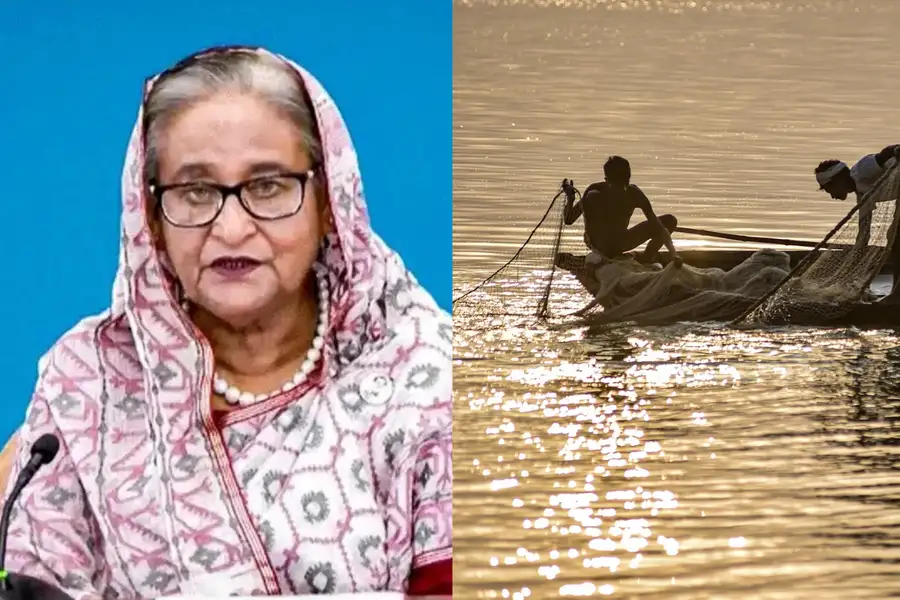
On December 12, the thirty-year Ganges Water-Sharing Treaty between India and Bangladesh reaches its formal deadline. With days ticking away, a delegation of Indian water officials is in Dhaka for the ninety-first meeting of the Joint Committee under the Joint Rivers Commission. While this meeting handles routine annual data reporting rather than pact extension talks, the impending expiry has sparked intense interest across South Asia. The 1996 agreement governs how Ganga waters are divided during the dry lean season, between the Farakka Barrage in West Bengal and the Hardinge Bridge in Bangladesh. Though actual water sharing continues under existing terms as a gesture of goodwill, official renewal negotiations remain deadlocked.
How water allocation works and why interests clash
Water distribution under the treaty relies on a fixed mathematical formula calculated in cusecs, a unit measuring liquid flow in cubic feet per second. During the leanest period from March to May, water is split equally when river flow drops to 70,000 cusecs or lower. If availability rises above 75,000 cusecs, India receives 40,000 cusecs and Bangladesh gets the remainder.
However, both nations now seek major revisions. Bangladesh wants to bring back an unconditional guarantee clause from a 1977 agreement. This clause assured Dhaka eighty percent of its allocated share even during severe dry spells. India resists this demand, arguing that climate change and unpredictable rainfall make guaranteed volumes hydrologically unfeasible. Upstream in India, Bihar officials blame the Farakka Barrage for heavy silt accumulation and flooding. Meanwhile, West Bengal requires an additional 5,000 cusecs to clear sediment at the Kolkata port and prevent salt water from damaging the Sundarbans delta.
The political shadow of Sheikh Hasina and diplomatic strain
Beyond technical water numbers, bilateral relations are heavily strained by political developments. Following a popular uprising in August 2024, former Bangladeshi Prime Minister Sheikh Hasina fled to India aboard a military aircraft. Bangladesh's International Crimes Tribunal subsequently issued a death sentence against her for alleged crimes against humanity. The new Bangladeshi administration under Prime Minister Tarique Rahman has repeatedly demanded her extradition.
India maintains that extradition is a legal matter requiring valid travel documents, which were revoked by Dhaka. In response, diplomatic interactions have cooled. High-level visits have stalled, and official consular dialogues stand postponed. Indian diplomats consider water sharing a key diplomatic tool, linking formal treaty discussions to a direct summit between Prime Minister Narendra Modi and Prime Minister Rahman. Meanwhile, Dhaka has sought to internationalise river disputes and expanded its engagement with China, particularly around infrastructure development on the shared Teesta river.
Moving beyond volume to save the shared delta
The 1996 treaty was built on historical water flow data from 1949 to 1988. Experts point out that dividing water volume alone ignores critical ecological processes. The Ganga carries vast amounts of sediment vital for sustaining soil fertility, channel formation, and delta stability. Reduced freshwater flow and blocked sediment transport have accelerated shoreline erosion, land loss, and saline intrusion in the fragile Sundarbans.
As fifty-four rivers cross the border between the two neighbours, managing shared waters requires moving from rigid arithmetic splits to comprehensive basin management. Whether both governments can look past immediate political friction to protect the livelihoods of millions remains the central question as the deadline approaches.
Published: 22 Nov 2026, 01:46 pm IST


Related Topics
Disclaimer: Kindly avoid objectionable, derogatory, unlawful and lewd comments, while responding to reports. Such comments are punishable under cyber laws. Please keep away from personal attacks. The opinions expressed here are the personal opinions of readers and not that of Mathrubhumi.
