
The Korean Peninsula technically remains in a state of war, as the 1950–53 Korean War ended with an armistice rather than a peace treaty.
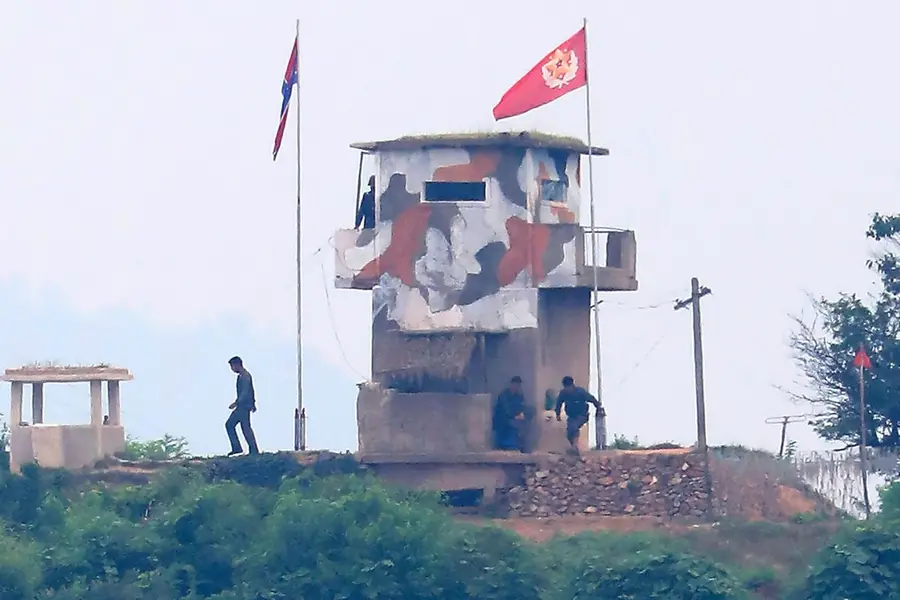
Seoul: North Korea has accused South Korea’s military of firing warning shots at its soldiers near the heavily fortified border, warning that the incident risks escalating tensions to what it called “uncontrollable” levels.
The confrontation, which Pyongyang said occurred on Tuesday, took place as North Korean forces were working to permanently seal off parts of the frontier. Army Lieutenant General Ko Jong Chol, in a statement carried by the official Korean Central News Agency, condemned the move as a “serious provocation” and claimed that South Korean troops fired “more than 10 warning shots” with a machine gun.
“This is a very serious prelude that would inevitably drive the situation in the southern border area where a huge number of forces are stationing in confrontation with each other to the uncontrollable phase,” Ko warned. He added that the North would treat any further attempts to interfere with its sealing project as “deliberate military provocation” and would “take corresponding countermeasure.”
Seoul issued its own account on Saturday, saying its troops fired after North Korean soldiers crossed the Military Demarcation Line, the de facto border running through the central frontline of the demilitarised zone. “Some North Korean soldiers operating near the Military Demarcation Line (MDL) within the central frontline DMZ crossed the MDL, prompting our military to fire warning shots,” South Korea’s Joint Chiefs of Staff said in a statement. “The North Korean soldiers then moved north of the MDL.”
The standoff is the latest flashpoint along the border, which remains one of the most tense in the world. The last such confrontation was in early April, when South Korean soldiers opened fire after spotting about 10 North Korean troops crossing into the demilitarised zone, a heavily mined and overgrown strip that separates the two countries.
North Korea last year announced plans to completely cut off its southern border, notifying US forces at the time to “prevent any misjudgment and accidental conflict.” Soon after, Pyongyang demolished sections of disused but symbolic roadways and rail links connecting the two sides.
Relations had plunged to new lows under South Korea’s previous administration. Tensions spiked when the North sent thousands of balloons filled with rubbish across the border, retaliating against propaganda balloons launched by South Korean activists. Seoul resumed loudspeaker broadcasts for the first time in years, blaring K-pop and news reports, while the North retaliated with strange audio transmissions along the frontier.
Since taking office in June, President Lee Jae Myung has promised to reduce tensions and “build military trust,” insisting that his administration would pursue dialogue with Pyongyang “without preconditions.” His government announced a halt to border loudspeaker broadcasts and later said it had observed the North dismantling some of its own.
However, Pyongyang has remained dismissive. Kim Yo Jong, the influential sister of leader Kim Jong Un, has declared that the North has “no will to improve relations” with Seoul.
The Korean Peninsula technically remains in a state of war, as the 1950–53 Korean War ended with an armistice rather than a peace treaty.
(With inputs from AFP)
Published: 23 Aug 2025, 08:03 am IST
Related Topics
Disclaimer: Kindly avoid objectionable, derogatory, unlawful and lewd comments, while responding to reports. Such comments are punishable under cyber laws. Please keep away from personal attacks. The opinions expressed here are the personal opinions of readers and not that of Mathrubhumi.
