
Karki’s academic journey took her to Banaras Hindu University (BHU) in Varanasi, India
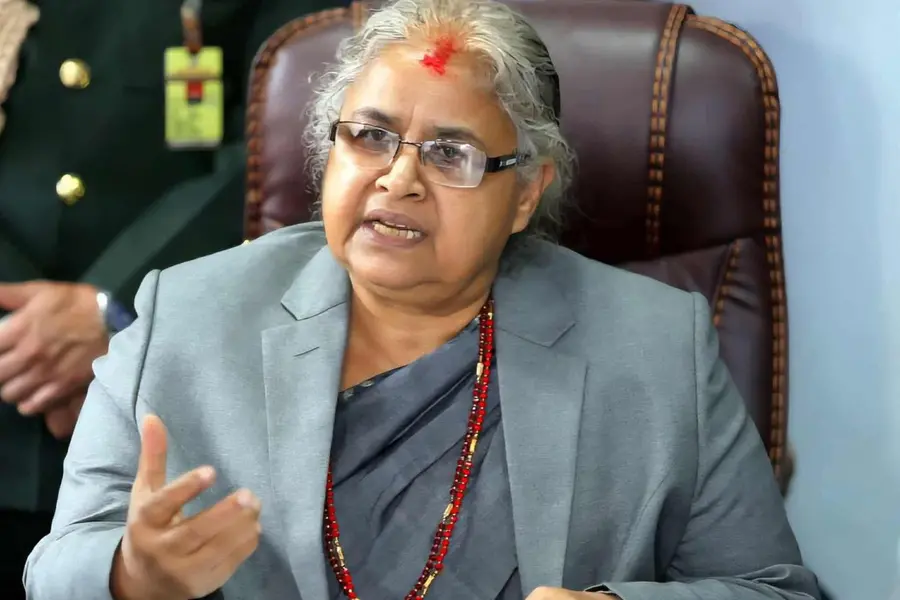
Kathmandu: Nepal has entered a new political phase with the appointment of Sushila Karki as the country’s interim Prime Minister, following the resignation of KP Sharma Oli amid mass protests. Karki’s rise to the highest political office is historic — not just because she is the first woman to hold both the position of Chief Justice and now Prime Minister — but also because she is a figure with deep roots in both Nepal’s legal establishment and its democratic movement, with a notable educational and personal connection to India.
A journey shaped by politics and law
Also Read

Born in 1952 in Biratnagar, in Nepal’s eastern Morang district, Sushila Karki was raised in a middle-class family that valued education at a time when few girls were encouraged to pursue it. Her father, influenced by B.P. Koirala, Nepal’s first elected Prime Minister, became an active member of the Nepali Congress, embedding political consciousness early in her life.
Karki’s academic journey took her to Banaras Hindu University (BHU) in Varanasi, India, where she earned a Master’s degree in Political Science in 1975. Prior to that, she had completed her Bachelor of Laws (LLB) from Tribhuvan University in 1972. It was during her time in India that she met Durga Prasad Subedi, a fellow political activist and youth leader of the Nepali Congress, whom she later married.
Link to Nepal’s first-ever plane hijacking
Karki’s India connection is more than academic. In 1973, her future husband, Durga Subedi, was involved in Nepal’s first-ever plane hijacking, a pivotal moment in the country's democratic struggle. Subedi and his associates hijacked a Royal Nepal Airlines flight believed to be carrying around 4 million Nepalese rupees belonging to the state bank, with the aim of funding the Nepali Congress's armed rebellion against King Mahendra’s autocratic Panchayat regime.
The flight was diverted to Forbesganj in Bihar, India, without harming any passengers. The cash was reportedly handed over to senior party leader Girija Prasad Koirala. Subedi was later arrested by Indian authorities and imprisoned for two years before returning to Nepal ahead of the 1980 referendum.
A legal trailblazer
After returning from India, Karki began her law practice in Biratnagar in 1979, eventually rising to become a senior advocate in 2007. Her judicial career took off when she was appointed an ad-hoc judge of the Supreme Court in 2009, followed by her confirmation as a permanent judge in 2010. In April 2016, she became Chief Justice of Nepal, making history as the first woman to lead the country’s judiciary.
Her tenure was marked by a no-nonsense approach to corruption. In January 2017, she delivered a landmark ruling disqualifying anti-corruption chief Lok Man Singh Karki, a controversial figure accused of using his office to intimidate public officials and business leaders. The ruling won her acclaim from civil society but made her a target among political elites.
A few months later, she was suspended after an impeachment motion was filed by lawmakers from the Nepali Congress and CPN (Maoist Centre) over a separate ruling related to the appointment of the police chief. The Supreme Court eventually invalidated the impeachment, allowing her to return before her retirement in June 2017.
During her time on the bench, Karki also presided over the conviction of serving Minister Jaya Prakash Gupta on corruption charges in 2012 — reinforcing her public image as a fearless and principled jurist.
A reluctant politician at a pivotal time
Though never a politician by profession, Karki’s track record of integrity and independence made her a compelling choice to lead Nepal through a period of deep political crisis. Her appointment as interim Prime Minister was the result of a consensus between President Ramchandra Paudel, leaders of the Generation Z protest movement, and the Nepal Army chief, General Ashok Raj Sigdel, following days of massive protests against corruption and governance failures.
Appointed under the “principle of necessity”
There is no constitutional provision permitting anyone outside the House of Representatives to serve as Prime Minister. Sushila Karki’s appointment has been made under the "principle of necessity".
Under Article 76 of Nepal’s Constitution, only a member of the House of Representatives may hold the pos, excluding even members of the upper house, the National Assembly. This renders Karki ineligible.
Furthermore, Article 132(2) bars former Chief Justices and Supreme Court Judges from holding any government office, unless expressly allowed by the Constitution — another clause that applies in Karki’s case.
As the country stands at a crossroads, Karki’s elevation is seen as a clean break from entrenched political interests, and a nod to the younger generation’s demand for transparency and justice.
(With IANS inputs)
Published: 13 Sept 2025, 12:11 pm IST
Disclaimer: Kindly avoid objectionable, derogatory, unlawful and lewd comments, while responding to reports. Such comments are punishable under cyber laws. Please keep away from personal attacks. The opinions expressed here are the personal opinions of readers and not that of Mathrubhumi.