
Nepal has signalled a diplomatic reset with India, saying all border disputes should be resolved through existing bilateral mechanisms and not external mediation. The remarks are being seen as an effort to ease tensions after recent controversy over calls for third-party involvement.
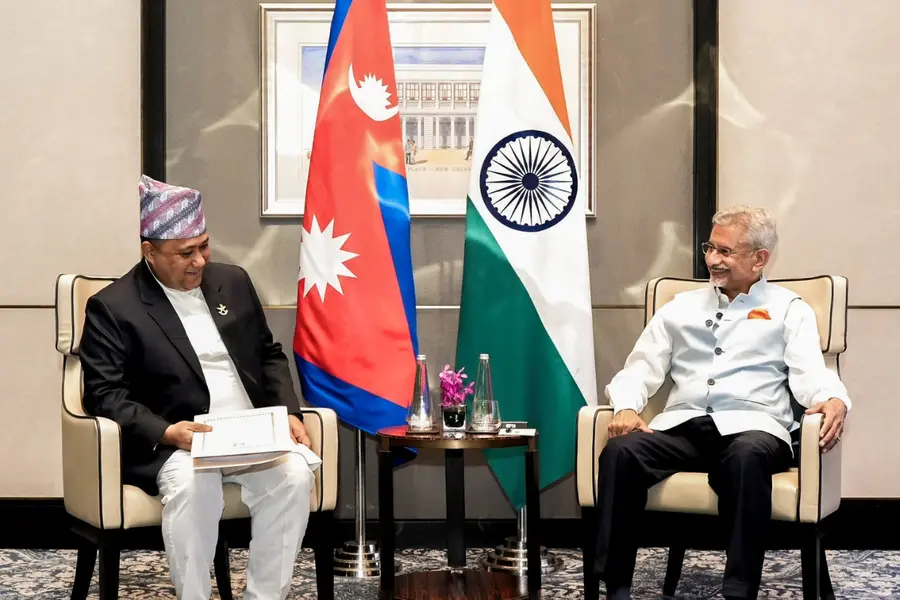
Dhaka: In a significant diplomatic message aimed at New Delhi, Nepal's Foreign Minister Shishir Khanal said Kathmandu wants to resolve all outstanding border issues through existing bilateral mechanisms and direct engagement with India.
The statement effectively aligns Nepal with India's long-standing position that disputes between the two neighbours should be addressed without external mediation.
Also Read

Speaking after talks with External Affairs Minister S. Jaishankar in New Delhi, Khanal stressed that no dispute was too difficult to resolve if both countries approached discussions with mutual respect, evidence-based dialogue and a willingness to find common ground.
Clarification after controversy over PM's remarks
The comments are particularly significant because they follow a diplomatic row triggered by Nepal Prime Minister Balendra Shah, who recently suggested that China and the United Kingdom could play a role in addressing the border dispute.
India swiftly rejected the idea of third-party involvement, reiterating that all bilateral issues should be resolved directly between New Delhi and Kathmandu.
Seeking to calm concerns, Khanal clarified that references to the UK were linked only to accessing historical documents and archival records that may help establish facts related to the boundary issue.
He emphasised that Nepal was not asking any foreign country to mediate between the two neighbours.
Border issue remains unresolved
The dispute centres on the areas of Kalapani, Lipulekh and Limpiyadhura, territories claimed by both countries.
India maintains that the regions are part of Uttarakhand, while Nepal argues that historical evidence supports its claim over the territory.
Khanal reiterated Nepal's position regarding the disputed areas but stressed that Kathmandu preferred diplomatic engagement over political rhetoric.
He said Nepal was pursuing a "calm, data-driven and evidence-based" approach rather than what he described as hyper-nationalistic posturing.
New Delhi and Kathmandu seek a reset
Beyond the boundary dispute, the Nepalese foreign minister's remarks reflected a broader effort to deepen cooperation with India.
Khanal praised India's transformation into a major economic and technological power and said Nepal wanted to engage with a rapidly modernising neighbour while pursuing its own economic development goals.
He argued that the current political moment presents one of the best opportunities in decades for both countries to elevate relations through cooperation in trade, connectivity, energy, technology and infrastructure.
The message signals Kathmandu's desire to focus less on historical grievances and more on economic partnership.
Nepal balances engagement with India and China
Despite backing bilateral talks with India, Khanal maintained Nepal's objections to agreements between India and China concerning the Lipulekh route used for the Kailash Mansarovar pilgrimage.
Kathmandu argues that since it claims the territory, any arrangement involving the region should involve Nepal's consent.
At the same time, the foreign minister avoided escalating tensions, repeatedly emphasising dialogue and existing diplomatic channels as the preferred route to resolution.
A shift from confrontation to cooperation?
Khanal's remarks suggest Nepal's new leadership is attempting to strike a balance between asserting its territorial claims and maintaining stable relations with its largest neighbour.
By distancing Kathmandu from suggestions of foreign mediation while simultaneously reaffirming Nepal's claims, the government appears to be signalling that future negotiations will focus on diplomacy rather than public confrontation.
For India, the statement may be viewed as a positive development, reinforcing New Delhi's preference for resolving sensitive issues through direct bilateral engagement rather than international involvement.
(With PTI inputs)
Published: 07 Jun 2026, 08:20 pm IST
Related Topics
Disclaimer: Kindly avoid objectionable, derogatory, unlawful and lewd comments, while responding to reports. Such comments are punishable under cyber laws. Please keep away from personal attacks. The opinions expressed here are the personal opinions of readers and not that of Mathrubhumi.