
The death toll from devastating floods in Nepal has neared 400, with hundreds still missing, prompting India to step up rescue efforts and place vulnerable border districts in Uttar Pradesh and other downstream areas on high alert.
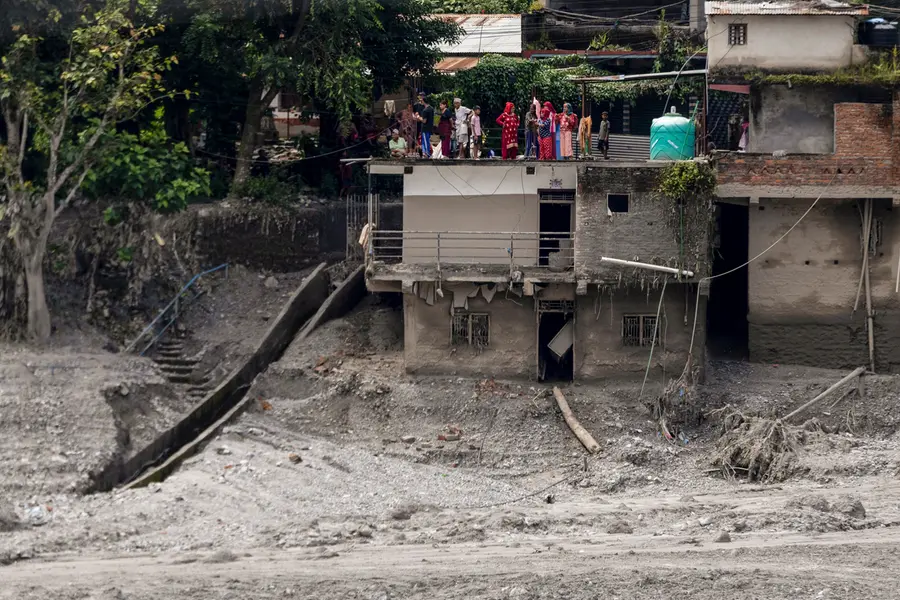
Devighat: The devastating flash floods in Nepal have triggered a high alert in parts of northern India, particularly in Uttar Pradesh, as authorities monitor rivers flowing downstream from Nepal and prepare for possible flooding in vulnerable areas. The disaster has also prompted India to step up rescue and relief assistance for Nepal while keeping its own border districts on alert.
What happened in Nepal?
A massive flash flood struck areas along the Nepal-China border after what the US Geological Survey later identified as a magnitude 5.2 glacier collapse rather than an earthquake. The event sent a huge volume of water, mud and debris downstream.
The disaster has caused widespread destruction in Nepal and Tibet. According to the latest figures cited by the Associated Press, at least 389 people had died in Nepal, with more than 460 injured and about 910 people reported missing. In Tibet, at least three people were reported dead and 558 missing.
More than 35 bridges and around 40 kilometres of roads in Nepal have reportedly been damaged, making rescue operations difficult.
Why is India on alert?
The biggest concern for India is the movement of water downstream through rivers originating in or passing through Nepal. A sudden rise in river levels can affect low-lying settlements in northern Bihar and Uttar Pradesh.
Uttar Pradesh has already placed Maharajganj and Kushinagar on high alert. Officials are monitoring the Gandak, Narayani and other rivers and warning people living close to riverbanks and in low-lying areas.
Authorities are also monitoring the Rapti, Ghagra and Sarda rivers. The Central Water Commission reported rising water levels at several locations, while the Ghagra at Turtipar in Ballia was above its warning level, although its level was falling.
Which Indian states are most vulnerable?
- Uttar Pradesh: UP is among the states facing the most immediate concern because several rivers flowing from Nepal enter or affect the state. Maharajganj, Kushinagar, Balrampur, Bahraich, Gonda, Lakhimpur Kheri and Ballia are among the areas being monitored.
- Bihar: Northern Bihar is particularly vulnerable because rivers including the Gandak, Rapti and other waterways receive water from the Nepal Himalayas. The Valmikinagar barrage is being closely monitored because changes in discharge can affect downstream areas.
- Uttarakhand: The state's rivers can also experience rapid changes during intense rainfall and Himalayan events. The Sarda at Banbasa was among the locations monitored by the Central Water Commission.
- West Bengal: Parts of northern West Bengal can also face flood risks from transboundary river systems, although the immediate situation described in the current disaster is concentrated further west.
- The level of risk will depend on rainfall, river discharge, the condition of barrages and embankments, and how much additional water moves downstream from Nepal.
How is UP preparing?
The Uttar Pradesh government has deployed a 32-member SDRF platoon and 22 PAC personnel to Nepal for rescue and relief operations.
Four rubber boats are available, while an aluminium boat is also being sent with another SDRF platoon. Rescue teams have been placed on standby in vulnerable areas inside UP.
Officials have also been instructed to use loudspeakers to warn residents, prepare evacuation arrangements and organise drinking water, mobile toilets and other essential facilities.
In Kushinagar, authorities are monitoring the Valmikinagar barrage and vulnerable stretches of the Narwa Jot embankment. Police and PAC personnel have also been deployed in areas considered vulnerable.
What about Indian citizens stranded in Nepal?
The floods have affected a large number of foreign nationals, including Indians. Nepal's tourism authorities reported hundreds of foreigners among those missing.
India's Ministry of External Affairs said 63 Indian nationals working at the Trishuli-1 project had been rescued. The Indian government has also been coordinating rescue and relief efforts in Nepal.
Families seeking information about stranded UP residents can contact the state's 1070 helpline.
Can India help Nepal while protecting its own people?
Yes, but the two operations have to run simultaneously.
India has significant disaster-response capacity through agencies such as the NDRF and SDRF, as well as the armed forces and other emergency services. India has already sent rescue personnel and equipment to Nepal while UP continues to monitor its own vulnerable districts.
The immediate challenge is therefore resource coordination rather than choosing between helping Nepal and protecting India. Rescue teams can operate in Nepal while state administrations downstream prepare for possible flooding at home.
The effectiveness of this response will depend heavily on timely information from Nepal about rainfall, river levels and water releases. Early warnings give Indian authorities more time to alert villages, move people and livestock to safer locations and position boats and rescue teams.
Why river monitoring is crucial
The flood threat does not automatically mean that all downstream Indian areas will be inundated. River levels can rise or fall depending on rainfall and the amount of water entering the river system.
That is why officials are watching rivers and barrages rather than simply assuming that the Nepal disaster will produce widespread flooding in India.
The Central Water Commission's monitoring network provides information on river levels and forecasts, while district administrations can use this information to issue local warnings and prepare evacuations.
Could the Nepal disaster become an Indian flood disaster?
It is a possibility, particularly in low-lying areas close to rivers connected to Nepal. However, there is no basis to say that the entire downstream region will be flooded.
The main risks are sudden increases in river discharge, prolonged rainfall, erosion of embankments and flooding in settlements located close to river channels.
For now, the appropriate response is heightened monitoring and preparedness rather than panic.
India is responding to the Nepal disaster while also keeping its own border states and districts prepared. Union Minister Shivraj Singh Chouhan said India's immediate priorities were locating missing people and providing humanitarian assistance.
India's assistance includes rescue personnel, equipment and support for affected communities. At the same time, Uttar Pradesh authorities are preparing for the possibility that rising rivers could affect communities inside the state.
The disaster has therefore become both a humanitarian emergency in Nepal and a cross-border disaster-management challenge for India.
What the disaster shows about the Himalayas
The flash floods have also raised concerns about the increasing vulnerability of Himalayan communities to glacier-related hazards, landslides and extreme weather.
Climate experts said a glacier-related avalanche likely triggered the flood. The Trishuli river reportedly rose by as much as nine metres in just half an hour.
For India and Nepal, the incident highlights the importance of real-time glacier monitoring, river-level surveillance, cross-border early-warning systems and coordinated evacuation plans.
The bigger picture
India is currently trying to manage two responsibilities at the same time: helping Nepal respond to a catastrophic disaster and preventing the consequences from spreading downstream into vulnerable Indian communities.
The high alert in UP does not mean a major flood has already struck the state. It indicates that authorities are preparing for a possible escalation.
If water levels rise sharply, the effectiveness of India's response will depend on how quickly warnings reach villages, how rapidly people can be evacuated and whether rescue teams and equipment are already positioned in vulnerable areas. The continuing monitoring of Nepal's rivers and the downstream river network will therefore be critical over the coming days.
Published: 28 Aug 2026, 06:36 am IST
ABOUT THE AUTHOR

Related Topics
Disclaimer: Kindly avoid objectionable, derogatory, unlawful and lewd comments, while responding to reports. Such comments are punishable under cyber laws. Please keep away from personal attacks. The opinions expressed here are the personal opinions of readers and not that of Mathrubhumi.