
PM Modi spoke with leaders of Oman, Kuwait and Qatar amid rising tensions in West Asia, condemning attacks and reviewing the safety of Indian nationals in the region.
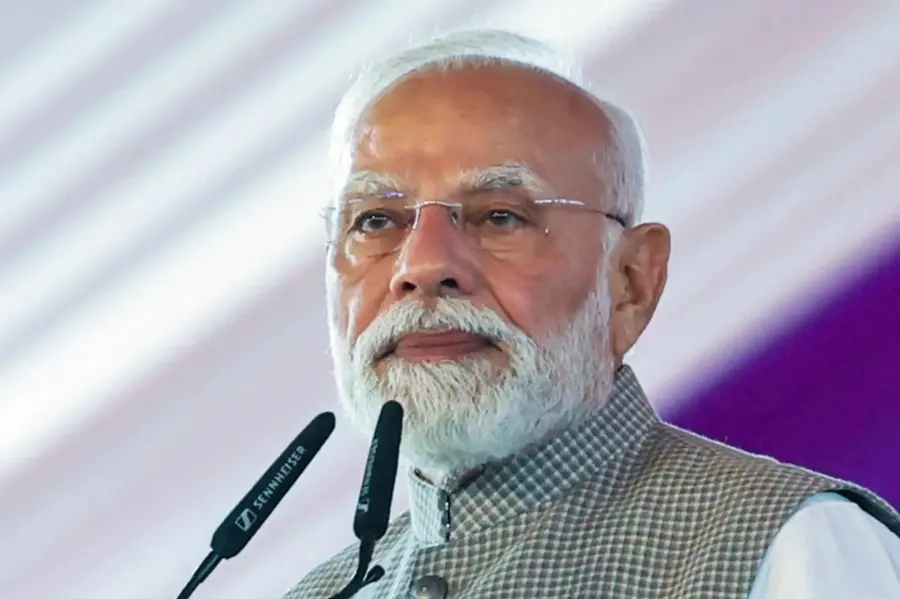
New Delhi: Prime Minister Narendra Modi has intensified diplomatic outreach across West Asia, holding conversations with leaders from Oman, Kuwait and Qatar on Tuesday as the region faces escalating hostilities following the joint US–Israeli offensive against Iran and retaliatory strikes by Tehran and allied groups. His calls come as several Gulf states report attacks on their territories, prompting heightened concern for millions of Indian nationals living and working across the region.
Over the past 48 hours, Modi has spoken to leaders of United Arab Emirates, Israel, Saudi Arabia, Jordan, Bahrain, Oman, Kuwait and Qatar, as New Delhi monitors the deteriorating situation and its implications for Indian citizens abroad.
Calls with Gulf leaders amid attacks on Oman and Kuwait
Officials confirmed that Modi held separate calls with the Sultan of Oman, Haitham bin Tarik, and the Crown Prince of Kuwait, Sheikh Sabah Al-Khaled Al-Hamad Al-Mubarak Al-Sabah, during which he condemned recent attacks in both countries.
In his post on X, Modi said: “Spoke with His Majesty Sultan Haitham bin Tarik and exchanged views on recent developments in West Asia. Condemned the violation of Oman's sovereignty and territorial integrity. We agreed that sustained diplomatic engagement is essential for earliest restoration of regional peace and stability. Deeply appreciated Oman's continued support to the Indian community.”
The Prime Minister also engaged in a similar conversation with the Crown Prince of Kuwait, raising concerns regarding the welfare of Indian nationals amid the ongoing conflict. India has a sizable expatriate population in both nations.
Conversation with Amir of Qatar
Earlier in the day, Modi spoke to the Amir of Qatar, Sheikh Tamim bin Hamad Al Thani, following reports of attacks on Qatari territory.
“Spoke with my brother, H.H. Sheikh Tamim bin Hamad Al Thani, the Amir of Qatar. We stand firmly in solidarity with Qatar and strongly condemn any violation of its sovereignty and territorial integrity… I also conveyed my appreciation for his continued support and care for the Indian community in Qatar during this challenging time,” Modi wrote on X.
India, he reiterated, supports an urgent return to stability through diplomacy.
Diplomatic outreach widens as regional tensions surge
The latest calls follow Modi’s discussions with the King of Jordan, King Abdullah II, on Monday, where the Prime Minister expressed “deep concern at the evolving situation” and thanked him for supporting Indian citizens in Jordan. Modi has also spoken to the Crown Prince of Saudi Arabia, Mohammed bin Salman Al Saud, and Bahrain’s King Hamad bin Isa Al Khalifa, condemning attacks on both nations.
On Sunday, the Prime Minister held a phone conversation with Israeli Prime Minister Benjamin Netanyahu, reiterating India’s call for a cessation of hostilities.
The conflict has intensified since the United States and Israel launched coordinated strikes on Iran, resulting in the death of Iranian Supreme Leader Ayatollah Ali Khamenei. Iran has since targeted Israel, US installations across the Gulf, and major aviation hubs including Dubai and Doha.
India monitors safety of nearly 9 million nationals in the region
Nearly 90 lakh Indians reside in West Asia, including around 10,000 in Iran and more than 40,000 in Israel. With much of the region’s airspace currently closed and commercial flights disrupted, hundreds of Indian travellers have been stranded at major transit airports such as Dubai and Doha.
The Cabinet Committee on Security (CCS), which met on Sunday, reviewed the situation and directed all relevant agencies to take “necessary and feasible measures” to assist Indian nationals. “It expressed serious concern over the safety and security of the large Indian expatriate community in the region,” the official statement said.
India has previously carried out several large-scale evacuations during crises in West Asia. The Ministry of External Affairs said Indian missions were in constant touch with citizens and had activated helplines across affected countries.
Khamenei’s death, confirmed Sunday, has reshaped the strategic landscape in West Asia. US President Donald Trump has warned that the “heavy and pin-point bombing on Iran” would continue “through the week or for as long as necessary,” signalling no imminent de-escalation.
(With inputs from agencies)
Published: 03 Mar 2026, 07:24 pm IST
Related Topics
Disclaimer: Kindly avoid objectionable, derogatory, unlawful and lewd comments, while responding to reports. Such comments are punishable under cyber laws. Please keep away from personal attacks. The opinions expressed here are the personal opinions of readers and not that of Mathrubhumi.
