
US President Donald Trump has said Prime Minister Narendra Modi is “not that happy” with him over steep US tariffs imposed on India for its continued purchases of Russian oil
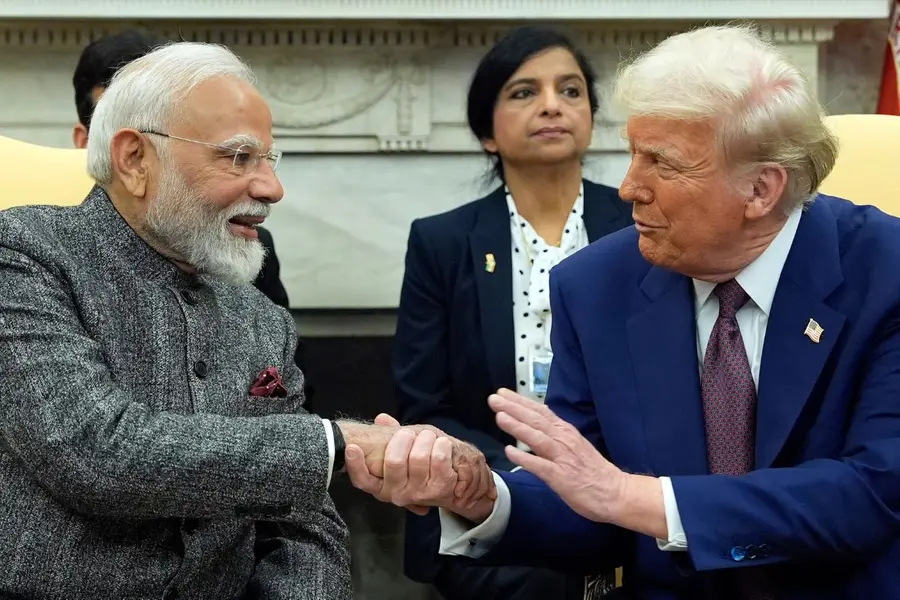
Washington DC: Speaking at the House GOP Member Retreat in Washington, US President Donald Trump acknowledged friction with Prime Minister Narendra Modi over tariffs imposed by the United States on Indian goods, linking the move directly to India’s oil imports from Russia. Trump said he continued to share a good personal relationship with Modi but admitted the tariff decision had caused dissatisfaction in New Delhi.
Trump told Republican lawmakers that India was now paying “a lot of tariffs” because of its oil trade with Russia, adding that New Delhi had “reduced it very substantially”. The US president claimed this reduction followed pressure from Washington. According to PTI, the US has imposed a 50 per cent tariff on India, including a specific 25 per cent levy tied to India’s purchases of Russian crude.
During his remarks, Trump also referred to past meetings with Modi and highlighted US defence sales to India. He said India had complained about long delays in receiving Apache attack helicopters and claimed the issue was being resolved. “India ordered 68 Apaches,” Trump said, adding that India had told him it had been waiting for five years for delivery.
The comments come amid repeated warnings from Trump linking India’s energy ties with Moscow to US trade action. He has previously threatened to raise tariffs further if India does not cooperate on what he calls the “Russian oil issue”, arguing that purchases of discounted Russian crude indirectly support Moscow during the Russia–Ukraine war.
Trump has framed tariffs as a tool to influence India’s behaviour while also insisting that the measures benefit the US economy. At the same time, he has positioned himself as a potential mediator in the Russia–Ukraine conflict, citing talks with Russian President Vladimir Putin and Ukrainian President Volodymyr Zelenskyy, though no breakthrough has been announced.
India has pushed back against some of Trump’s claims. New Delhi has previously rejected his assertion that Prime Minister Modi had assured the US that India would stop buying Russian oil, stating that no such assurance was given. India has consistently maintained that its energy purchases are guided by national interest and market conditions.
The latest remarks highlight how energy, defence and geopolitics are increasingly intertwined in India–US relations, with tariffs emerging as a key pressure point as Washington seeks to reshape global responses to Russia.
Published: 06 Jan 2026, 11:16 pm IST
Disclaimer: Kindly avoid objectionable, derogatory, unlawful and lewd comments, while responding to reports. Such comments are punishable under cyber laws. Please keep away from personal attacks. The opinions expressed here are the personal opinions of readers and not that of Mathrubhumi.
